Mandatory Electric Scooter Insurance in Spain: Who It Applies To and What to Check Before Taking Out Cover
The insurance requirement is already in force for light personal vehicles covered by Law 5/2025. This guide explains how to identify the vehicle, register a personal mobility vehicle, review third-party liability cover and avoid confusing it with the certificate of circulation.
Key points
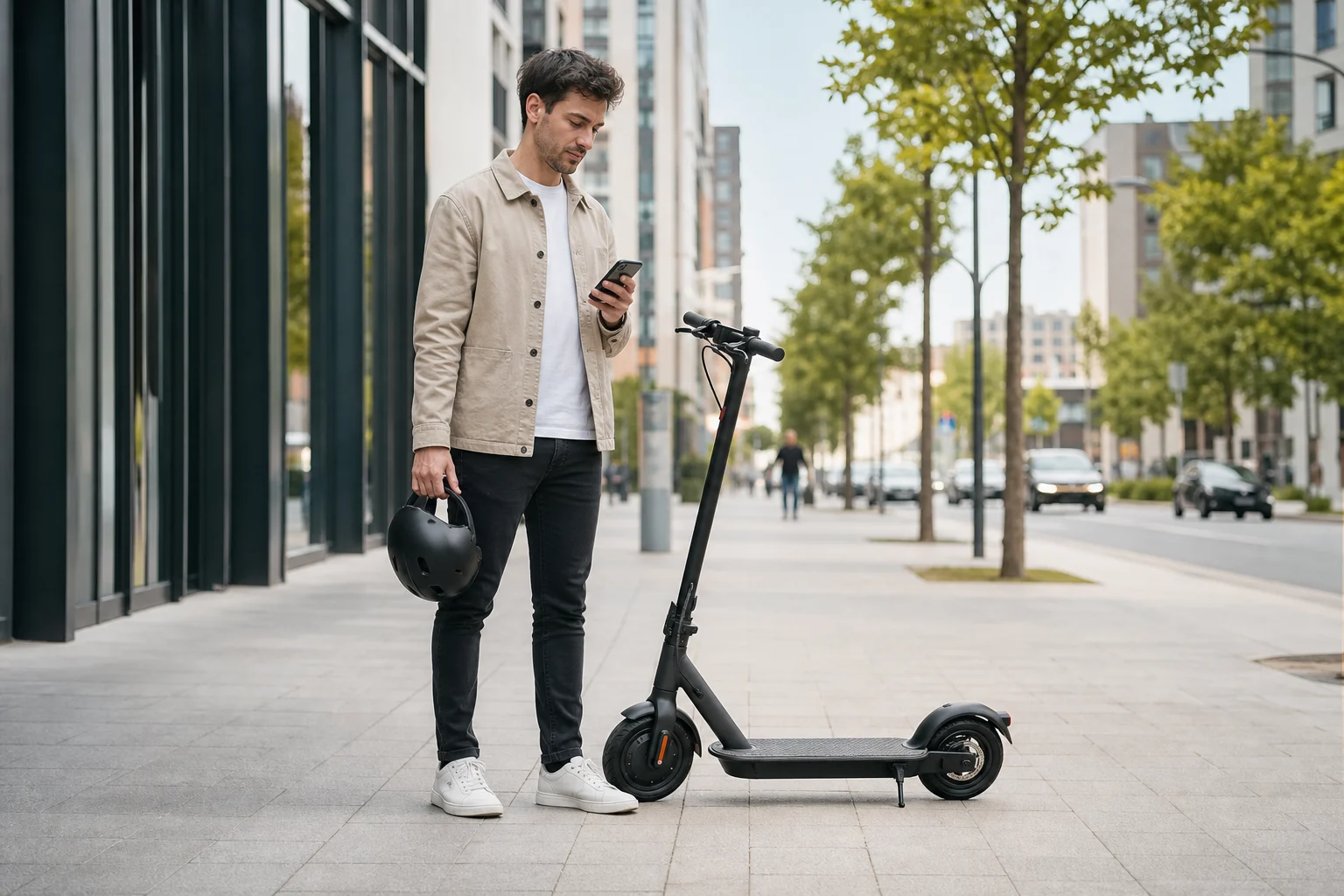
Mandatory third-party liability insurance for light personal vehicles took effect on 2 January 2026. Before arranging cover, check the vehicle’s classification, details, registration and label where applicable, and distinguish the policy from the certificate of circulation and voluntary cover.
The quick answer: insurance is now mandatory, but first you need to know what vehicle you have
The first additional provision of Law 5/2025 established mandatory third-party liability insurance for light personal vehicles (VPLs), the term used by the law for insurance purposes. The DGT’s registration information refers to VMPs required to be registered. It took effect on 2 January 2026. Therefore, anyone using an electric scooter that falls within this category should not simply look for the price of a policy: they should first check that the vehicle is correctly identified and meets the conditions linked to insurance.
The requirement does not mean that every product advertised as an “electric scooter” is subject to the same rules. Legal classification depends on its manufacturing characteristics, especially its weight, maximum design speed, number of seats, propulsion and, where fitted, its seat. A vehicle that falls outside the definition of a VPL may be subject to a different regime; you should not take out VPL insurance assuming that it resolves that situation.
The practical sequence is straightforward: identify the vehicle, confirm which documents it has, complete registration where applicable, obtain the identification label where applicable and take out third-party liability insurance linked to that vehicle. The DGT presents registration in the National Vehicle Register as a prior step to mandatory insurance for VMPs that must be registered.
Section references: Ley 5/2025, de 24 de julio ↗ · Tráfico pone en marcha el Registro de Vehículos Personales Ligeros ↗
- Mandatory insurance covers liability for personal injury and property damage suffered by third parties; it does not automatically cover theft or damage to the scooter itself.
- The certificate of circulation confirms technical certification; it is neither the policy nor the registration certificate.
- The identification label is obtained after registration and must display the assigned identification number or, where applicable, a registration plate.
Which light personal vehicles are covered by the requirement
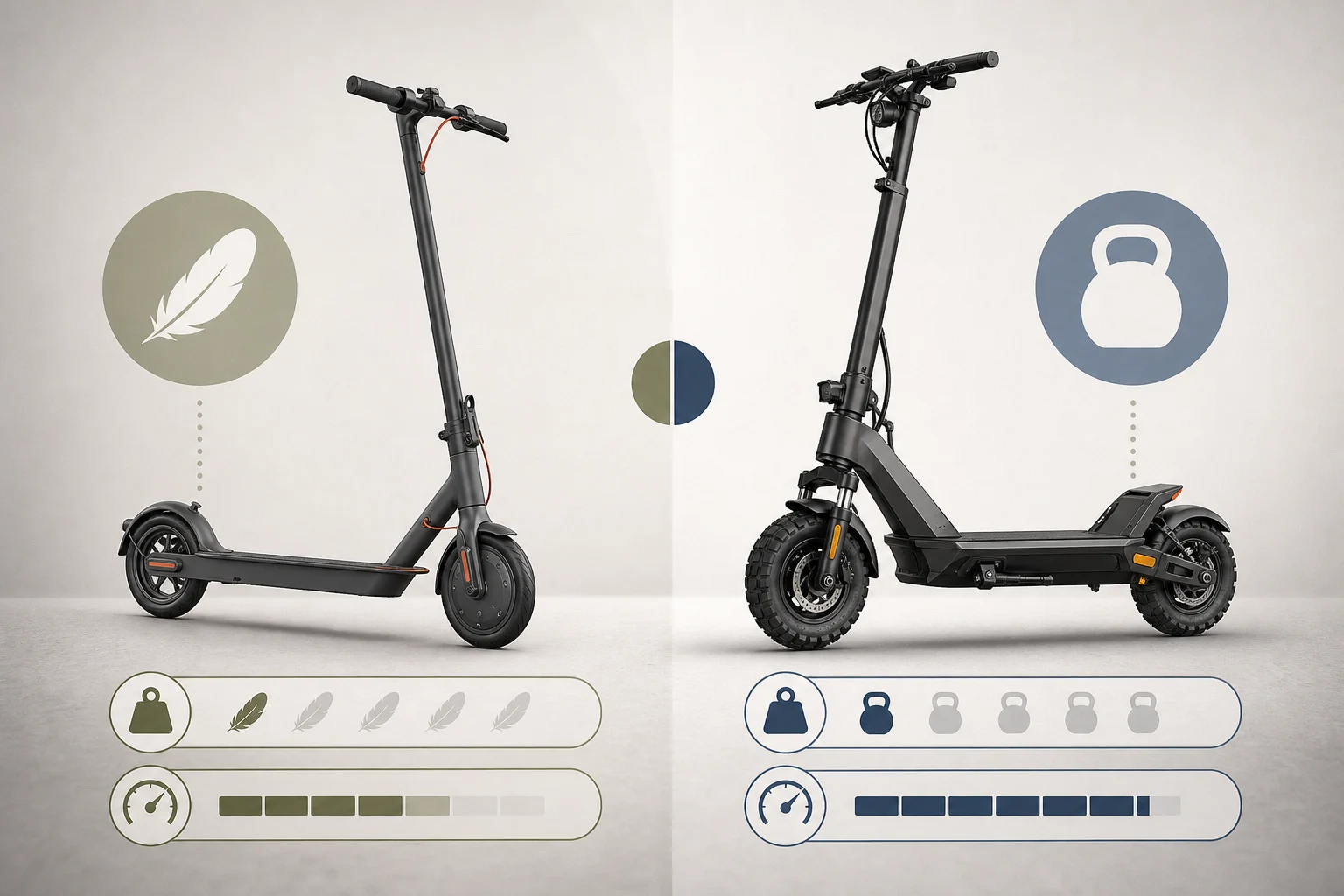
For insurance purposes, Law 5/2025 defines a light personal vehicle as a single-seat vehicle that travels on the ground on one or more wheels and is powered exclusively by electric motors. It also sets out two combinations of weight and maximum design speed.
A VPL may only have a seat or saddle if it has a self-balancing system. This condition is particularly important when assessing models with seats, conversions or used units: adding or changing components may mean that the vehicle no longer matches the configuration in which it was certified or registered.
The law excludes motorised aids intended exclusively for people with disabilities or reduced mobility from this definition. It also excludes electrically assisted pedal cycles that meet the stated legal limits, including a maximum continuous rated power of 250 W. Therefore, appearance or the commercial name alone is not enough.
| Characteristic | Condition for a VPL |
|---|---|
| Seats and propulsion | One seat and exclusively electric propulsion |
| Weight below 25 kg | Maximum design speed between 6 and 25 km/h |
| Weight above 25 kg | Maximum design speed between 6 and 14 km/h |
| Seat or saddle | Only if it has a self-balancing system |
Section references: Ley 5/2025, de 24 de julio ↗
- Under 25 kg: maximum design speed between 6 and 25 km/h.
- Over 25 kg: maximum design speed between 6 and 14 km/h.
- A maximum design speed above 25 km/h, or a weight above 25 kg with a maximum design speed above 14 km/h, may place the vehicle within the law’s definition of a motor vehicle for liability and insurance purposes.
Registration, certificate of circulation and label: three different elements
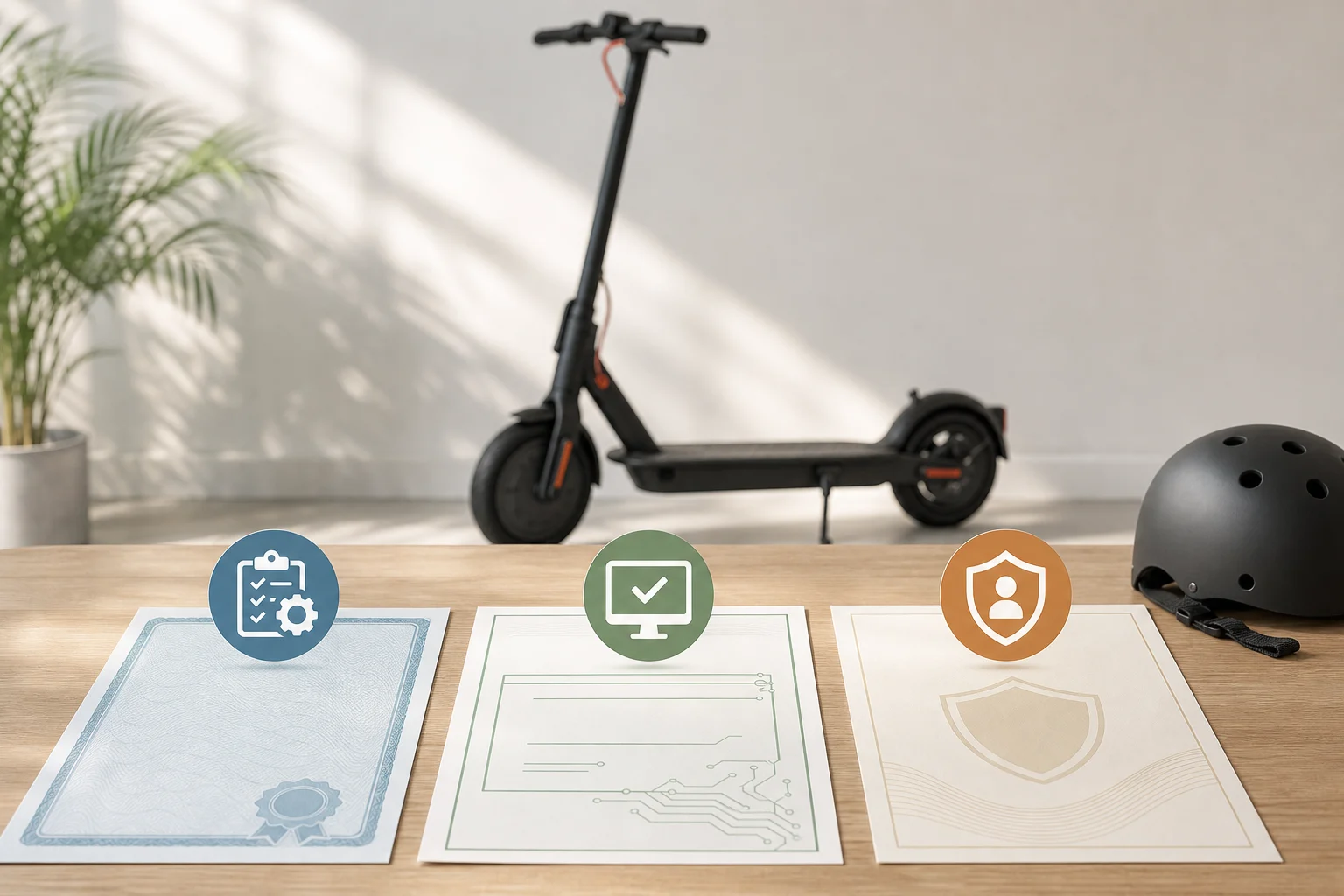
Law 5/2025 links mandatory VPL insurance to three requirements for circulation: having a certificate of circulation, being registered in the DGT Vehicle Register and displaying an identification label. These are complementary checks, not interchangeable documents.
The certificate of circulation confirms the result of the VMP’s technical certification and includes a certification number. The registration certificate, by contrast, identifies the registered holder and assigns the vehicle’s identification number within the register. After registration, the DGT issues this digital certificate and allows an application for the identification label.
For a certified VMP, registration requires the holder’s details, the certificate number and the serial number shown on the marking plate and in the technical specification sheet. It is advisable to check that these details physically match before applying for insurance: an error in the serial number may complicate vehicle identification on a policy or in a claim.
Section references: Ley 5/2025, de 24 de julio ↗ · Real Decreto 52/2026, de 28 de enero, Registro de Vehículos Personales Ligeros ↗ · Tráfico pone en marcha el Registro de Vehículos Personales Ligeros ↗
- Keep a copy of the certificate of circulation and the technical specification sheet.
- Keep the digital registration certificate and check the assigned number before obtaining the label.
- Do not accept a simple photograph from an advert or a seller’s verbal statement as a substitute for documentation.
What mandatory third-party liability cover actually includes
The legal purpose of the insurance is to compensate personal injury and property damage suffered by third parties in accidents involving a light personal vehicle. It is third-party liability cover for each vehicle, not comprehensive scooter insurance or a guarantee that every expense incurred by the user will be covered.
The minimum sums set by law are substantial: €6,450,000 per claim for personal injury and €1,300,000 per claim for property damage. The territorial scope of mandatory insurance is Spain. When comparing offers, these minimums are the starting point; check that the policy states cover meeting the statutory minimums.
There is an important consequence where a user has manipulated the VPL’s technical characteristics. The law allows recovery from a user who has manipulated the VPL’s technical characteristics where that manipulation contributed to the accident or made it worse. Manipulating technical characteristics can have far more serious effects than a warranty issue.
Under the current legal regime, intervention by the Insurance Compensation Consortium for these vehicles is limited to personal injuries requiring medical care or resulting in death. The rules provide for this to be extended by regulation to property damage, but that extension should not be assumed.
Section references: Ley 5/2025, de 24 de julio ↗
- Do not assume that the policy includes theft, own damage, assistance, legal-expenses cover or a deductible.
- Read the general and specific terms to find out which voluntary benefits have been taken out.
- Avoid manipulating the vehicle’s technical characteristics and retain records of repairs or modifications carried out.
How to compare policies without missing key details
The main criterion is not the premium alone. The policy must identify the vehicle to be insured unequivocally and meet the mandatory third-party liability requirement. Give the insurer the exact information from the marking plate, technical specification sheet, certificate of circulation and registration that it requests, and check that it appears correctly in the contractual documents.
Then distinguish the mandatory core from the add-ons. Check whether the policy expressly offers theft cover, assistance or legal-expenses cover. These benefits do not arise from the law on their own, so they must be expressly stated in the policy.
It is also advisable to review exclusions and requirements before paying. Additional cover may exclude certain circumstances, impose limits or apply a deductible. The useful exercise is to compare the specific terms of two equivalent offers, not merely their marketing messages.
Section references: Ley 5/2025, de 24 de julio ↗
- Check that the vehicle, its serial number and, if it already exists, its identification number are correctly recorded.
- Verify that mandatory third-party liability cover and its statutory minimum sums are stated.
- Find the exclusions, deductible and limits of any voluntary cover in writing.
- Keep the policy, payment receipt and the phone number or channel for reporting a claim.
- Ask what procedure the insurer will follow if the holder changes.
Buying second-hand: documentation, transition rules and change of ownership
When buying used, it is advisable to resolve the documentation before completing payment. Ask the seller for the certificate of circulation, technical specification sheet, serial number and marking plate; compare the details with the vehicle itself. If the VMP is already registered, verify the DGT’s current process before purchase and obtain the documentation the DGT currently requires.
There is a transitional regime for uncertified VMPs placed on the market before 22 January 2024: they may continue to be used until 22 January 2027, but they must also be registered and obtain mandatory insurance. To register an uncertified VMP, the DGT states that an invoice, technical specification sheet or photograph of the vehicle may be attached, in addition to the holder’s personal details.
This transitional regime does not make every used scooter a straightforward purchase. If there is no invoice, specification sheet, traceable serial number or sufficient information to determine the vehicle category, clarify the documentation and identification details before buying rather than relying on a policy to address missing documentation.
Section references: Real Decreto 52/2026, de 28 de enero, Registro de Vehículos Personales Ligeros ↗ · Tráfico pone en marcha el Registro de Vehículos Personales Ligeros ↗
- Check the date it was placed on the market if the VMP is uncertified.
- Ask for an invoice or documentary proof of purchase, the technical specification sheet and current photographs of the vehicle.
- Compare the serial number, marking plate and documentation before transferring money.
- Confirm that the vehicle has not been modified in speed, motor, wheels or seat configuration.
- Keep the purchase agreement and copies of all documents received.
Before riding: a final check separate from insurance
The policy does not replace the certificate of circulation, and the technical certificate does not replace registration and the identification label where applicable. Keeping these three checks separate avoids two common mistakes: believing that a certified VMP is automatically insured, or thinking that having insurance alone proves that the vehicle may be used as a VPL.
Section references: Ley 5/2025, de 24 de julio ↗ · Tráfico pone en marcha el Registro de Vehículos Personales Ligeros ↗
- Vehicle correctly classified as a VPL or in the applicable category.
- Certificate of circulation available where applicable.
- Registration completed and digital certificate retained where applicable.
- Identification label obtained and the vehicle displaying the required label where applicable.
- Valid third-party liability insurance for that vehicle.
Since when has insurance been mandatory for electric scooters in Spain?
The first additional provision of Law 5/2025, which creates mandatory third-party liability insurance for light personal vehicles, took effect on 2 January 2026.
Does every electric scooter need this insurance?
This cannot be determined from the commercial name alone. The requirement applies to light personal vehicles as defined by Law 5/2025. You must check the number of seats, propulsion, weight, maximum design speed and, where present, the seat or saddle.
Does the certificate of circulation replace mandatory insurance?
No. The certificate of circulation confirms the VMP’s technical certification. Insurance covers third-party liability for personal injury and property damage suffered by third parties. For VMPs required to be registered, the DGT also requires registration in the Vehicle Register and an identification label.
What minimum amount does mandatory insurance cover?
The statutory minimums are €6,450,000 per claim for personal injury and €1,300,000 per claim for property damage. The territorial scope of mandatory insurance is Spain.
Does mandatory insurance cover theft of my scooter?
It should not be assumed to do so. The confirmed legal requirement is third-party liability cover for personal injury and property damage suffered by third parties. Theft, own damage, assistance, legal-expenses cover and a deductible are covers that must be expressly stated in the policy.
What happens with an uncertified scooter bought before 2024?
If it was placed on the market before 22 January 2024, it may continue to be used until 22 January 2027 under the transitional regime indicated by the DGT. It must nevertheless be registered and obtain mandatory insurance.