How to choose an agricultural tractor: power, weight, transmission and hydraulics for the job
Power is only the starting point. This guide explains how to match tasks, implements and technical specifications to choose a compatible, properly sized agricultural tractor.
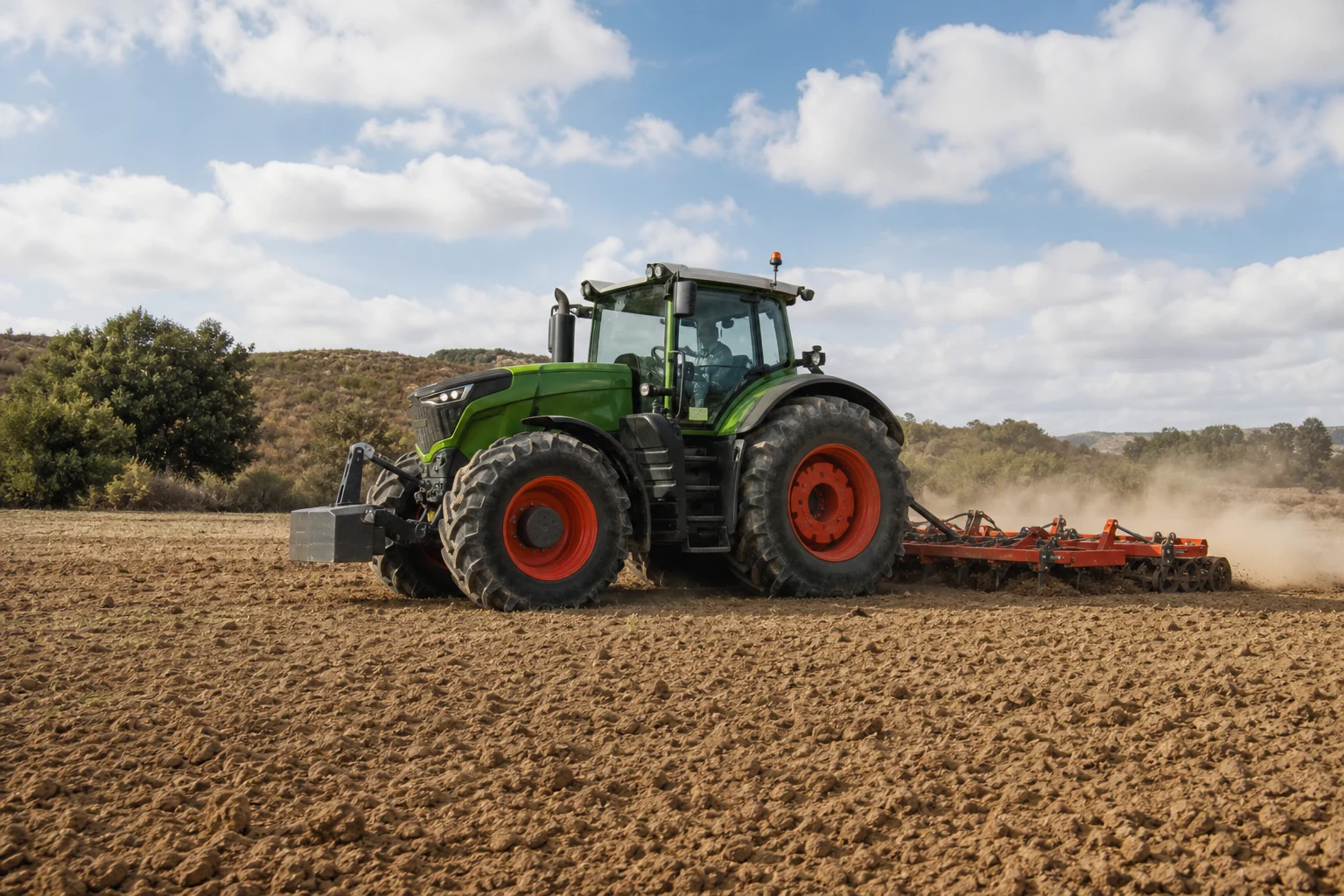
1. The job comes first: do not buy a horsepower figure
Knowing how to choose an agricultural tractor starts by defining the intended work before comparing brands, trims or prices. Two tractors with similar power figures can have different technical specifications for transmission, power take-off (PTO), hydraulic flow, available valves, weight or dimensions.
List the tasks you want to cover and gather the published information for current or planned implements. For each one, note the manufacturer data on PTO, connections, hydraulics, mass, coupling points and dimensions. Then compare them with the specification sheet for the specific tractor configuration.
The buying reference is not a single power figure, but the available information for the selected combination of tasks, implements and configuration. Manufacturer specification sheets show that items such as the PTO, hydraulic flow, transmissions and dimensions can vary between ranges and versions.
- For powered implements: gather the published data on PTO speed and shaft.
- For hydraulics: identify the connections, valves and flow rates shown in the implement documentation.
- For front-mounted work: check the options and preparations published for the tractor model.
- For specialist crops: compare the published dimensions of the selected version with the available measurements on the farm.
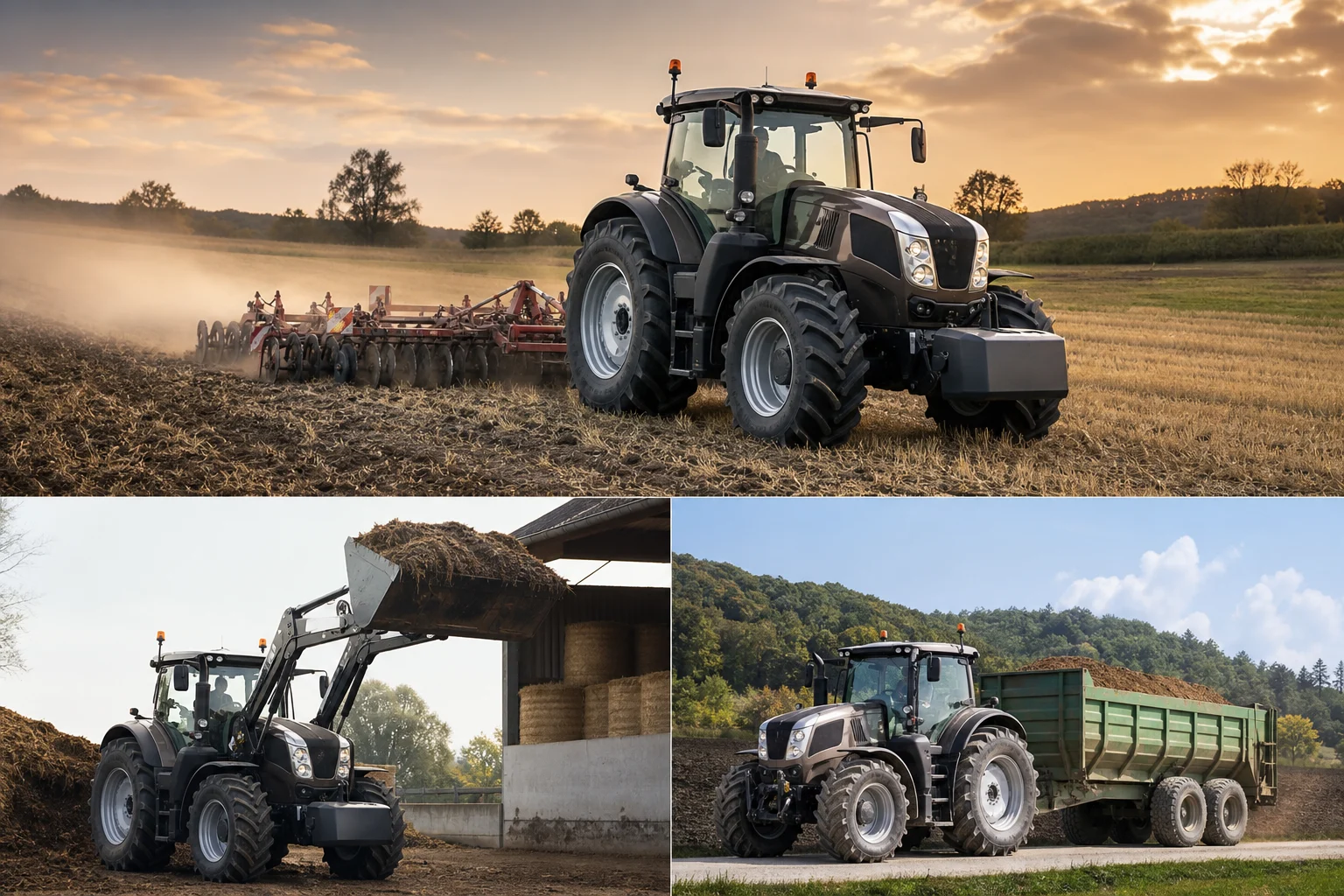
2. Engine power, registration power, torque and PTO: figures that are not equivalent
Engine power should not be considered in isolation. In Spain, Royal Decree 448/2020 establishes that registration power, certified by the ITV inspection card, must be prominently displayed in documentation, information or advertising. The regulation allows power with the management system activated to be added. Before comparing two adverts or quotations, it is advisable to identify which figure is shown and check the ITV card when available.
Manufacturer specification sheets can separate rated power, maximum power and maximum power with power management, as well as maximum torque. For example, the New Holland T5 Dynamic Command/Auto Command sheets identify maximum and rated power figures in accordance with ISO TR14396 and ECE R120, while the Fendt 600 Vario sheet distinguishes rated, maximum and maximum power with ECE R120 power management, as well as maximum torque. These terms help avoid comparing different figures.
The PTO is also described using several data points. An MF 5700 M, for example, states 540 and 1,000 rpm at 2,000 engine rpm, 540 Eco at 1,550 rpm, and 6-spline or 6- and 21-spline shaft configurations. The Fendt 600 Vario states rear PTO speeds of 540, 540E, 1,000 and 1,000E rpm, plus an optional 1,000 rpm front PTO.
Eco modes, speeds, splines and front PTO availability depend on the version. Documentation for the offered unit makes it possible to check which features it includes.
- Compare the same standard and the same type of power across all candidates.
- Distinguish advertised power from registration power certified by the ITV card.
- Check the published PTO speeds, Eco versions and number of splines.
- Check whether a front PTO is listed as an option for the range or version under consideration.
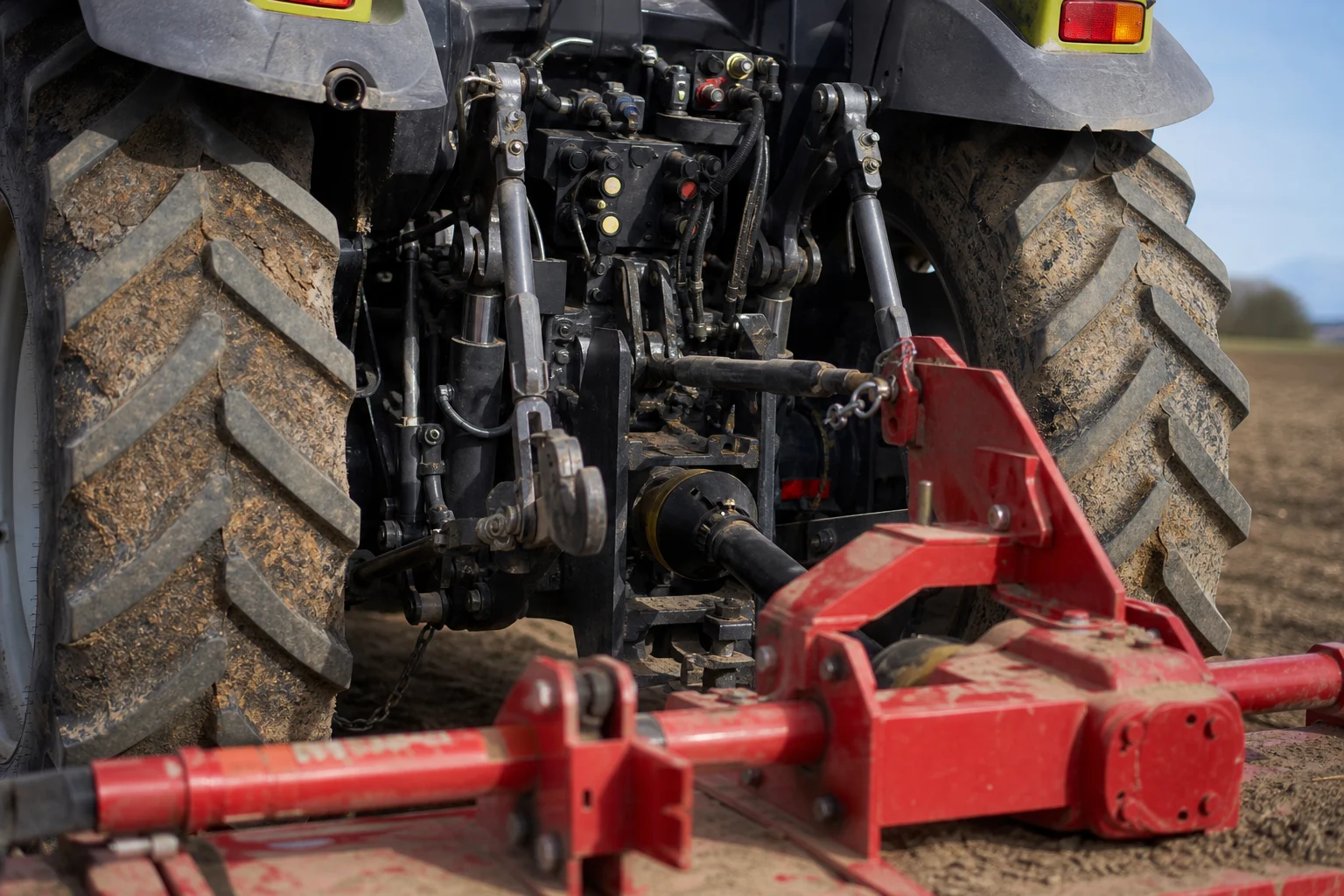
3. Weight, wheelbase, tyres and ballast: how to read published figures
Published weight should be read together with the condition stated by the manufacturer. The Fendt 700 Vario Gen6, for example, defines its unladen weight as that of the basic tractor with cab, full tanks and no driver. This description does not necessarily correspond to a unit with every optional accessory.
It is also advisable to distinguish the weight terms that appear in a specification sheet. The Fendt 600 Vario publishes an operating weight with common accessories, with a stated tolerance, and a maximum permissible gross weight of 13,500 kg. These figures are presented under different manufacturer-defined concepts.
Information on axles, wheels, accessories and front equipment can form part of the configuration. New Holland states that a machined front axle support can be requested for the T4 series to ensure compatibility with special front implements. This statement refers to that series and those special implements.
Dimensions and configuration items should be checked for the specific unit. In particular, specification sheets and dealer information make it possible to verify the available data before choosing a version.
- Check the definition of weight that accompanies every published figure.
- Distinguish between unladen weight, operating weight and maximum permissible gross weight where the sheet lists them.
- Check the published options for front equipment or implements on the model being considered.
- Request information on the exact wheel and accessory configuration offered.
4. Transmission and speeds: compare the specific configuration
A transmission should be compared using the published data for the specific version. The New Holland T5 Dynamic Command/Auto Command range offers an eight-speed semi-powershift transmission and a continuously variable transmission respectively, with a 40 km/h ECO alternative stated in the specification sheet.
Minimum speed can also be expressly listed in technical documentation. The Fendt 700 Vario Gen6 states a 0.02 to 28 km/h range in speed range 1. This type of figure provides different context from the number of gears.
In specialist crops, the transmission and maximum speed can depend on the configuration. New Holland states that the T3F LP can be equipped with a 12x12 Synchro Shuttle transmission and reach 30 km/h when configured with the ST front axle, available only on the T3LP series.
Commercial names do not replace checking the technical specification sheet. The transmission, ECO option, front axle and published speed must correspond to the unit being compared.
- Note the speed range and maximum speed listed for the specific version.
- Check whether the 40 km/h ECO alternative is stated as optional.
- Review the conditions linked to certain speeds or axle configurations.
- Check manufacturer or dealer documentation to confirm the equipment offered.
5. Hydraulics and lift: flow, outlets and capacity in the technical specification sheet
Technical specification sheets can separate flow rates intended for different services. The Fendt 600 Vario states a 152 l/min variable-flow LS pump and a 205 l/min option. The MF 5700 M distinguishes 32 l/min for steering, brakes, differential lock and four-wheel drive, 58 l/min for valves and lift, and a combination that delivers 100 l/min to the valves for work such as using a front loader.
Therefore, when comparing models, it is advisable to identify which service each flow figure refers to. A pump's total figure and the flow stated for valves or the lift can appear separately in the documentation.
Lift capacity should also be read with its measurement point when the manufacturer specifies it. The New Holland T7 SWB states 6,616 kg throughout the entire lift range at 610 mm behind the ball ends. The distance is part of the published figure.
The number and location of hydraulic outlets can also vary. The New Holland T5 Utility can have front and mid-mounted outlets, in addition to rear remote valves. These options must be checked in the selected configuration.
- Distinguish total pump flow from flows allocated to specific services where the specification sheet separates them.
- Review the hydraulic pump options published for each range.
- Compare lift capacity together with the stated measurement point.
- Check whether front, mid-mounted or rear outlets are available on the version considered.
6. Cab, dimensions and a documented purchase: the final check
Operating dimensions complete the comparison between versions. Height, width, length and turning radius should be checked in the documentation available for the selected configuration. The New Holland T3F LP example shows that a maximum speed can depend on a specific front axle.
For long working days, catalogue information and the display unit can be used to check the layout of controls, PTO and hydraulic components, and equipment listed for the version under consideration. These features can vary according to configuration.
It can be useful to keep a dated quotation identifying the model, version, registration power, transmission, tyres, PTO, hydraulic pump, valves, lifts and selected front options. The MF 5M specification sheet warns that specification data can change and refers readers to the dealer or distributor.
The tractor's technical documentation, the ITV card where applicable, and the available implement documentation make it possible to compare published data with the final configuration communicated by the seller.
- Request the technical specification sheet and data for the exact configuration offered.
- Compare registration power with the ITV card when available.
- Keep the details of the options included in the dated quotation.
- Ask the dealer or distributor about any specification changes.
- Verify the items stated for the unit ultimately offered.
What power figure should I look at when choosing an agricultural tractor?
In Spain, registration power must be prominently shown in documentation, information or advertising and is certified by the ITV card. When comparing specification sheets, distinguish whether the figure is rated, maximum or maximum with power management.
Why is it not enough to know hydraulic litres per minute?
Because specification sheets can separate total pump flow from flows intended for valves, the lift, steering or other services. The MF 5700 M and Fendt 600 Vario show this difference in their published data.
How should I compare rear lift capacity?
Read the figure together with its measurement point when the manufacturer publishes it. For example, the New Holland T7 SWB states 6,616 kg throughout the entire lift range at 610 mm behind the ball ends.
What should I check if I am considering front equipment?
Check the specific options published for the model and configuration offered. In the New Holland T4 series, for example, a machined front axle support can be requested for special front implements.