4x2, 6x2 or 6x4 truck: differences and how to choose
What 4x2, 6x2 and 6x4 configurations indicate, what kinds of work they may suit, and which details to check in the specifications before requesting a quote.

Key points
A 4x2 has one driven axle, while 6x2 and 6x4 identify other driven-axle configurations whose details cannot be established from the label alone. Compare the specifications against the route, terrain and load.
Quick answer: the job matters, not the code alone
A 4x2 has one driven axle. The 6x2 and 6x4 labels identify other driven-axle configurations, but do not specify every detail of a particular vehicle.
Compare the options according to the application, load and route. For a 6x2, the specifications should state the location and type of non-driven axle. For a 6x4, check the tandem layout and the equipment fitted to that version.
Start your choice with the bodywork or fifth wheel, load, route, topography and road conditions. You can explore the trucks section and our guide to choosing and buying for more information.
Section references: How to determine the right axle configuration for your truck ↗
How to read 4x2, 6x2 and 6x4
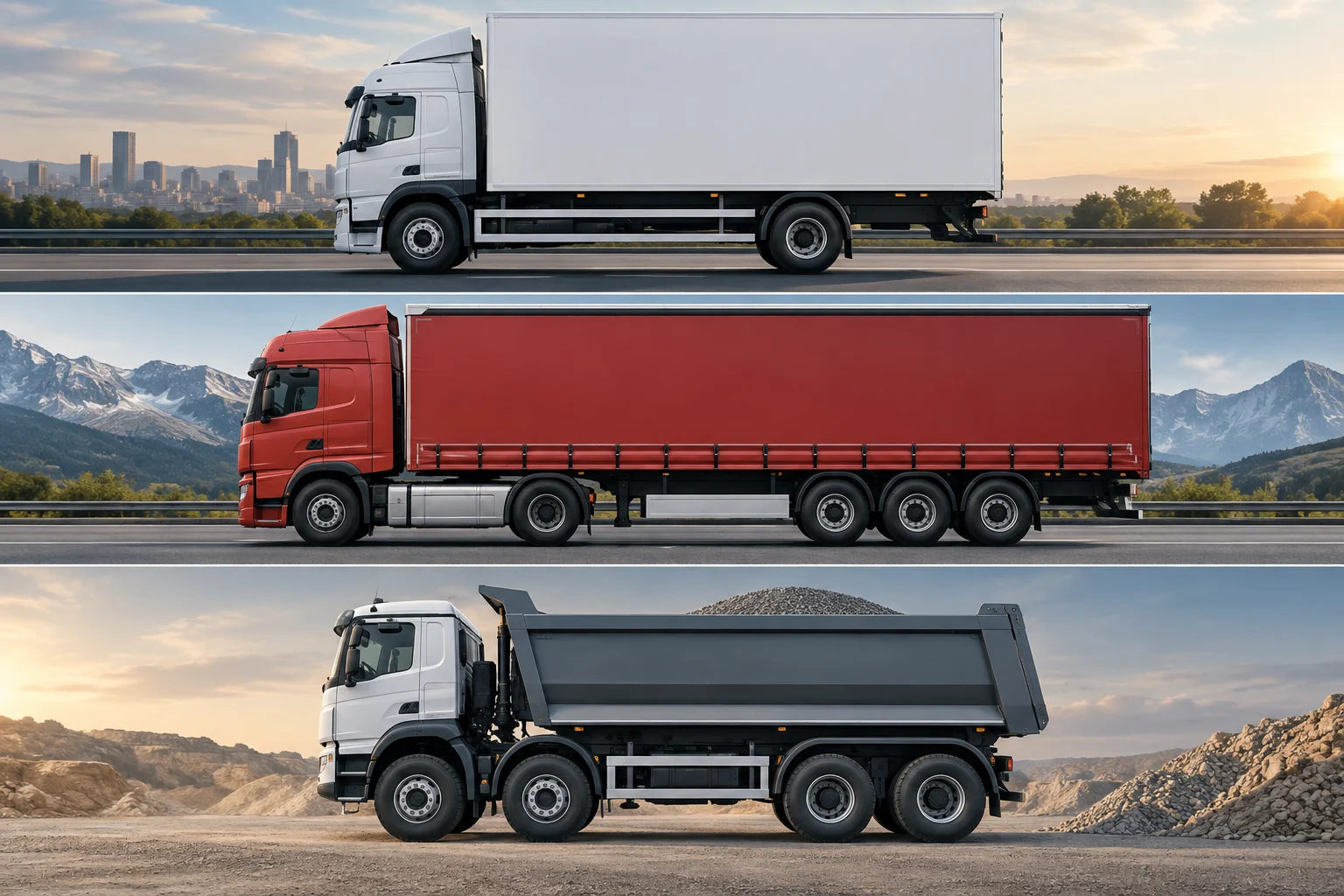
The nomenclature identifies the driven-axle layout. Volvo confirms that a 4x2 has one driven axle and describes configurations with different numbers of driven axles; for details of a 6x2 or 6x4, check the specifications for the exact version.
The diagrams below are conceptual. They do not represent the dimensions, weight distribution or every detail of a specific version.
Section references: How to determine the right axle configuration for your truck ↗ · Especificaciones de CrewCab ↗
- 4x2: Volvo confirms that it has one driven axle.
- 6x2: check the location and function of the non-driven axle.
- 6x4: check the tandem layout and the equipment listed in the specifications.
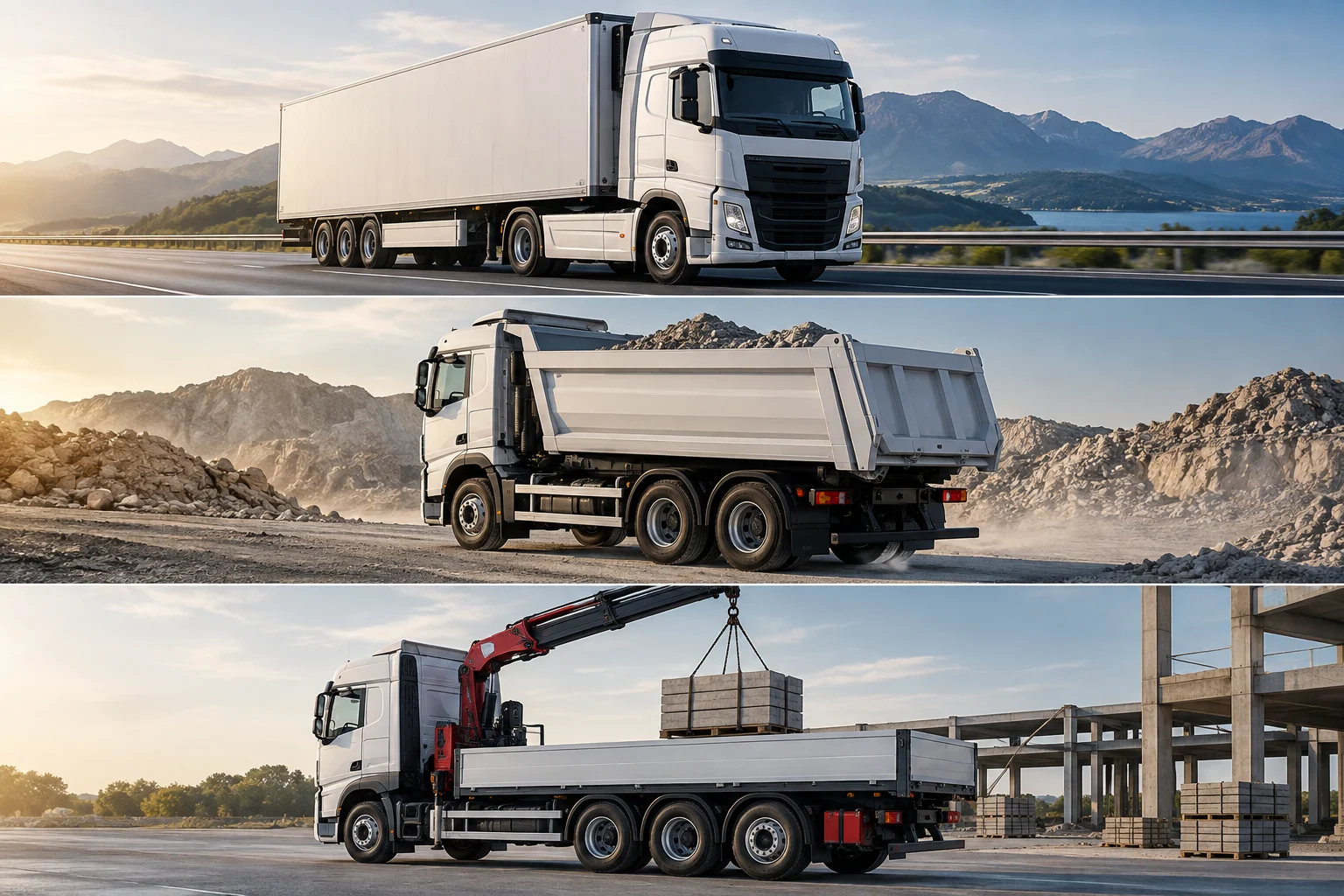
4x2: a layout with one driven axle
A 4x2 has one driven axle. Its suitability depends on the application and the exact specification; do not assume that it will always be the lightest, cheapest or most efficient option. Those conclusions require comparing specific vehicles.
As an example of the range of applications, Volvo offers the FE in several configurations, including 4x2, and lists uses such as delivery, urban construction, waste collection, recycling and municipal services. This list does not automatically assign an axle type to each job; it is a reminder to check the application against the available version.
For the vehicle being quoted, check the axle or bogie loads stated in its specifications, along with the components fitted to the version configured with its bodywork or equipment. If the work involves uneven ground or difficult access, also ask about the drivetrain and ground clearance: the 4x2 layout alone does not specify those components.
Section references: Especificaciones del Volvo FM ↗ · Volvo FE ↗
- It may be a candidate when one driven axle is sufficient for the intended operation.
- Check the axle or bogie loads for the completed vehicle, not just figures for the model in general.
- Confirm that the bodywork, equipment and route conditions are compatible with the version quoted.
6x2: the third axle can make a big difference to the vehicle
The 6x2 label does not, by itself, describe every detail of the configuration. Variants may differ in axle layout and in the characteristics of the non-driven axle.
The steering of the auxiliary axle may be worth considering for jobs that require precise manoeuvring. In a 2022 announcement, DAF presented a steered third axle for 6x2 rigids and mentioned applications such as heavy construction and agricultural materials, waste collection and liquid transport. These examples describe uses for that solution; they do not guarantee that any 6x2 will be suitable for them.
When requesting a quote, specify the axle position and whether it is fixed, steered or self-steering. Also confirm how the configuration affects the bodywork and manoeuvring. Options vary by range: Volvo and Scania specifications show that the general designation can cover different variants.
Section references: Especificaciones del Volvo FM ↗ · Especificaciones del Volvo FE ↗ · Especificaciones de CrewCab ↗ · Nuevo tercer eje direccional DAF para una eficiencia aún mayor ↗
- Is the non-driven axle ahead of or behind the driven axle?
- Is it fixed, steered or self-steering?
- What axle or bogie loads and chassis height are stated for the exact version?
6x4: check the tandem configuration
Volvo notes that some 6x4 configurations can lift one of the tandem's rear driven axles in certain conditions, such as when driving unladen. Ask the manufacturer to identify the system available and explain how it works on the vehicle being quoted.
The configuration alone does not specify the reduction type, chassis height or other vehicle characteristics. Volvo states that hub reduction can provide greater ground clearance and durability, and may be suitable for difficult terrain such as construction or mining sites. This is a specific feature to check in the specifications, not an automatic attribute of every 6x4.
Section references: How to determine the right axle configuration for your truck ↗ · Especificaciones del Volvo FM ↗
- Consider which sections, slopes or surfaces affect your choice.
- Check the tandem layout, reduction, ground clearance and suspension in the specifications.
- Do not infer payload or fuel consumption from the 6x4 code.
Comparison and checks before requesting a quote
The table summarises what to check; it is not a ranking of capacity or cost. Axle or bogie loads and equipment should be checked in the documents for the specific configuration intended for the Spanish market.
| Configuration | What it identifies or what to check | What to consider for the job | What to check in the specifications |
|---|---|---|---|
| 4x2 | Volvo confirms that it has one driven axle | Whether the configuration suits the operation and route | Axle or bogie loads, bodywork and components |
| 6x2 | The specific layout must be checked | Manoeuvring and the characteristics of the non-driven axle | Location and type of non-driven axle, axle or bogie loads |
| 6x4 | The specific layout must be checked | Route conditions and the equipment required | Tandem, reduction, chassis height and version specifications |
Section references: How to determine the right axle configuration for your truck ↗ · Especificaciones del Volvo FM ↗
- 1. Define the actual work: rigid truck or tractor unit, bodywork or fifth wheel, type of load and installed equipment.
- 2. Describe the route: roads, urban areas, gradients, access, road surface and frequency of manoeuvres.
- 3. Request the specifications for the exact version and check the axle or bogie loads.
- 4. For a 6x2, specify the axle layout, the location and type of non-driven axle, and whether it steers.
- 5. For a 6x4, confirm the tandem components, reduction, chassis height and any axle-lifting function.
- 6. Ask for the quote to identify the full configuration; do not compare vehicles using only the axle code.
What does the 6x2 label indicate?
It identifies a driven-axle configuration, but the label alone does not specify the layout or characteristics of the non-driven axle. Check the specifications for the version.
Can a 6x4 always carry more payload than a 4x2?
You cannot determine that from the nomenclature alone. Check the axle or bogie loads and payload in the specifications and documentation for the vehicle.
What should I check especially carefully on a 6x2?
The axle layout, the location of the non-driven axle, and whether it is fixed, steered or self-steering.