Mid-drive or hub motor: how to choose an electric bike
Motor location matters, but it is not the only deciding factor. Learn what to check in the specifications and how to match your choice to your hills, pace and maintenance needs.
Key points
To choose between a mid-drive, front-hub or rear-hub motor, compare its location and what the specifications say about assistance, gears, weight, range and servicing. The motor’s position alone does not determine which option is best for every use.
The short answer: choose based on your route and the whole system
There is no motor location that is best on every electric bike. If your route is flat and steady, you can compare mid-drive and hub-motor models by looking at assistance response, weight and available servicing. If you regularly ride hills, start by checking the gears, the stated torque and the type of sensor; these details are more useful than deciding on motor position alone.
Also distinguish between a front hub and a rear hub: they are different configurations, with the motor in different parts of the bike. Before buying, compare complete bikes with similar prices and equipment, not motors in isolation.
Section references: Bafang front, mid or rear motor guide ↗ · Bosch range factors ↗
- For hilly routes: look for a suitable gear range and check how assistance is specified.
- For flat routes: compare pedalling comfort, total weight and ease of charging based on your needs.
- If you prioritise maintenance: confirm who services the specific system and what spare parts are available.

Mid-drive, front hub and rear hub: how to identify them
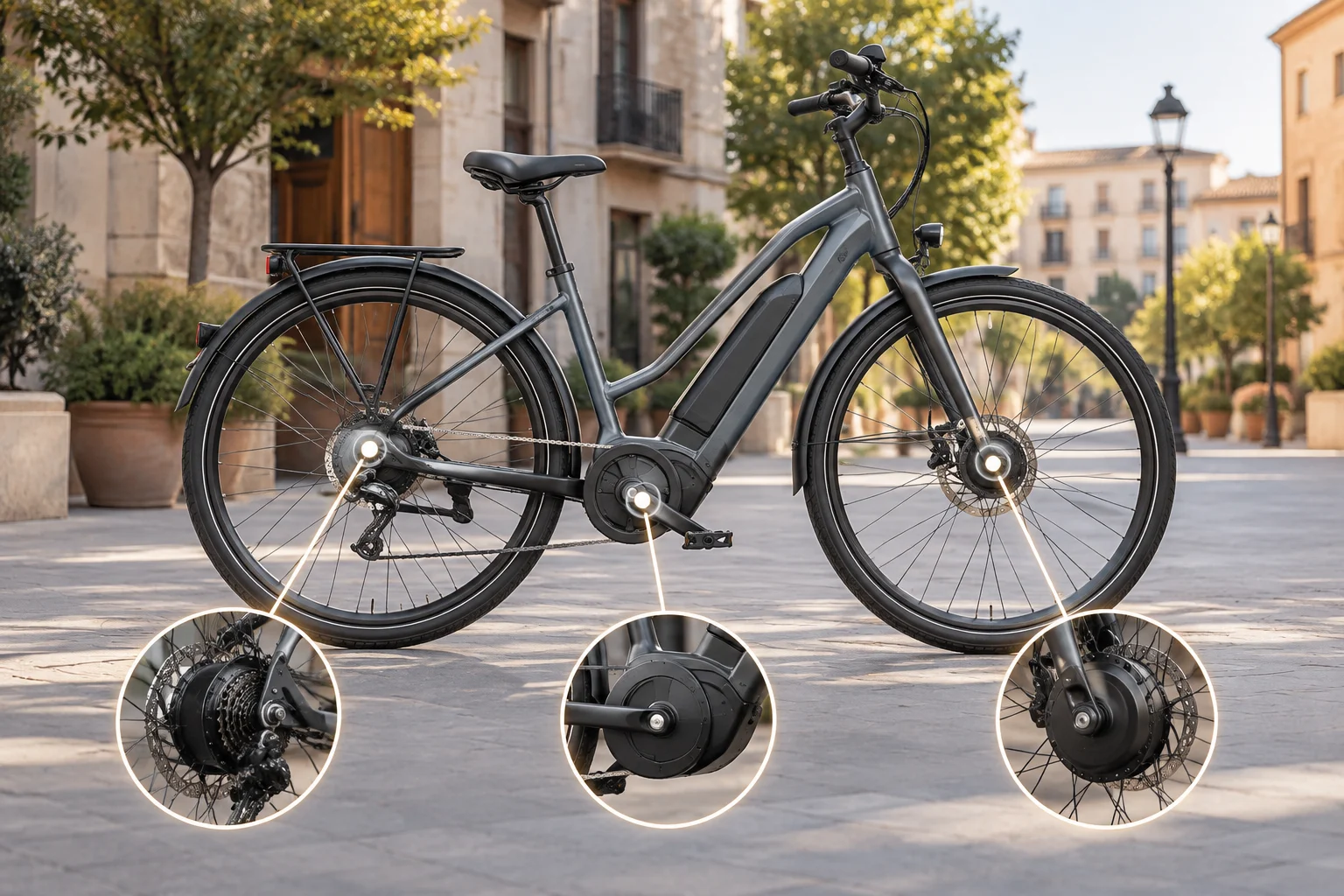
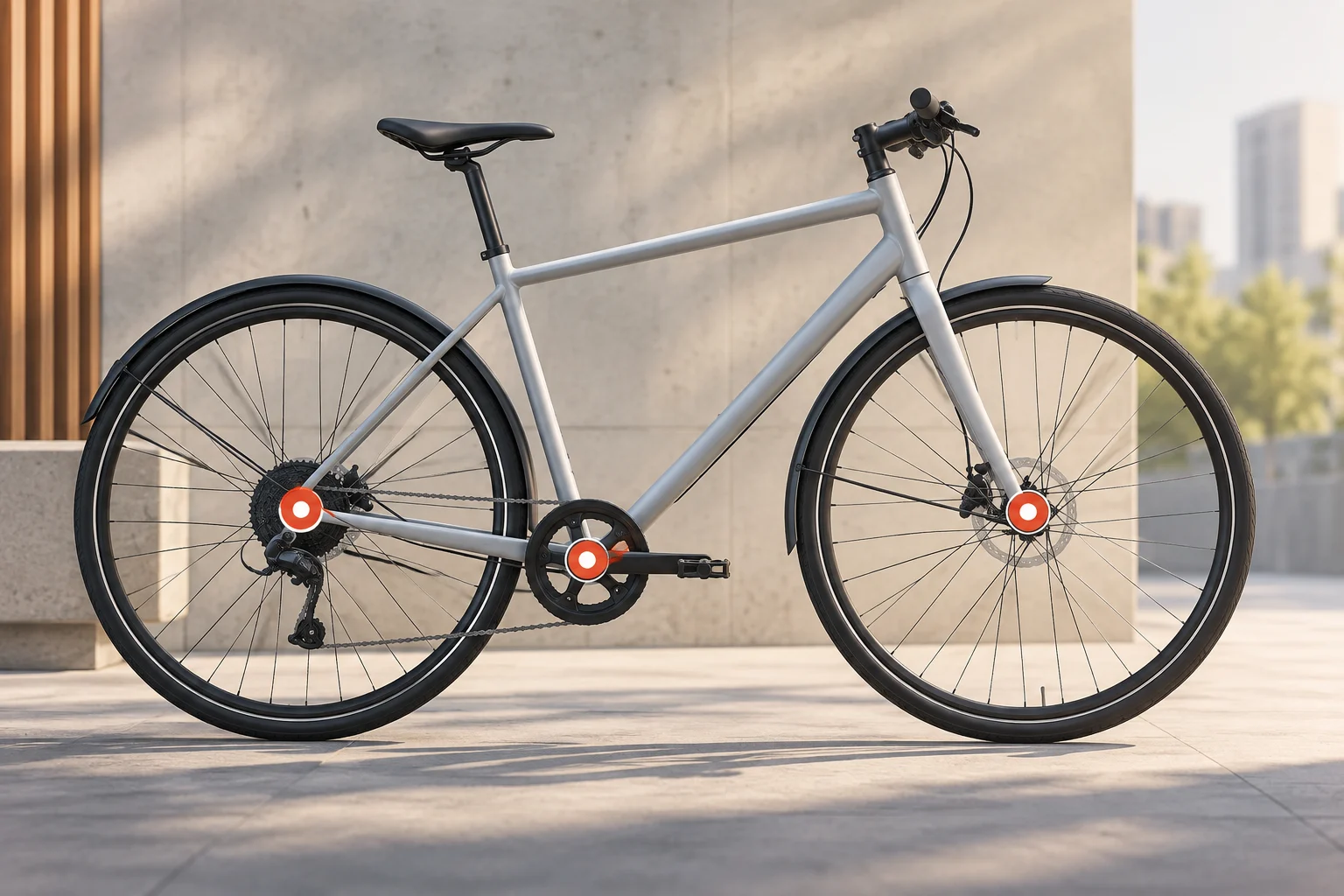
A mid-drive motor sits by the bottom bracket, where the cranks join. Shimano’s technical documentation describes it as a drive unit installed at that point. A hub motor, by contrast, is built into the centre of a wheel: either the front or rear wheel. In Bafang’s identification documentation, the FM and RM codes refer to a front and rear motor, respectively.
Motor location helps you identify the different layouts, but it is not enough to determine which bike will be lighter or how it will handle. If weight distribution matters to you, compare the specific model and try it if you can; the available information does not support saying that one location is always better for a particular type of route.
Do not rely only on a photograph or marketing phrases such as “integrated motor”. Location helps identify the layout, but does not on its own reveal torque, sensors, total weight or warranty terms.
| Layout | Where the motor is and where its mass is concentrated | What you can check when comparing |
|---|---|---|
| Mid-drive | By the bottom bracket | Total weight; check how the specific model handles |
| Front hub | In the centre of the front wheel | Total weight; check how the specific model handles |
| Rear hub | In the centre of the rear wheel | Total weight; check how the specific model handles |
Section references: Bafang product identification guide ↗ · Bafang front, mid or rear motor guide ↗ · Shimano drive unit installation diagram ↗
Hills and assistance feel: check sensors, torque and gears
Published maximum torque is useful for comparing specific units, not for establishing a universal figure for all mid-drive or hub motors. Shimano, for example, lists it as a feature of each individual drive unit. Note the figure for each bike and check that the specifications you compare refer to precise models and versions.
The sensor also affects how assistance is managed. A torque sensor measures the force applied to the pedals; a cadence sensor measures how fast the cranks are turning. Some specifications list these components separately, so do not assume what a bike has based on its motor layout alone.
On a hill, also check the available gears and how they are recommended for use. Bosch advises using a low gear when starting and climbing, and changing gears according to the terrain and speed. At the shop, if an authorised test ride is available, assess starting from a standstill and riding up a hill representative of your route; a torque figure on its own is no substitute for this check.
Section references: Bosch torque and cadence sensors ↗ · Shimano 2025 e-bike product documentation ↗ · Bosch range factors ↗
- Look for the maximum torque in N·m and the exact name of the drive unit in the specifications.
- Check whether it lists a torque sensor, cadence sensor or other sensors, and ask how each assistance level feels.
- Review the gear range and make sure you can start and pedal in a gear suitable for your hills.
Weight and handling: do not infer total weight from the motor
The weight of a drive unit is not the same as the weight of the complete bike. Compare the stated total weight of equivalent models and ask whether it includes the battery and accessories. If you can examine the bike, move it at low speed in a permitted space and check whether you can handle it when carrying it upstairs or putting it in its usual storage spot.
Section references: Bafang front, mid or rear motor guide ↗ · Shimano 2025 e-bike product documentation ↗ · Bosch range factors ↗
- Note the weight of the complete bike and check which items are included in that figure.
- Consider where you will keep or carry the bike: stairs, a lift, parking or a bike rack.
- Whenever possible, try comparable models with the battery installed and a similar riding position.
Maintenance, warranty and servicing: the specific system matters
There is no basis for claiming that all hub motors need less maintenance than all mid-drive motors, or vice versa. The drivetrain needs care on any bike fitted with one: Shimano recommends cleaning and lubricating the chain, and warns that wear can accelerate wear on other components. When parts need replacing depends on use, terrain and riding style.
For work on a drive unit, the service network can make a difference. Bosch says that certain maintenance work and minor repairs on its unit can be carried out by specialist dealers. These are conditions to check for the specific system and seller, not to assume apply to every brand.
Before paying, ask for the warranty terms that apply to the bike and its electrical components in writing, where repairs are handled and what spare parts can be obtained. Bosch says that, as a principle, it aims to keep spare parts available for at least six years from the last delivery to the bicycle manufacturer; always check what this policy covers for the system you plan to buy.
Section references: Bosch spare parts and repairs ↗ · Shimano chain service tips ↗
- Ask which workshop services the drive unit and whether you need to use an authorised dealer.
- Clarify what the warranty covers and which actions could affect it.
- Check parts availability for the exact system and keep your purchase and maintenance records.
Range and a pre-purchase checklist
Do not choose based on a single range figure. Bosch lists temperature, pedalling cadence, stops and starts, gear changes, tyre pressure, and the weight of the bike and luggage among the factors that affect range. That is why two different routes can produce different results, even with an identical battery.
Compare the stated range and ask what conditions were used to calculate it. Then compare those figures with your actual journey, including detours and the reserve you want to keep before recharging.
Section references: Bosch range factors ↗
- Confirm the motor location and the exact name of the drive unit.
- Note the stated torque, sensors and gears; if an authorised test ride is available, assess the assistance.
- Check the total weight and whether the figure includes the battery and accessories.
- Review the battery capacity, estimated range and the conditions used to calculate it.
- Ask which workshop services the system, what the warranty covers and what spare parts are available.