Travelling by car with children: how to organise the journey
A practical guide to deciding what to keep within reach, organising the boot and planning stops on a family car journey.
Key points
Pack separately what you will need during breaks and what can stay in the boot, so you do not have to unpack at every stop. Plan realistic breaks too, and tailor your list to the children’s needs and ages.
Before you set off: decide what you will need and when
Good organisation starts before you open the boot. Check the route, approximate journey time and road conditions; then locate rest areas and service stations. The DGT recommends planning your route and allowing for possible stops, especially when travelling with children. There is no need to turn the timetable into a rigid schedule: it is there to help you know where you could stop and what to have ready.
Make a short list of what each passenger needs and check that it suits the journey and your plans. If the route, weather or journey time changes, review the list before loading the car.
Also consider each child’s individual needs: food, hygiene, warm clothing or entertainment, as appropriate for your family. This individual check helps you avoid relying on a generic list. Guidance on child restraint systems should be consulted separately; it is not replaced by an organisation guide.
Section references: Consejos antes de viajar ↗ · Consejos para viajar con niños ↗
- Check the route and identify suitable places to rest.
- Check each passenger’s individual needs.
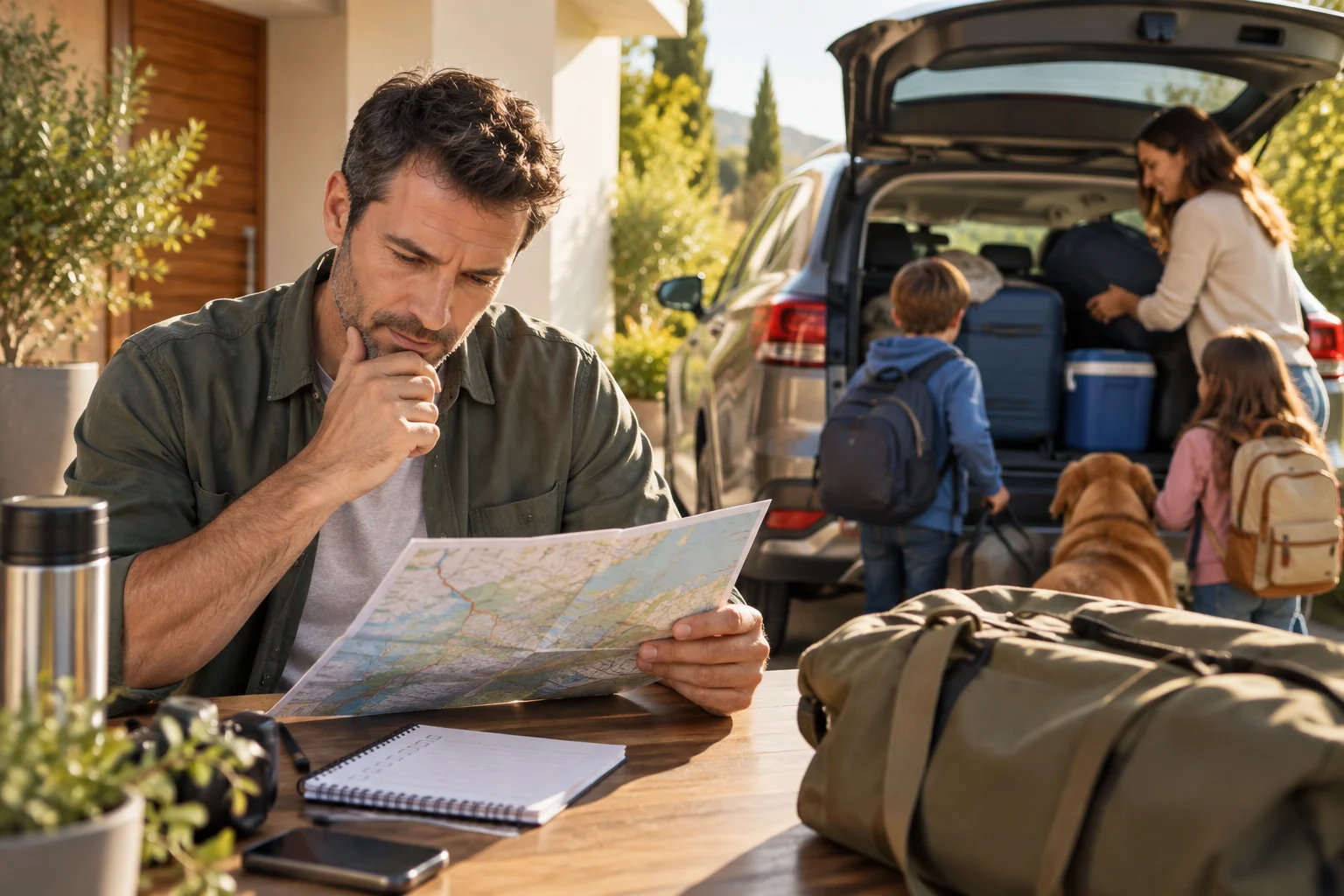
On the journey: keep luggage in the boot
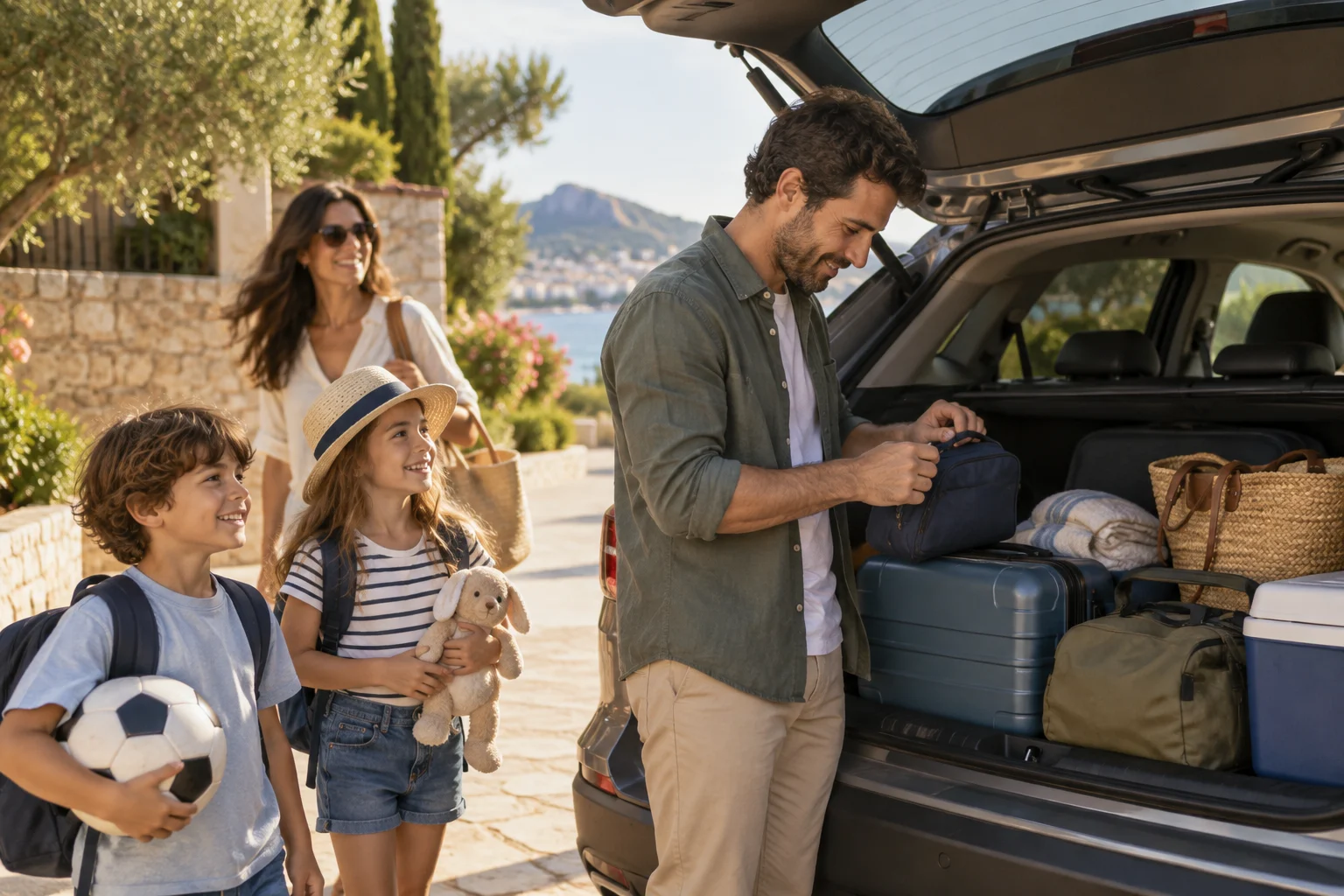
The DGT advises carrying luggage in the boot and avoiding loose objects in the passenger compartment. For children, you could plan to bring water, a light snack and entertainment such as games, stories, songs, books or drawing pads; these are recommendations the DGT has shared based on advice from AESVi. Keep these items with the rest of the luggage and get them out during a stop.
Regulations require loads to be positioned and, where necessary, secured so that they cannot fall, move dangerously, compromise the vehicle’s stability or interfere with driving or passengers. The driver must retain the attention and field of vision needed to drive.
Keep items stowed while the car is moving. If someone needs something, it is safer to wait until you have stopped in a suitable place before accessing luggage.
Section references: Reglamento General de Circulación, artículos 14 y 18 ↗ · Equipaje: en su sitio y bien sujeto ↗ · Consejos para viajar con niños ↗ · Viajar de una forma segura con los más pequeños ↗
- Plan to bring water, a light snack and entertainment for the children.
- Choose activities that are suitable for each child.
- Only access luggage when the car is stopped.
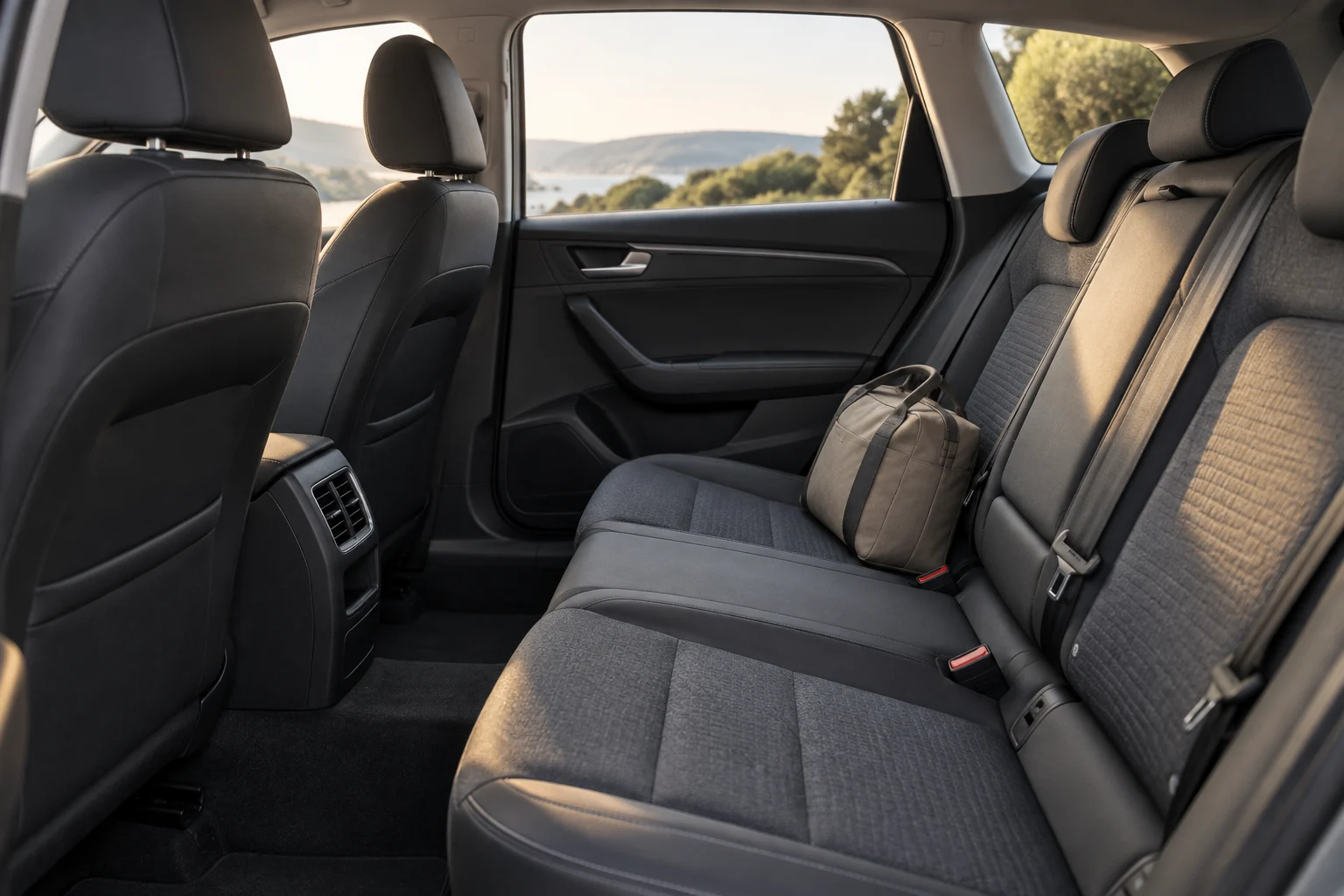
The boot: separate luggage from what you will use during breaks
Put the bag containing items you will use during breaks somewhere accessible in the boot, separate from the luggage for your stay. That way, you will not have to open several suitcases every time you stop.
When packing this bag, prioritise what the children are likely to need during a break and decide what to bring before you set off.
| Type of item | Where to keep it | Practical approach |
|---|---|---|
| Water, a light snack and items for a break | An accessible bag in the boot | Take it out when the car is stopped |
| Books, games or a drawing pad | With the luggage, in a bag that is accessible during a stop | Choose options that suit each child |
| Luggage for your stay | In the boot, separate from the bag for stops | Avoid having to open it at every rest break |
Section references: Reglamento General de Circulación, artículos 14 y 18 ↗ · Equipaje: en su sitio y bien sujeto ↗
Plan realistic stops and allow for changes of pace
Plan breaks as part of the journey, rather than waiting until someone needs to stop. In its summer 2026 advice, the DGT recommends stopping every 200 kilometres or every two hours. Treat this as a guide for planning your journey, not a timetable to follow regardless of the circumstances.
At each stop, children can stretch their legs, walk around or use the toilet. Before setting off, check what facilities are available at the planned rest areas and put anything you would like to have there in your bag for stops. If the journey takes longer, there are traffic jams or your family’s needs change, adapt the plan and find a suitable place to stop; do not try to deal with it by handling objects while driving.
Avoid planning a series of stretches that leave you too little time. Allow extra time to park and attend to passengers. If a stop is not practical, use another safe option available along the route.
Section references: Ocho consejos para un buen viaje este verano ↗ · Consejos antes de viajar ↗ · Consejos para viajar con niños ↗
- Identify rest areas and alternatives before setting off.
- Use breaks to let the children walk around or go to the toilet.
- Adapt your plan to the journey conditions and the passengers.
Adapt your plans to the children’s ages, without relying on a rigid list
Not every family needs the same bag. With babies or young children, some items kept for stops may depend on their usual feeding and hygiene routines. Rather than packing endless items “just in case”, write down what you would need on a typical journey and what could stay in the boot until a stop.
For children who enjoy books, songs or drawing activities, prepare an option they can use during the journey without leaving objects loose. The DGT has recommended games, stories, songs and drawing pads. Choose what is suitable for each child and put it away when it is not in use.
For older children and teenagers, agree in advance what they will bring and where it will be kept. Age alone does not determine what to pack: the planned journey time, personal needs and proximity of a break all matter. In every case, avoid making passengers ask for or reach for items that could distract the driver. Follow the relevant instructions for installing and using child restraint systems; this guide does not replace them.
Section references: Consejos para viajar con niños ↗ · Viajar de una forma segura con los más pequeños ↗
- Young children: prioritise the personal items your family actually uses as part of its routines.
- Children who enjoy books or drawing: choose simple entertainment and put it away when finished.
- Older children and teenagers: agree before setting off what will be accessible at stops and what will stay stowed.
How often should you stop?
In its summer 2026 advice, the DGT recommends stopping every 200 kilometres or every two hours. This is a guideline for that context; adjust the interval to the passengers’ needs and the journey conditions.
Can I get something from the luggage while driving?
It is safer to wait until you have stopped in a suitable place before accessing luggage, so the driver can maintain attention and sufficient visibility.