Windscreen wiper blades: how to spot wear and choose compatible replacements
Streaks, juddering or noise may mean your wiper blades are no longer clearing the screen properly. Learn how to check their condition and confirm the size, fitting and vehicle application before buying replacements.
Key points
To choose compatible wiper blades, check the vehicle manual or a product catalogue for the correct application, position, length and fitting. Water marks, juddering and noise can indicate wear, but rule out dirt and washer-system problems too.
What to check before buying
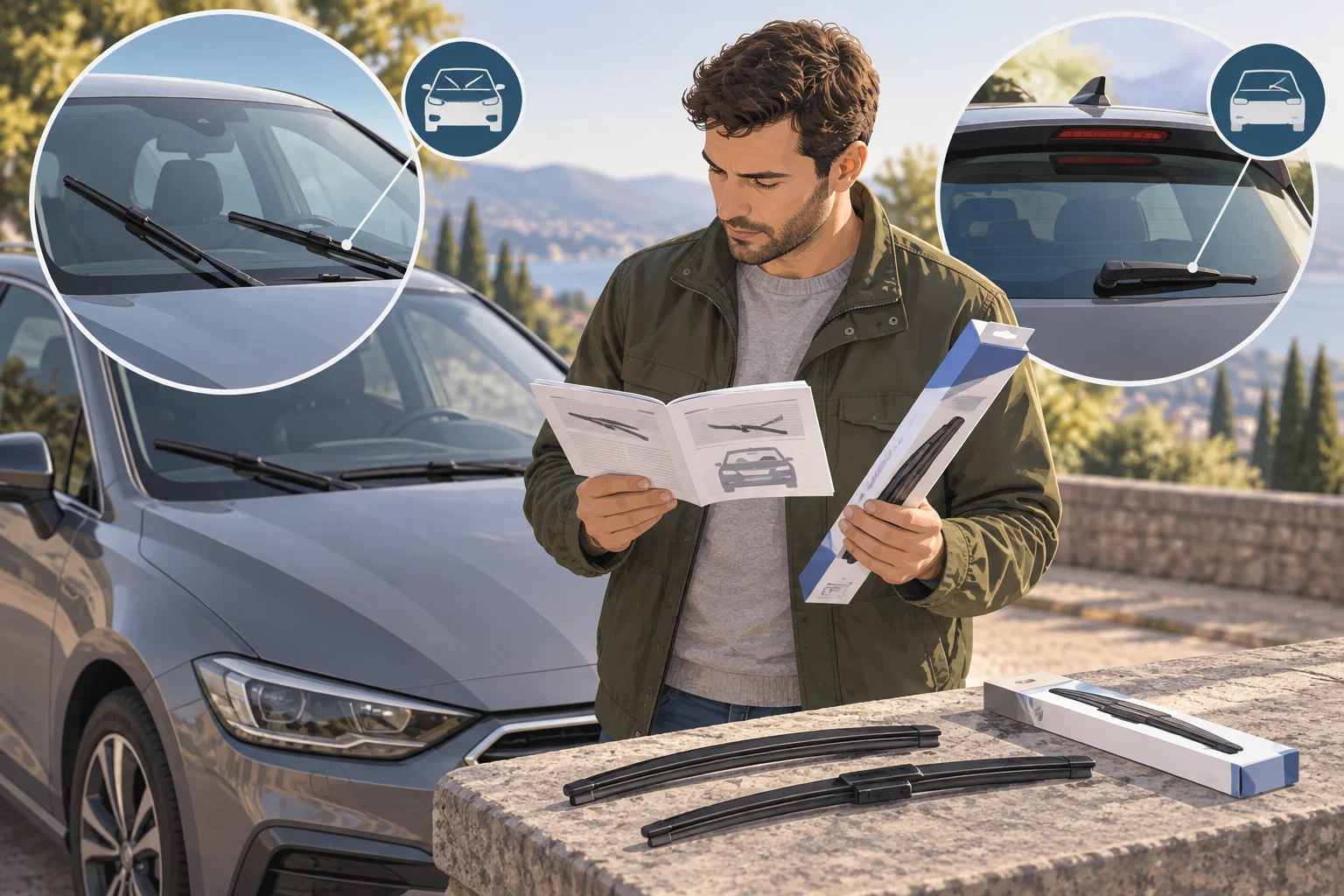
Do not choose a replacement just because it is the same length as the blade currently fitted. To get the right one, confirm that the product is listed for your specific car, for the front or rear position, and for the type of connection on the wiper arm. A specific adaptor may also be required.
Start by checking the vehicle manual, then look up the application in the wiper-blade manufacturer's catalogue. Check the stated size for each position and read the packaging instructions. If the catalogue offers more than one option, do not assume the first match is correct: cross-check the vehicle identification details and version.
Section references: Escobillas limpiaparabrisas: consejos, cambio y mantenimiento ↗
- Identify the car and its version using the details requested by the catalogue.
- Check the driver's-side, passenger-side and, where applicable, rear wiper blade separately.
- Verify the length and fitting; check whether the product includes or requires an adaptor.
- Check the manual for how to put the wipers in the service position, and follow the fitting instructions on the packaging.
Signs of wear and causes to rule out
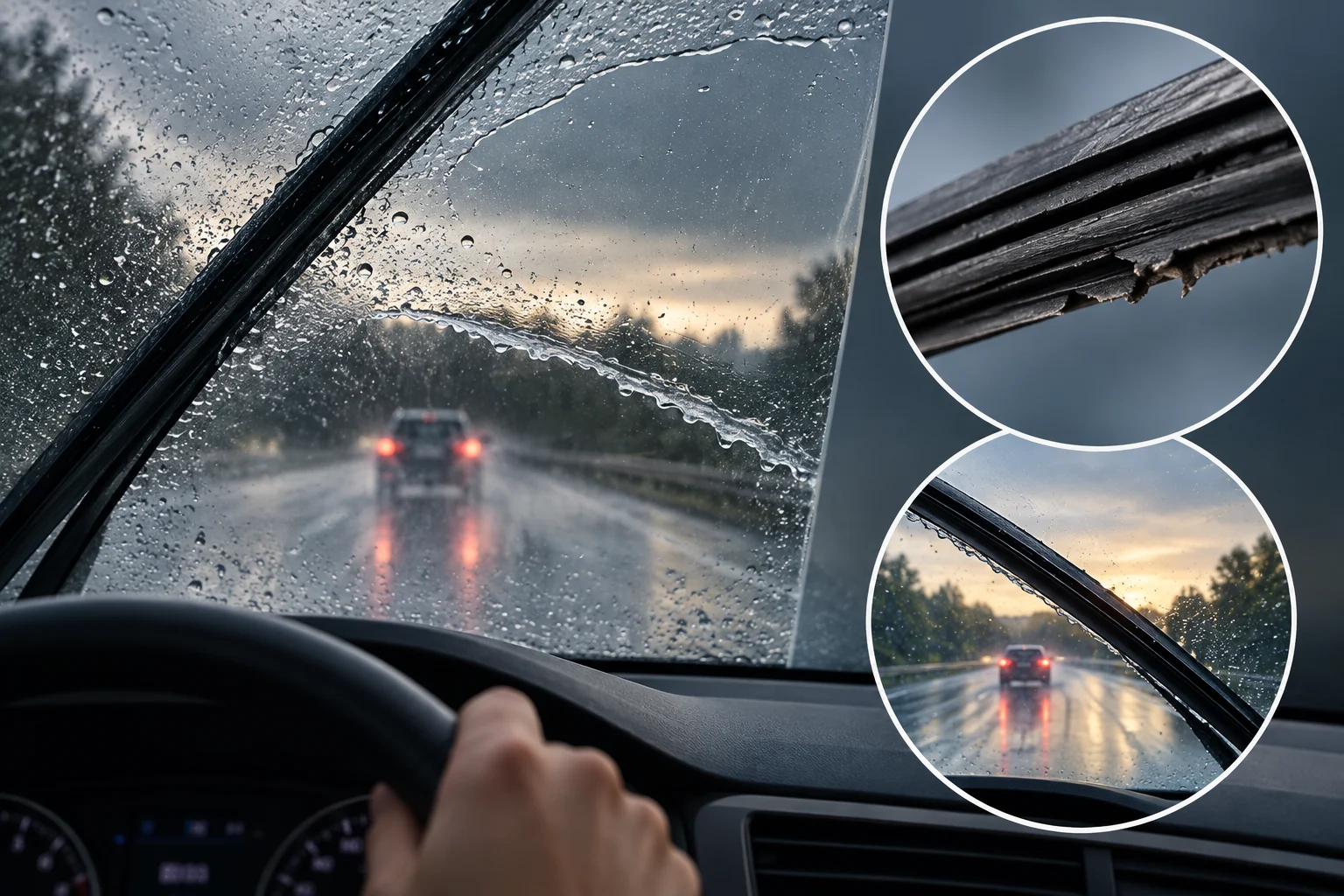
Pay attention to how the blades clear the screen: marks, water streaks, uncleared areas, sudden juddering, vibration or noise are all reasons to check them. The DGT warns that hardened or damaged rubber can leave marks and cause noise or juddering; if it is deteriorated, it may even scratch the windscreen.
However, poor clearing does not on its own prove that a blade is worn out. Dirt, pollution or insect residue can damage or interfere with the rubber. An uncleared area may also be caused by a bent tension strip or a deformed blade.
Before buying, clean the windscreen and the rubber, check that there is washer fluid, and make sure the jets are not blocked and are pointing correctly. If the problem persists, inspect the rubber and the blade structure. If a significant part of your field of vision is left uncleared, check the blades and consult the vehicle manual or a workshop.
Section references: El peligro de unas escobillas en mal estado ↗ · Lo que los limpiaparabrisas necesitan ↗ · Escobillas limpiaparabrisas: consejos, cambio y mantenimiento ↗ · Change your wiper blades for vision clarity ↗
- Streaks or lines: check whether the rubber is dirty, torn or deteriorated.
- Juddering, noise or vibration: inspect the condition of the rubber, but also rule out dirt and cleaning-system problems.
- A section that does not clear: the blade may be deformed or a tension strip may be bent.
- Before blaming the replacement blade, check the washer fluid and jets.
Length, position and fitting: how to confirm compatibility
Length matters, but it does not by itself identify a compatible wiper blade. Two replacements of a similar size may have different connection systems, and the catalogue may specify different lengths for each side of the windscreen. A product may also need an adaptor to fit the arm.
Use the manufacturer's catalogue to find the application for your car and cross-check it against the manual. Read carefully to see whether the part is for the driver's side, passenger's side or rear window. The old blade can help you check its position or compare its length, but it does not replace confirmation in the catalogue: it may not be the correct part for that vehicle.
If you cannot find a clear match, or the vehicle details produce several options, do not buy based on an approximate match. Ask a distributor or garage for help using the exact vehicle identification details. An incorrect connection or a part that is not intended for that position may not fit properly.
Section references: Escobillas limpiaparabrisas: consejos, cambio y mantenimiento ↗
- Do not automatically swap the left and right blades: check the position specified for each part.
- Check the type of fitting and whether the correct adaptor is available.
- If the catalogue, manual and fitted part do not agree, pause the purchase until you have clarified the discrepancy.
Conventional, flat and hybrid: design differences
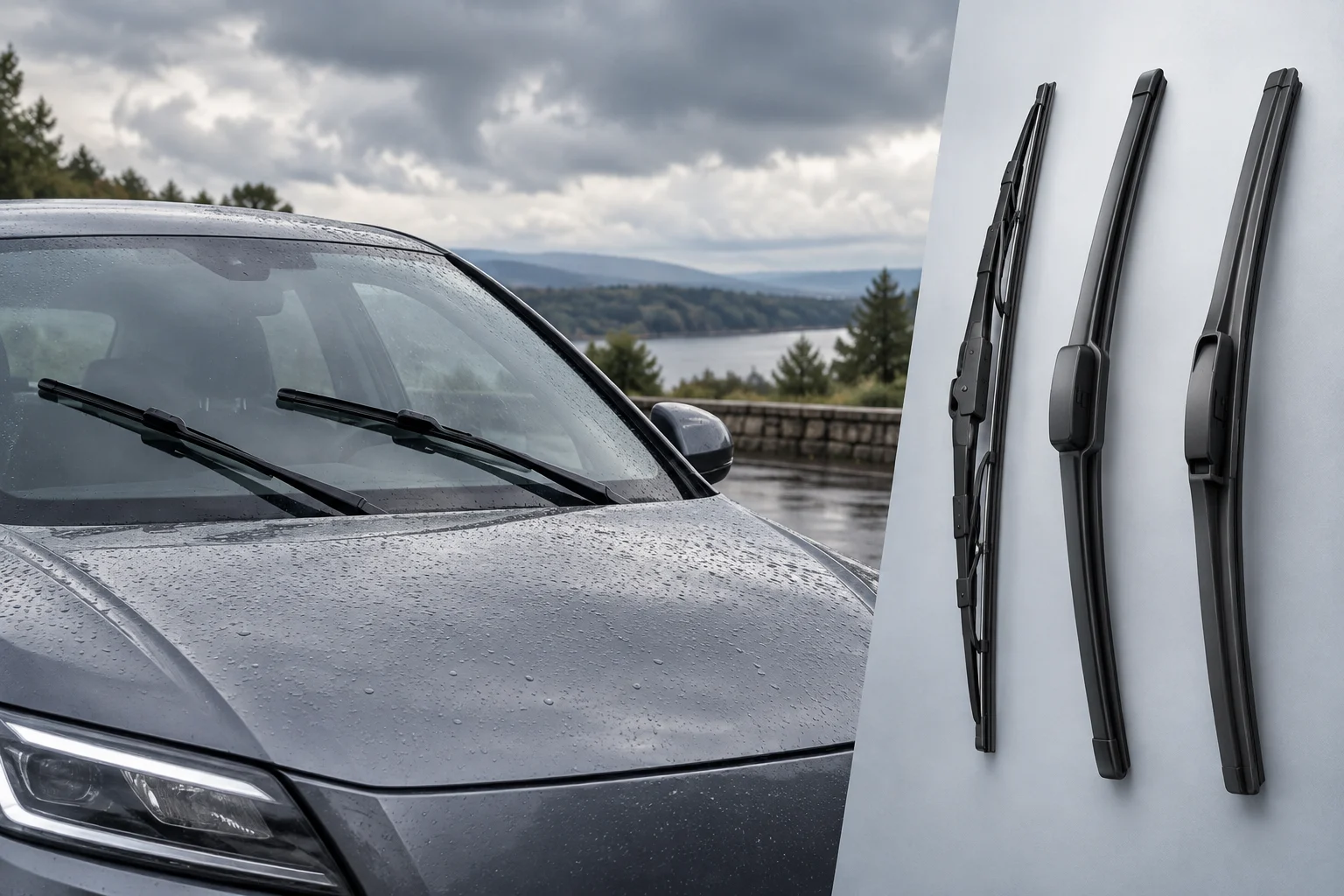
These terms describe different constructions, not a universal ranking from best to worst. According to Valeo, conventional wiper blades use a metal frame; flat blades are a distinct design category; and hybrid blades combine features of the conventional design with a flat blade.
That difference is not enough to decide which one is right for your car. Compatibility should take priority over design preference: first confirm the application, fitting and measurements. If the catalogue offers several compatible options, compare their specifications and the manufacturer's fitting instructions, without assuming that a flat or hybrid option is always better.
| Type | Feature described by the manufacturer | What to check |
|---|---|---|
| Conventional | Metal frame. | Vehicle application, length and connection. |
| Flat | Distinct design category. | That the catalogue lists it for that vehicle and position. |
| Hybrid | Combines features of the conventional design with a flat blade. | Application, measurements and adaptor, if required. |
Section references: Valeo First™ Wiper Blades ↗
Wear: when to check and when to replace
There is no replacement interval that can be presented as universal for all cars and driving conditions. The DGT recommends checking the blades once a year and keeping an eye on their condition; it also cites the recommendation to replace them at least annually, more often if you cover a lot of kilometres. This is guidance from that source, not a guarantee of service life or a rule that is the same for every manufacturer.
Heat, temperature changes and pollution can accelerate rubber deterioration. So, as well as considering how long they have been fitted, observe how they clear the screen and check their condition regularly. A relatively new blade may still need attention if it is used in conditions that damage the rubber or if it stops clearing properly.
If you replace a blade and the problem continues, do not keep buying different replacements without identifying the cause. Check that the part and fitting are correct, that the rubber and glass are clean, and that the washer system works. If the blade is deformed or the assembly is visibly damaged, have it inspected.
Section references: El peligro de unas escobillas en mal estado ↗ · Lo que los limpiaparabrisas necesitan ↗ · Recomendaciones previas a las vacaciones veraniegas ↗
- Check their condition at least once a year, as well as responding to any symptoms.
- Bear in mind the mileage covered and exposure to heat, temperature changes and pollution.
- Replace the blade if the deterioration persists after cleaning the glass and rubber, or if visibility is compromised.
- If the washer jets cannot be cleaned or correctly aimed, visit a garage.
Is measuring the old wiper blade enough to buy a replacement?
No. Length is only one of the details: you also need to confirm the vehicle application, position and fitting, including any adaptor required. Check the manual and the manufacturer's catalogue.
Are flat wiper blades better than conventional ones?
You cannot tell from the design alone. Conventional, flat and hybrid blades have different constructions; choosing one should start with the compatibility listed for your car and the replacement's specifications.
How often should wiper blades be replaced?
There is no universal interval for every vehicle and driving condition. The DGT recommends checking them once a year and notes that they may need replacing more often if you cover a lot of kilometres. Make your decision based on their condition and how well they clear the screen too.
What should I do if new wiper blades still leave areas uncleared?
Check that they are intended for the correct position and fitting, and that they have been installed according to the instructions. Clean the glass and rubber, and check the washer fluid and jets. If the problem persists or there is visible deformation, consult a garage.