EFB or AGM battery: how to choose the right one for your car
EFB and AGM batteries are not automatically interchangeable. Find out which details to check in your manual and on the battery before buying a replacement for your start-stop car.
Key points
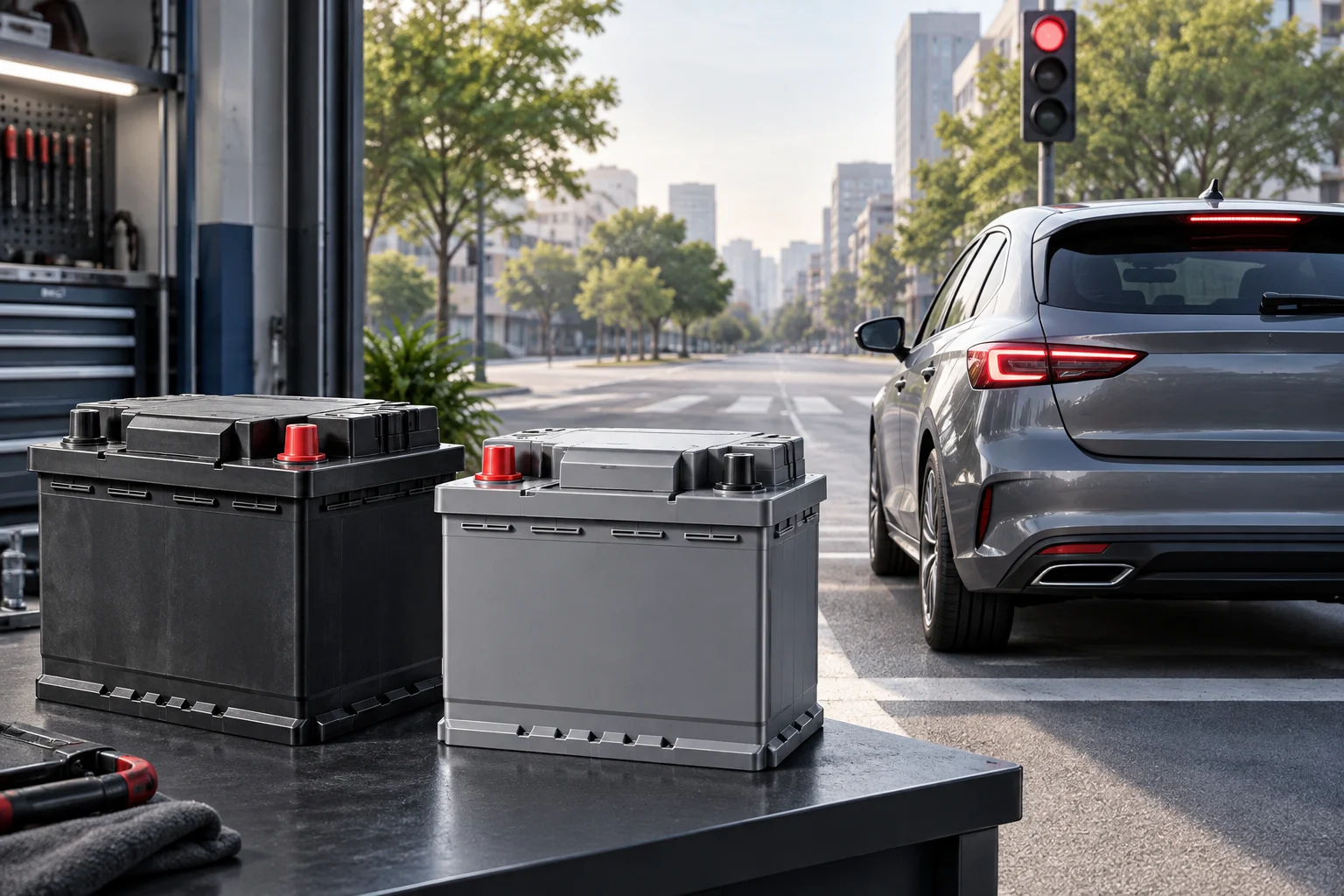
For a car with start-stop, fit a battery compatible with the manufacturer’s specification: don’t choose on price, capacity or size alone. Check the technology, dimensions, polarity and whether the vehicle requires the new battery to be registered.
The main rule: follow the vehicle specification
If you’re replacing the battery in a car with start-stop, the choice isn’t about buying the most expensive option or finding one with the highest amp-hour rating. The technology must be compatible with the vehicle’s battery management system and meet the manufacturer’s specifications. A conventional battery doesn’t become suitable just because it is the same size or its terminals fit.
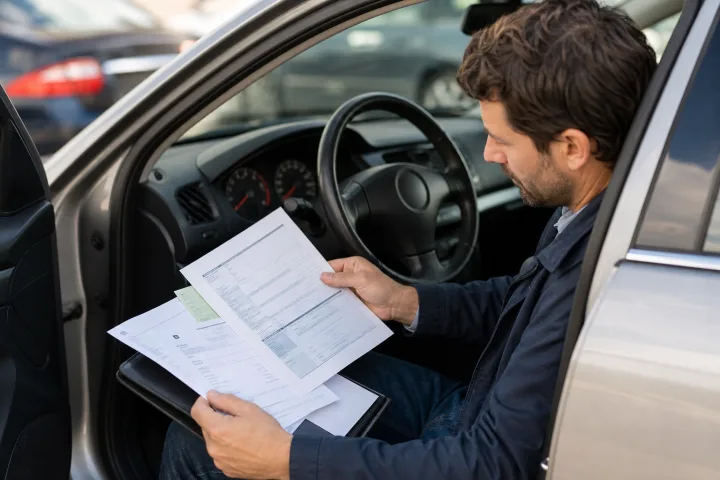
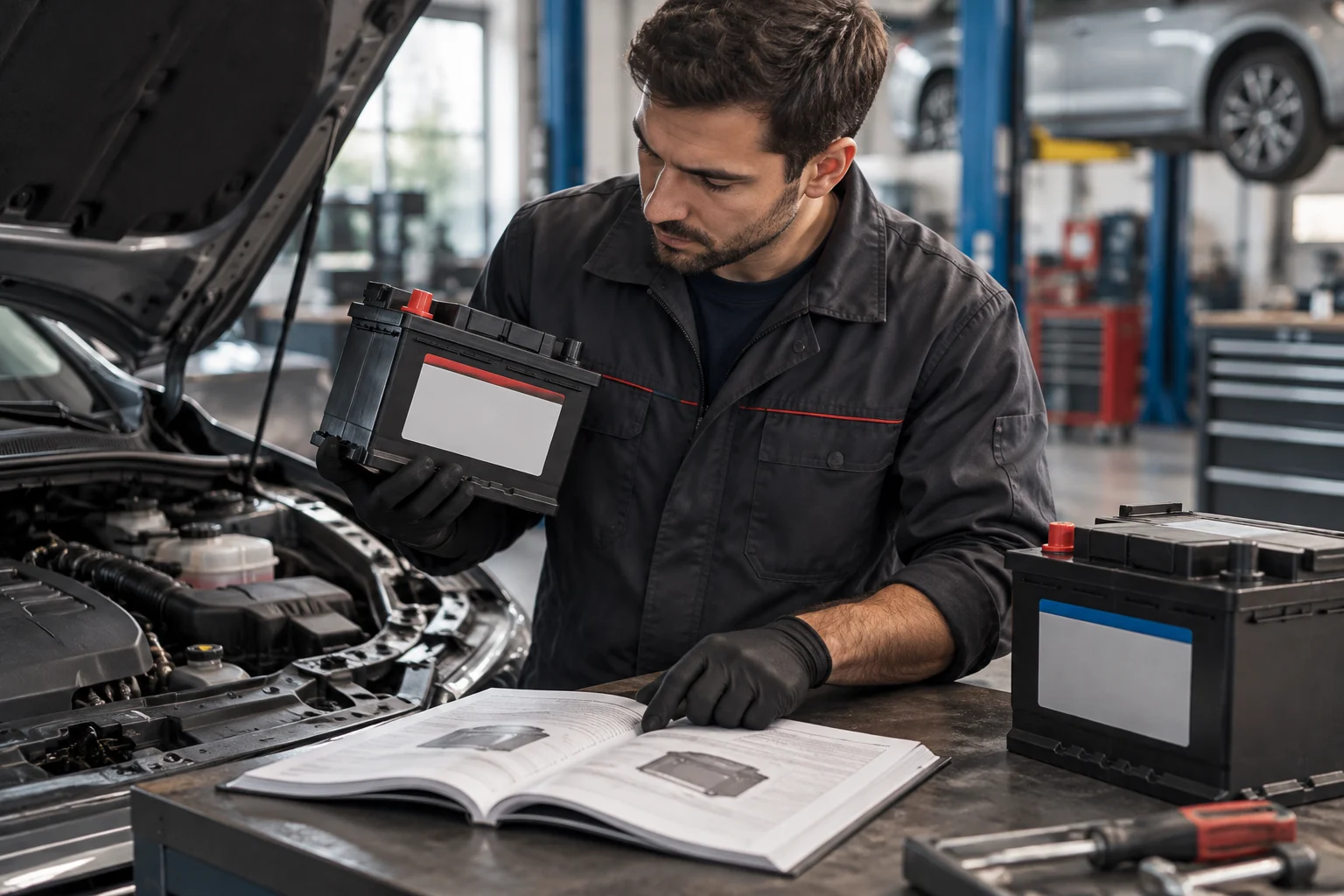
Start by checking the manual and the application information for your car. Then compare those details with the label on the battery currently fitted. If they differ, or you can’t confirm the correct part number, don’t assume the current battery is the original or the right one: it may previously have been replaced with an unsuitable technology. If in doubt, ask a professional to check.
Section references: Sustitución de la batería en vehículos start-stop ↗ · Diferencias entre EFB y AGM ↗ · Herramientas para el taller ↗
- Confirm the technology required for the vehicle, not just that the battery fits.
- Use the manufacturer’s documentation as your main reference.
- Check the application in a vehicle-specific catalogue against the part number of the battery currently fitted.
EFB and AGM: two technologies, not universal performance levels
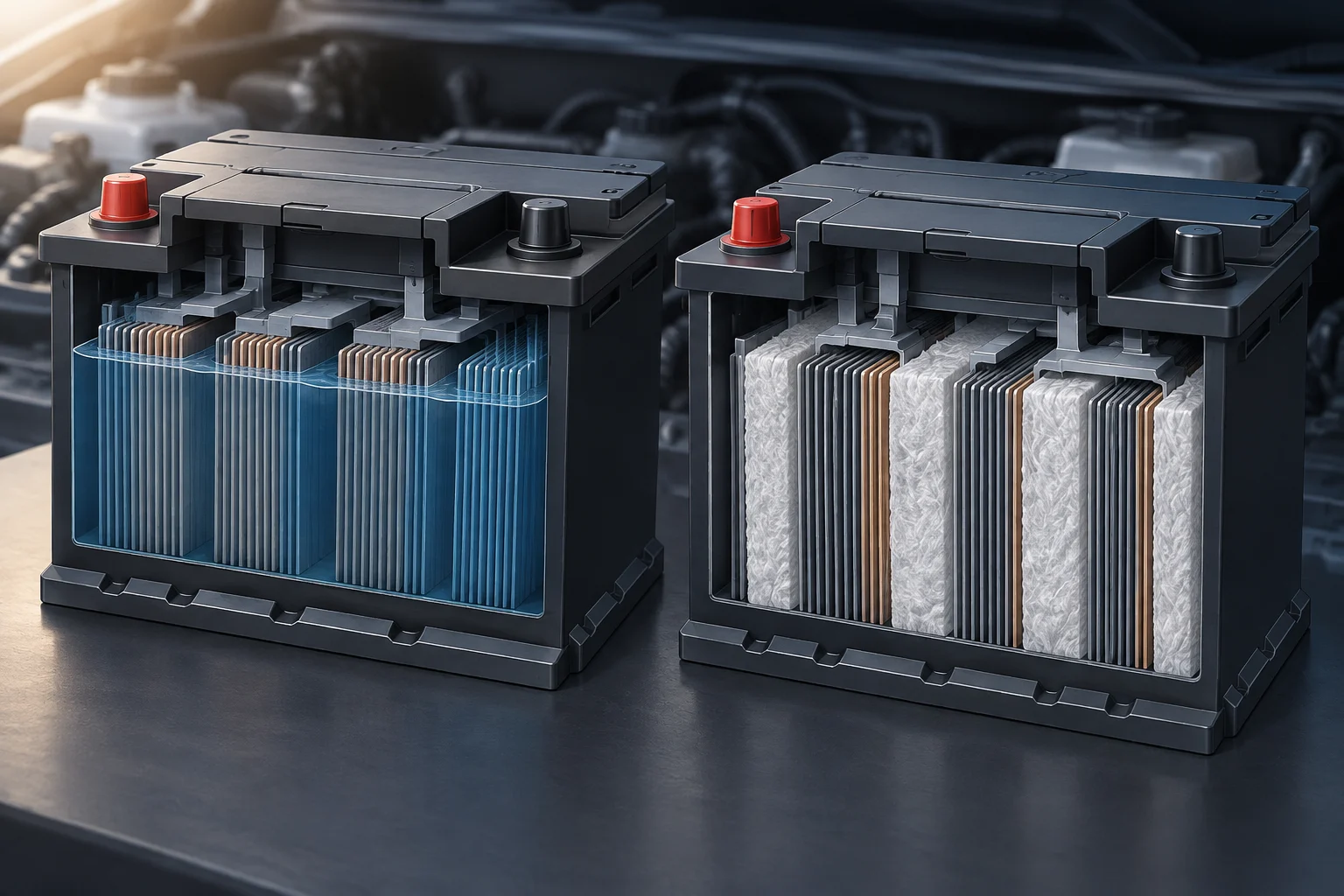
An EFB is an enhanced version of a conventional starter battery. In VARTA’s classification, it is commonly found in basic start-stop systems, usually without brake energy recuperation. An AGM battery holds the electrolyte in an absorbent glass-fibre mat and is associated with advanced start-stop systems and vehicles with energy recuperation.
This difference helps explain why it’s best not to follow a general rule such as “AGM is always better”. The right battery is the one that matches the vehicle’s configuration and requirements; the fact that a technology is used in more advanced systems doesn’t, by itself, confirm that it is a valid replacement for every car.
| Technology | What characterises it | Use described by the manufacturer |
|---|---|---|
| EFB | Enhanced version of a conventional starter battery | Basic start-stop systems, usually without brake energy recuperation |
| AGM | The electrolyte is absorbed in a glass-fibre mat | Advanced start-stop systems and energy recuperation |
Section references: EFB y AGM ↗ · Sustitución de la batería en vehículos start-stop ↗ · Diferencias entre EFB y AGM ↗
What to check before buying
Check the manual, the battery label and a vehicle-specific compatibility catalogue. The label or its QR code may give you the part number and let you look up specifications, but that doesn’t replace confirming that the battery is suitable for your car. Search tools may identify the application by make and model or VIN; some offer a registration-number search, although this option isn’t available in every country.
When comparing part numbers, note the technology and check the starting performance (CCA), capacity in amp-hours (Ah), physical size and polarity—that is, the position of the terminals. Don’t use Ah as your only filter: a battery may have a similar figure and still be unsuitable because of its technology, dimensions, polarity or application.
If the manual doesn’t clarify something, give a specialist the make, model, version and VIN so they can check which battery is compatible. Don’t buy based only on a photograph or the appearance of the old battery.
Section references: Herramientas para el taller ↗ · Dynamic EFB 595500085 ↗
- Technology approved for the vehicle.
- Required or permitted CCA and Ah capacity.
- Physical dimensions and terminal layout.
- Part number and compatibility confirmed for the specific version.
Can you replace an EFB with an AGM, or an AGM with an EFB?
Don’t make the change based on guesswork. VARTA’s guidance covers replacing an EFB with another EFB, as well as upgrading from EFB to AGM, but any change in technology must follow the car manufacturer’s specifications. General guidance that a change may be possible doesn’t prove that it is approved for every model.
If the vehicle has an AGM battery, VARTA recommends replacing it with another AGM; don’t downgrade to an EFB or a conventional battery unless that specific application has been expressly confirmed. Conversely, don’t assume that fitting an AGM to a car designed for an EFB will provide a useful upgrade or be compatible with its electrical management system. A different type must be fitted in accordance with the manufacturer’s instructions.
Section references: Sustitución de la batería en vehículos start-stop ↗ · Diferencias entre EFB y AGM ↗ · Comprobación del regulador del alternador: notas sobre el cambio de batería ↗
- EFB fitted: confirm whether the application allows an EFB and whether an AGM is approved as an alternative.
- AGM fitted: check the specification; the general guidance is to replace it with an AGM.
- If the label, manual and catalogue don’t agree, pause the purchase and ask for a check.
Registration and adaptation after replacement
Replacing the battery doesn’t always end once a physically compatible one has been fitted. In many vehicles, the new battery needs to be registered in the management system. The procedure and whether adaptation is needed depend on the vehicle, so check the manual or ask the workshop before starting the job.
Don’t skip registration if the manufacturer requires it: HELLA warns that if a replacement should be registered but isn’t, the new battery may not be fully charged. When asking for a quote, check whether the work includes a compatibility check and the registration or adaptation required for your car. There is no single instruction that applies to every model.
Section references: Baterías especiales start-stop ↗ · Comprobación del regulador del alternador: notas sobre el cambio de batería ↗
- Check in the manual whether the vehicle requires the battery to be registered or adapted.
- Confirm with the workshop that it can carry out the procedure required for your model.
- Don’t assume the job is complete just because the car starts.
Final buying checklist and a note about long-term parking
Before paying, gather the information in a checklist and resolve any differences between sources. If you can’t confirm the technology, application, dimensions or polarity, it’s better to delay the purchase and ask a professional than to trust that a “similar-looking” battery will fit. Price and capacity alone don’t prove compatibility.
Choosing a new battery is different from maintaining a battery that is already fitted during a period of inactivity. If the car will be parked for several months, VARTA recommends maintaining its charge with a compatible charger. This doesn’t change the technology the vehicle needs or make an incompatible battery suitable.
Section references: Sustitución de la batería en vehículos start-stop ↗ · Herramientas para el taller ↗
- □ Technology confirmed in the vehicle documentation.
- □ Compatibility checked by model or VIN and compared with the part number of the fitted battery.
- □ CCA, Ah, dimensions and polarity checked.
- □ Registration or adaptation requirements checked for that vehicle.
- □ If the car will be parked for months, consider using a compatible charger to maintain the charge.
Can I fit an AGM battery in a car that has an EFB?
VARTA covers upgrading from EFB to AGM, but this shouldn’t be assumed to be valid for every car. Check that the vehicle manufacturer approves this technology for your application.
If my car has an AGM battery, can I fit an EFB?
Don’t do this without specific confirmation. VARTA’s general recommendation for a vehicle with an AGM is to replace it with another AGM; check the manufacturer’s specification.
Is it enough to buy a battery with the same Ah rating?
No. You also need to check the compatible technology, starting performance, dimensions and polarity, as well as the specific application for your vehicle.
Does a new battery always need to be registered?
Not necessarily; it depends on the vehicle. Registration is required in many cars, so check the manual or ask a professional.