What Car Environmental Labels Mean
What car environmental labels mean, which documents to check on a used car, and why the DGT sticker does not determine the category on its own.
Key points
Before buying, compare the advertised technology and the general environmental classification criteria with the vehicle information available. Also confirm the classification recorded in the Vehicle Register: the sticker only identifies it visually and does not determine it on its own.
Quick answer: the sticker does not determine the category
Before buying a vehicle, compare the advertised technology and the general environmental classification criteria, and confirm the classification recorded in the Vehicle Register.
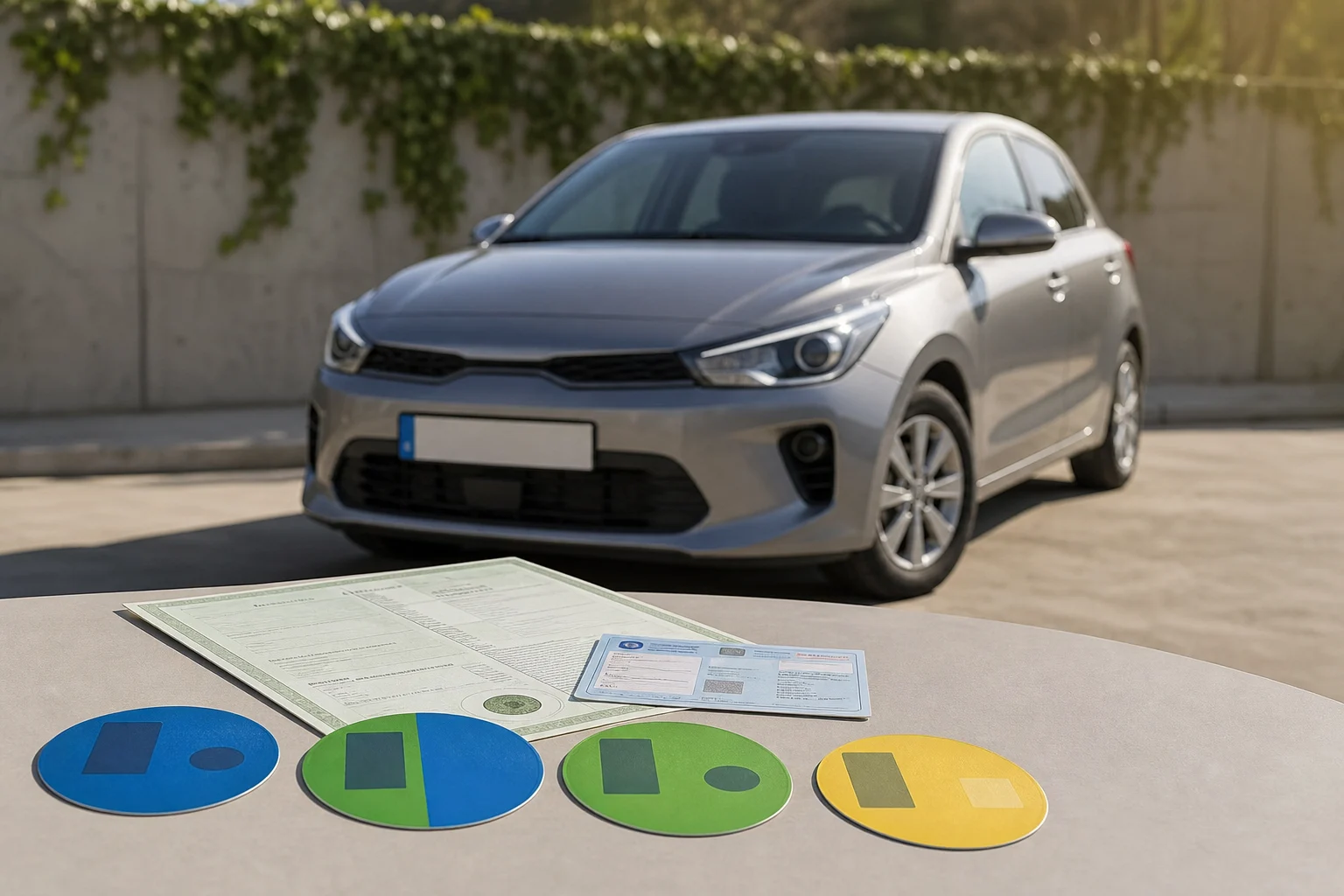
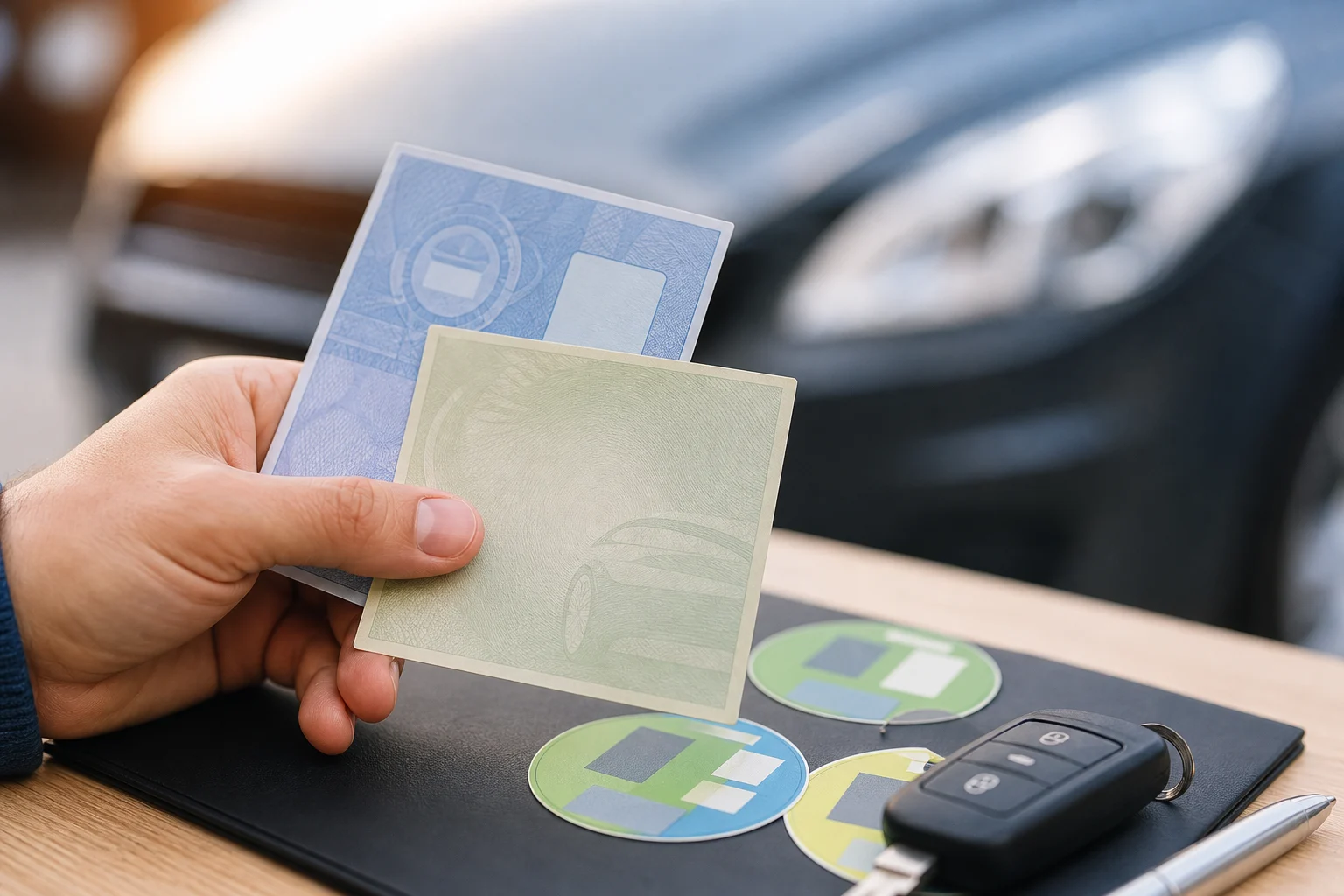
The reason is simple: the V-25 sign—the sticker usually displayed on the windscreen—visually identifies the environmental classification recorded in the Vehicle Register. Therefore, having a sticker fitted is not the proof that creates or determines the category; the register is the reference. A classified car may also have no physical sticker.
Spain's General Vehicle Regulations provide for 0 emissions, ECO, C and B labels. Category A vehicles have no label. Assess this information alongside ownership, the ITV inspection and administrative encumbrances.
Section references: Reglamento General de Vehículos: clasificación ambiental y señal V-25 ↗
- Confirm the classification recorded in the Vehicle Register.
- Request the registration certificate and the ITV inspection card or technical data sheet.
- If there are differences between the advert and the sticker, stop the transaction until they are clarified.
What the 0, ECO, C and B labels mean
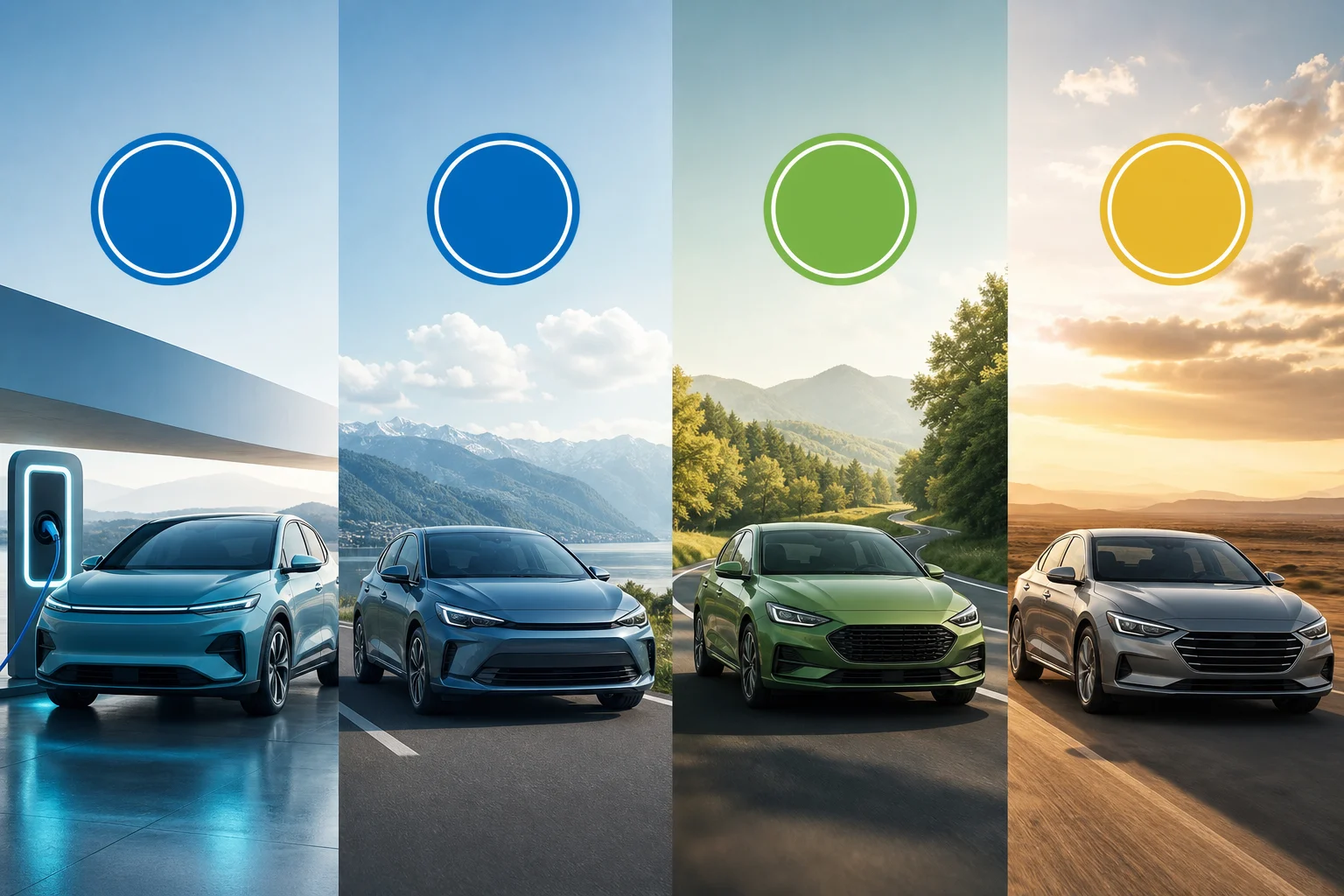
The labels sort vehicles by their environmental classification. That classification matters when comparing cars with different technologies or Euro standards.
The 0 emissions label applies, among others, to battery electric vehicles (BEVs), range-extended electric vehicles (REEVs), fuel-cell vehicles and plug-in hybrids (PHEVs) with a minimum electric range of 40 kilometres. ECO covers non-plug-in hybrids, PHEVs with an electric range below 40 kilometres and gas-powered vehicles; for passenger cars and light commercial vehicles, all must also meet the C-label criteria.
The C and B categories are based on fuel, Euro standard and vehicle category. Reading only the first registration year in an advert is not enough: it may help with an initial search, but it must be compared with the general criteria applicable to the vehicle.
| Label | Associated technologies or criteria | What to keep in mind |
|---|---|---|
| 0 emissions | BEV, REEV, fuel-cell vehicles and PHEVs with a minimum electric range of 40 km | The vehicle's general electrification criteria |
| ECO | HEVs, PHEVs with an electric range below 40 km and gas-powered vehicles; all must meet C criteria | The technology and the general criteria applicable to PHEVs, HEVs and gas-powered vehicles |
| C | Petrol Euro 4/IV, 5/V or 6/VI; diesel Euro 6/VI | Fuel, Euro standard and vehicle category |
| B | Petrol Euro 3/III; diesel Euro 4/IV or 5/V | Fuel, Euro standard and vehicle category |
| No label | Category A | There is no sticker for this category |
Section references: Etiqueta 0 Emisiones ↗ · Etiqueta ECO ↗ · Etiqueta C ↗ · Etiqueta B ↗
How to check a car before signing
Ask the seller for a legible image of the Spanish permiso de circulación (registration document) and tarjeta ITV (ITV inspection card) or technical data sheet. The permiso de circulación identifies the registered holder or keeper; the tarjeta ITV confirms that the vehicle has been type-approved. These are relevant documents for checking a used car, but they do not replace confirmation of the classification recorded in the Vehicle Register.
Use the general fuel, Euro standard and vehicle-category criteria when assessing a car advertised as B or C. For a PHEV, do not assume it has a 0 label: the official threshold is 40 kilometres of electric range. A plug-in vehicle with a range below that threshold may fit into ECO if it also meets the applicable C criteria. Nor is a hybrid automatically ECO in every case: non-plug-in hybrids may fit that category if they also meet the applicable C criteria, while other cases must fit the criteria provided for. These criteria help identify a possible discrepancy; they do not replace the final classification in the Register.
For a used-car purchase, also obtain a full DGT vehicle report. It allows you to check technical data, ITV history, mileage, number of registered holders and encumbrances. The DGT recommends obtaining it before purchasing the vehicle to check, among other issues, for seizures, impoundment orders or insolvency proceedings.
Section references: Etiqueta 0 Emisiones ↗ · Etiqueta ECO ↗ · Informe oficial de un vehículo ↗ · Documentación de un vehículo ↗
- Request the registration certificate and the ITV inspection card or technical data sheet.
- Confirm the classification recorded in the Vehicle Register.
- Request a full DGT vehicle report before completing the purchase.
If the advert and the sticker do not match
Treat any discrepancy as an issue that must be resolved before committing money. The advert may contain an incorrect description, and the sticker may be absent or may not be the determining evidence. The environmental classification is recorded in the Vehicle Register.
Do not try to resolve the discrepancy using only the car's year, fuel, advertised technology or the appearance of the label. This information can help assess whether the description appears consistent with the general criteria, but the conclusive check must refer to the classification recorded in the Vehicle Register. If it does not match what was advertised, postpone signing and request a documented explanation.
Section references: Reglamento General de Vehículos: clasificación ambiental y señal V-25 ↗ · Documentación de un vehículo ↗
- Do not accept the physical sticker as the only proof.
- Do not infer the category from the registration date.
- Confirm the registered classification before proceeding with the purchase if there is a discrepancy.
Final checklist for choosing with less uncertainty
If two cars appear comparable in price, mileage and condition, environmental criteria may tip the balance because of their technology and classification. But they should form part of a wider review: a full DGT vehicle report lets you check encumbrances, ITV history, mileage and ownership.
Organise the results in a purchase record for each vehicle. Note the declared label, the classification confirmed in the Vehicle Register, the date, the advertised technology and the report result. This method reduces the risk of confusing a feature stated in an advert with a confirmed administrative condition.
Section references: Informe oficial de un vehículo ↗
- Declared label recorded.
- Registered classification confirmed.
- Advertised technology compared with the category's general criteria.
- Full DGT vehicle report requested for a used car.
- Purchase arrangements paused if there is an unresolved discrepancy.
Does a hybrid car always have an ECO label?
It is not advisable to generalise. Non-plug-in hybrids may fit into ECO if they also meet the C-label criteria. For plug-in hybrids, an electric range below 40 km may fit into ECO if those criteria are met, while a minimum range of 40 km falls into 0 emissions, according to DGT criteria.
Is the registration date enough to know whether a car is B or C?
No. It can serve as an initial guide, but for passenger cars and light commercial vehicles the official criteria are expressed by fuel, Euro standard and vehicle category.
What should I request when buying a used car besides the label?
Request the registration certificate and the ITV inspection card or technical data sheet, confirm the classification recorded in the Vehicle Register and obtain a full DGT vehicle report. The report lets you review, among other data, ITV history, mileage, registered holders, encumbrances and technical data.