Motorcycle tyre pressure: where to find the correct figure
Before setting off, check the pressure in your motorcycle’s manual or on its sticker and measure it cold. We explain which figure takes priority, why the sidewall is not a riding reference and what to do if the information is missing.
Key points
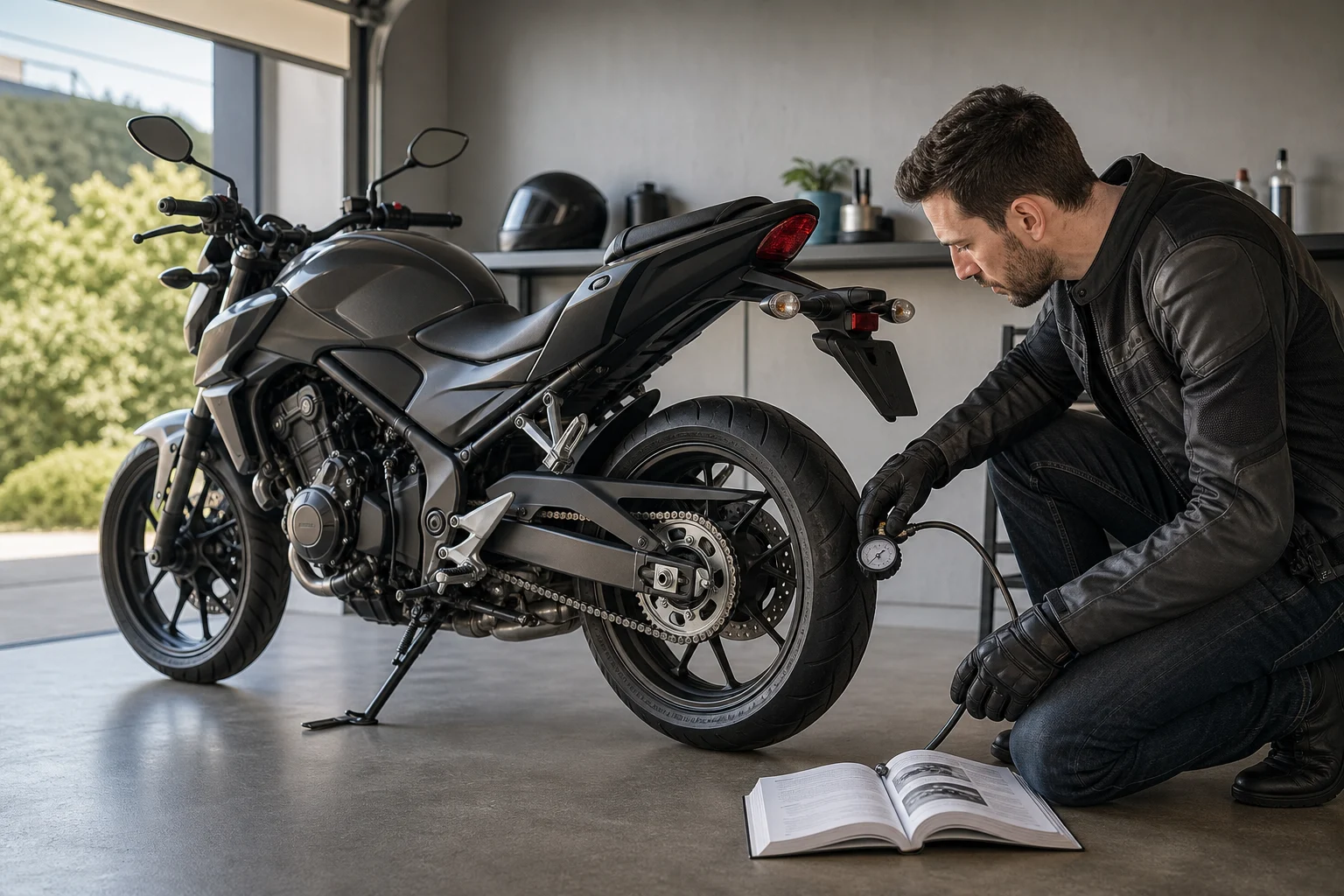
The correct motorcycle tyre pressure is the one specified by the motorcycle manufacturer for that model, measured cold. Find it in the manual or on the vehicle sticker; do not replace it with the maximum pressure marked on the tyre sidewall.
The quick answer: follow the motorcycle manufacturer
The correct motorcycle tyre pressure for road riding is not chosen from a generic figure or from the one shown on the tyre sidewall. The reference is the one set by the vehicle manufacturer for the specific model. It is the figure you should check before routine maintenance, a daily commute or a trip.
Read that value in full. It is not enough to remember one figure: identify which pressure applies to the front axle and which applies to the rear.
The check must be carried out cold. Michelin states that the pressure in the vehicle documentation is defined for cold inflation; therefore, a reading taken after riding cannot be compared directly with the value printed in the manual or on the sticker. Spain’s DGT also recommends checking it before setting off or after only a short distance.
The practical consequence is simple: before changing anything, find the recommendation specific to your motorcycle and measure it cold. This sequence prevents you from using a figure that means something else as your reference.
Section references: Manual de conductas imprudentes en motocicleta ↗ · Preguntas frecuentes de neumáticos para moto ↗
- Reference pressure: the one stated by the vehicle manufacturer.
- Details to check together: front and rear.
- Measurement condition: cold.
- If you cannot find the information: do not replace the missing data with a figure from the tyre.
Where to find the recommended value
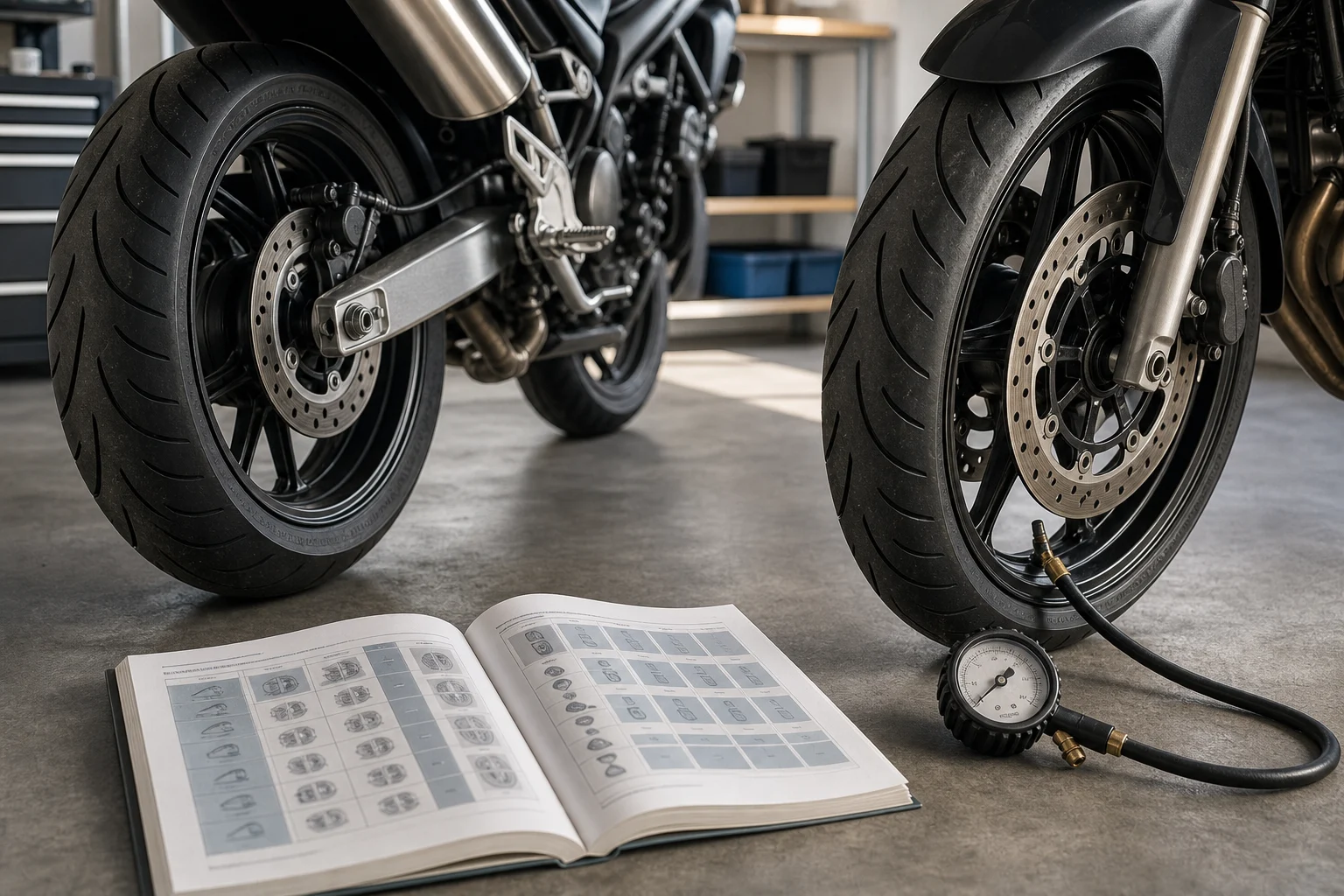
Start with the owner’s manual. The DGT notes that the recommended pressure may appear in the owner’s manual or on a motorcycle sticker, generally located on the swingarm. It is worth checking both: the manual helps identify the table and its conditions, while the sticker offers a quick reference beside the vehicle.
Read the sticker carefully, rather than treating it as an isolated number. Check which figure applies to each axle. Then compare it with the manual for your model, especially if you have just bought a used motorcycle or are unsure what each line represents.
If you have neither the manual nor the information displayed on the vehicle, Michelin recommends contacting the vehicle manufacturer. This is the appropriate way to recover the exact specification for the model, rather than extrapolating a pressure from another motorcycle, a forum or a seemingly similar tyre.
Nor is it advisable to transfer track or off-road pressures automatically to road riding. Michelin states that, after riding on a track, you must adjust the pressure cold to the manufacturer’s recommendation before returning to the road.
Section references: Manual de conductas imprudentes en motocicleta ↗ · Preguntas frecuentes de neumáticos para moto ↗ · Guía de la presión de los neumáticos de moto ↗
- First source: the owner’s manual.
- Second source: the motorcycle sticker, generally on the swingarm according to the DGT.
- No manual or sticker: contact the vehicle manufacturer.
- After track use: restore the manufacturer’s road recommendation when cold.
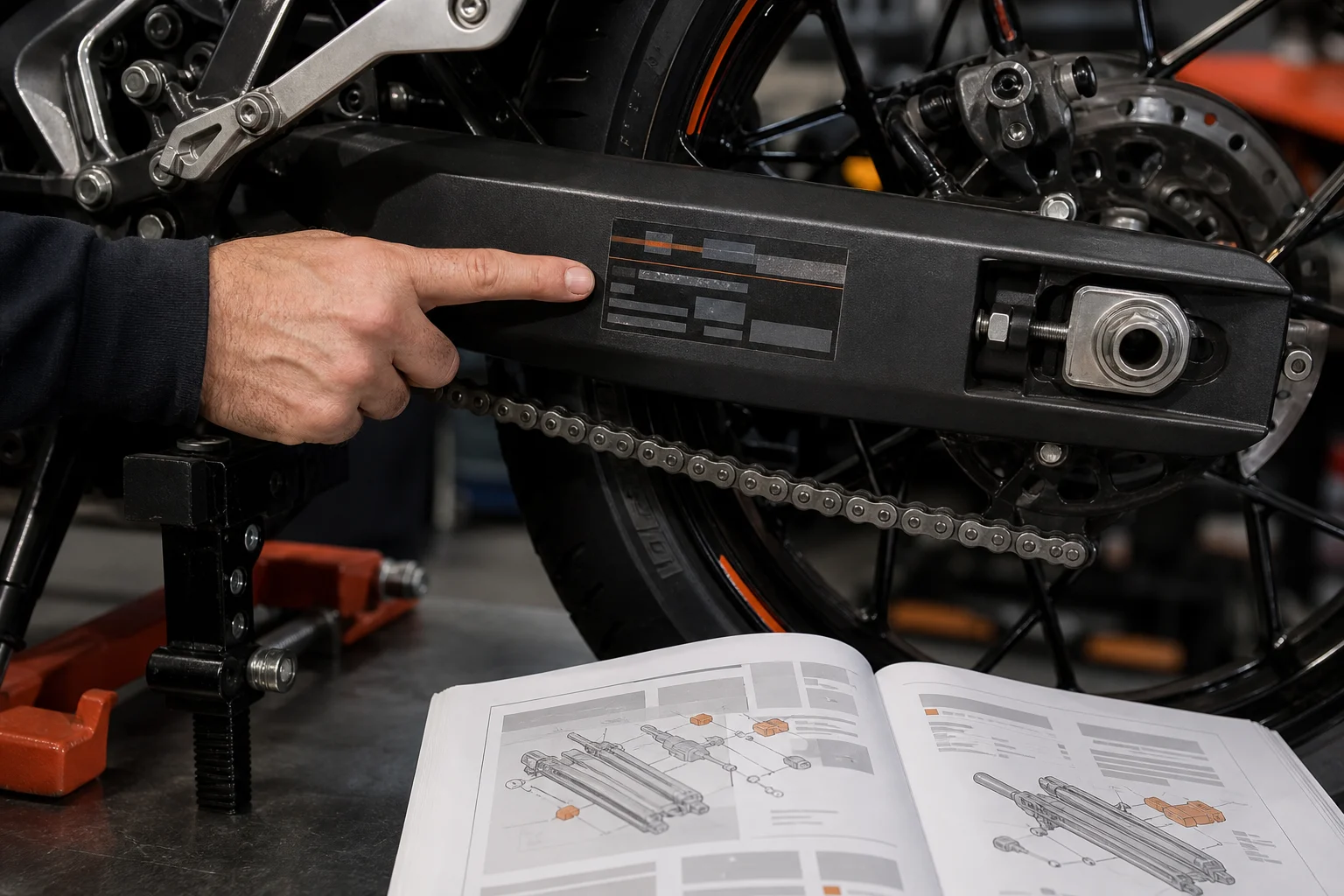
Manual, sidewall and inflator: three figures that do not mean the same thing
The most common confusion arises when looking at the tyre sidewall. The maximum pressure marked on the tyre is not a road-riding recommendation for your motorcycle. Michelin expressly warns that it must never be considered a safe pressure for road use. Therefore, it cannot replace the figure from the vehicle manufacturer.
The inflator or pressure gauge provides something else: a reading of the pressure in the tyre at that moment. It is useful for comparing the actual condition with the target, but it does not itself decide what that target should be. The manual or sticker provides the reference pressure; the gauge only verifies whether it has been reached.
The distinction matters particularly after changing tyres. Although the tyre displays its own technical information on the sidewall, the starting point for road use remains the motorcycle manufacturer’s specification. If you cannot find it or have doubts about the documentation that applies to your vehicle, contact the manufacturer before guessing.
| Source | What it indicates | How to use it |
|---|---|---|
| Vehicle manual or sticker | The pressure set by the manufacturer for the model. | It is the reference for deciding the target pressure. |
| Tyre sidewall | A maximum pressure marked by the tyre manufacturer. | Do not use it as a safe pressure for road riding. |
| Inflator or pressure gauge | The pressure present in the tyre when measured. | Compare it cold with the motorcycle manufacturer’s reference. |
Section references: Preguntas frecuentes de neumáticos para moto ↗
- Manual or sticker: sets the motorcycle’s target pressure.
- Tyre sidewall: does not replace the road-use pressure.
- Inflator or pressure gauge: shows the pressure measured at that time.
How to carry out a reliable check before setting off
Carry out the check before setting off. As a more specific criterion, the DGT considers a tyre cold if no more than five kilometres have been ridden. For its road guide, Michelin suggests measuring after the motorcycle has not been used for at least two hours, or after less than three kilometres at reduced speed. If you can choose, measuring before starting the engine removes any doubt.
First check the manufacturer’s recommendation. Then measure both axles and compare each reading with its reference value. Front and rear may have different specifications, so remembering only one figure is a frequent source of error.
The DGT notes that workshop gauges are usually the best and recommends having a good-quality pressure gauge of your own. Using a consistent measuring reference makes the comparison with the vehicle recommendation more useful.
Do not deflate the tyre while it is hot. Michelin expressly advises against this. If you arrive after riding and notice a reading that raises doubts, wait until the tyre returns to a cold condition and repeat the check against the manufacturer’s figure.
Section references: Manual de conductas imprudentes en motocicleta ↗ · Preguntas frecuentes de neumáticos para moto ↗ · Guía de la presión de los neumáticos de moto ↗
- Find the table or sticker before using the inflator.
- Measure before riding; the DGT sets the cold limit at no more than five kilometres ridden.
- Check front and rear separately.
- Prioritise a workshop gauge or a good-quality personal gauge.
- Do not deflate a hot tyre.
When to stop and seek a professional inspection
Pressure is a preventive check, not a way to solve every tyre problem. Before setting off, the DGT advises visually inspecting the tyres for deformities or cuts. If you notice wear or any irregularity, it recommends consulting a workshop. In that case, choosing an inflation figure is not enough: the issue requires an assessment.
It is also better not to guess when you cannot reliably identify the published pressure for your model. This is especially relevant if you have just fitted new tyres and cannot find the manual or sticker: the sidewall maximum does not solve the lack of the motorcycle specification. Contact the vehicle manufacturer to obtain it.
For a simple routine, keep a legible photo of the sticker and the manual, and check both before a trip. The aim is not to memorise universal numbers, but to repeat the same process every time: the correct source, a cold tyre and a reading from a suitable pressure gauge. You can find more maintenance and motorcycle content on AutosOcasion.
Section references: Manual de conductas imprudentes en motocicleta ↗ · Preguntas frecuentes de neumáticos para moto ↗
- Inspect for deformities or cuts.
- If you observe wear or irregularities, consult a workshop.
- If the vehicle specification is missing, contact its manufacturer.
- Do not use the sidewall maximum pressure to make up for missing documentation.
- Before a trip, confirm the manufacturer’s recommendation.
Where is the correct tyre pressure for my motorcycle shown?
It is shown in the owner’s manual and usually on a sticker on the vehicle. The DGT states that this sticker is generally found on the swingarm. The reference is the one set by the manufacturer for your specific model.
Is the maximum pressure written on the tyre the pressure I should use?
No. Michelin states that the maximum pressure marked on the tyre must not be considered a safe pressure for road use. To decide the inflation pressure, use the figure from the motorcycle manufacturer.
When should I measure motorcycle tyre pressure?
When cold, preferably before setting off. The DGT states that no more than five kilometres should have been ridden; Michelin suggests measuring after two hours without use or after less than three kilometres at reduced speed.
What should I do if I do not have the manual and cannot see the sticker?
Contact the vehicle manufacturer to obtain the exact specification. Do not replace this information with the maximum pressure on the tyre sidewall.
Can I lower the pressure immediately after riding?
No. Michelin recommends never deflating a hot tyre. Wait and measure it again when cold, then compare it with the manufacturer’s recommendation.