Dashcams in Spain: what you can record and when to use the footage
Installing a dashcam does not make every recording conclusive evidence or allow it to be shared without limits. These are the precautions for recording, storing, submitting and publishing footage in Spain.
Key points
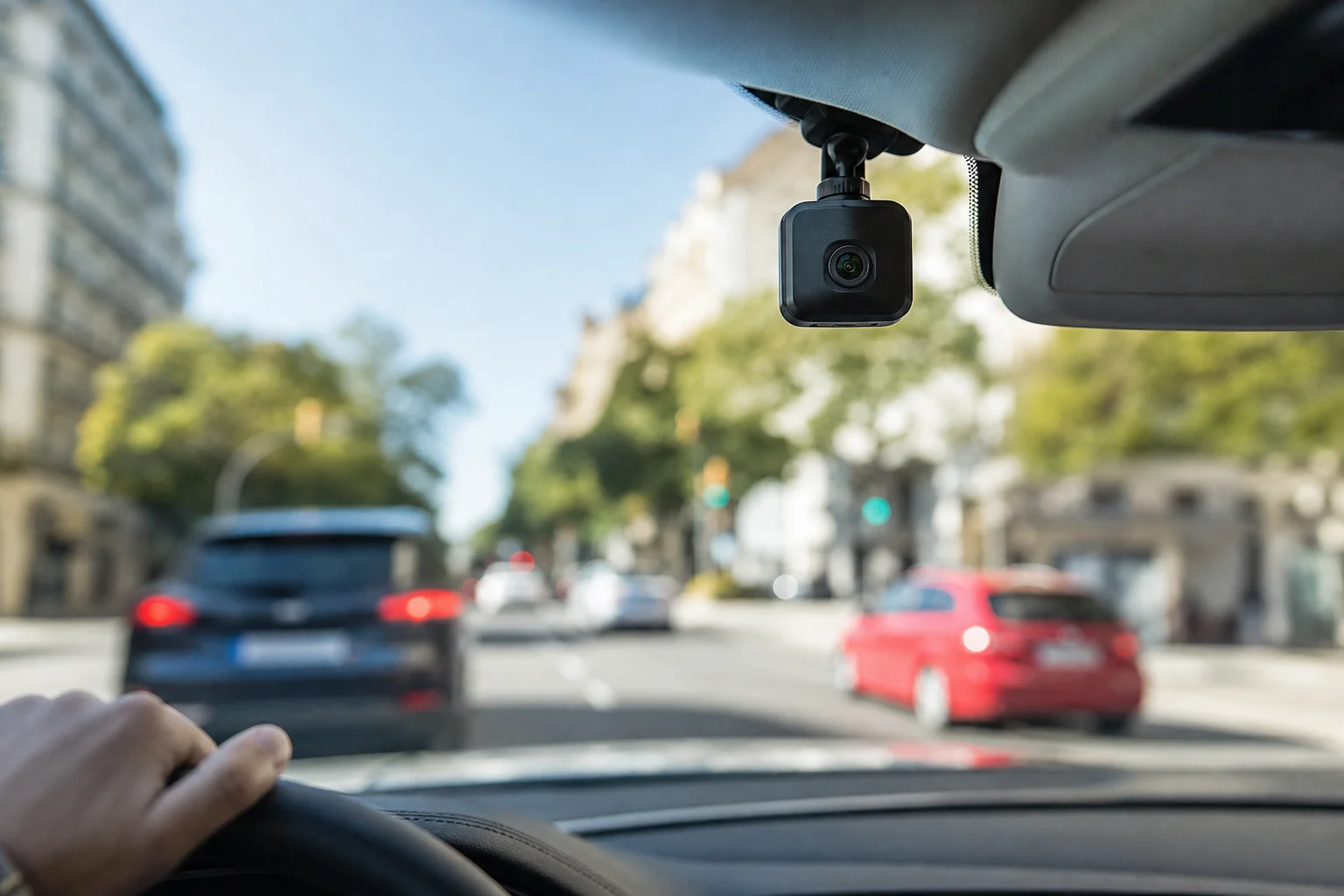
A dashcam can record a journey or preserve the context of an incident, but it does not authorise unlimited surveillance or unrestricted publication of videos. In Spain, the purpose, scope of recording and later use of the file are decisive.
Is it legal to have a dashcam in your car? The answer depends on how it is used
A dashcam is a camera installed in a vehicle. The question is not answered simply by physically fitting the device: what is captured, the purpose for which it is kept, and who receives or is shown the video all matter. Therefore, having a camera does not mean you are authorised to record public roads without limits or to publish what was recorded afterwards.
In its answer on a camera installed on a motorcycle to record journeys, the Spanish Data Protection Agency (AEPD) accepts the household exemption where recording is for strictly personal use. This reference is useful for understanding the criterion, although it does not make every dashcam use identical. The AEPD report on on-board cameras expressly rejects a generic and unlimited deployment of image capture and recording, and considers panoramic recording of public roads disproportionate.
In practical terms, the most prudent option is to set the camera for a specific and limited purpose — for example, preserving the context of an incident — rather than as a permanent observation system for everything happening around the car. It is also advisable to distinguish between four different actions: installing the equipment, recording for personal use, submitting a file in proceedings, and publicly sharing it. Each involves different precautions.
Section references: FAQ de la AEPD sobre cámara en moto y grabación de viajes ↗ · Informe jurídico de la AEPD sobre cámaras on-board ↗ · Ley Orgánica 3/2018, de protección de datos personales y garantía de los derechos digitales ↗
- Do not assume that broad, continuous recording is covered merely because it is for private use.
- Avoid aiming the camera to obtain unnecessary panoramic views of public roads.
- Do not confuse keeping a file for an incident with uploading it to social media.
- If the intended use is professional, recurring or for surveillance, the analysis requires particular caution.
Four situations that should not be treated in the same way
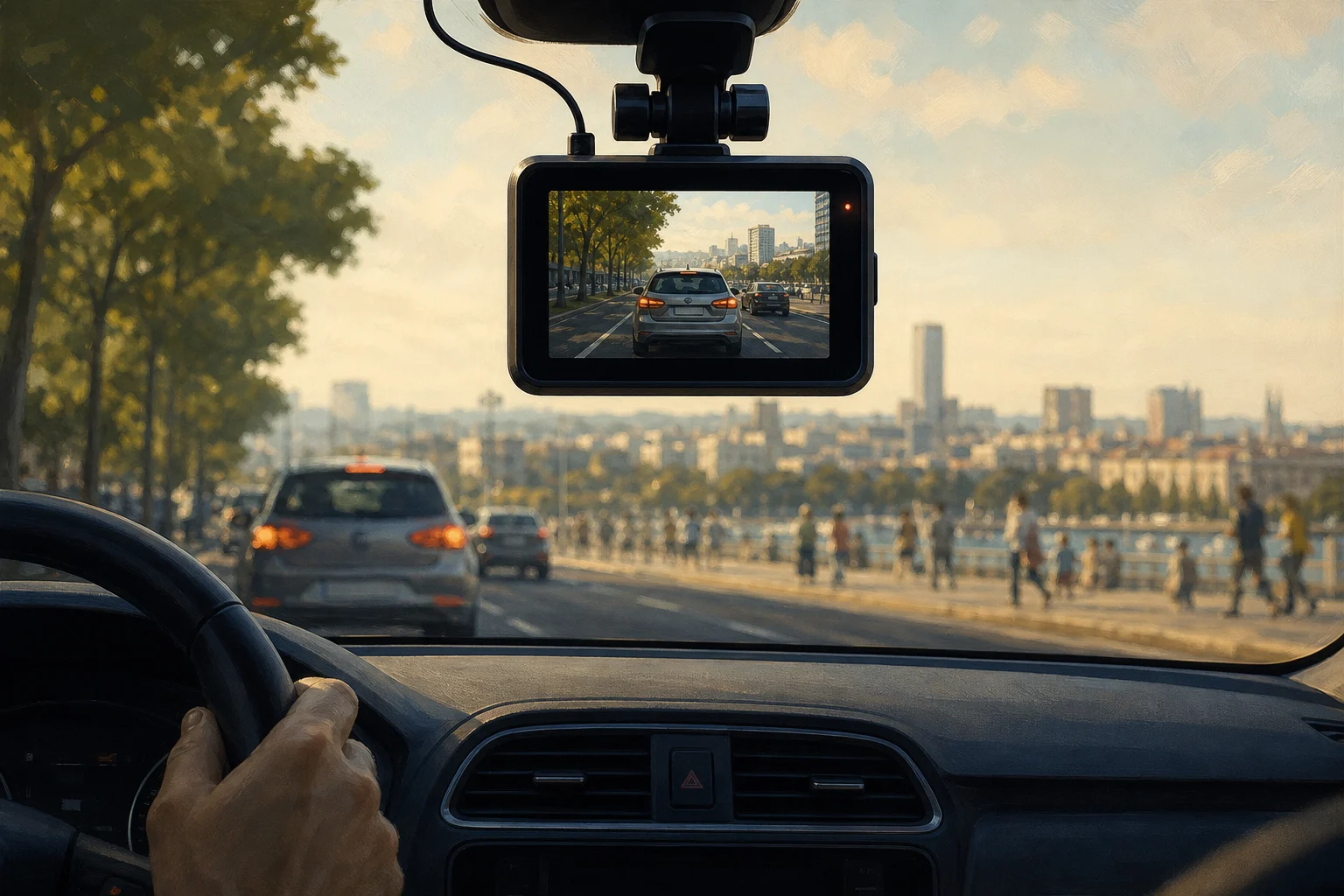
Recording a journey for personal use differs from continuously capturing what happens outside the vehicle. It is also different to find a file that accidentally records a crash and then decide to share it online. The AEPD reminds us that an image in a photo or video is personal data.
The proportionality criterion is especially relevant when public space is captured. Article 22 of Organic Law 3/2018 provides, for the video-surveillance systems it regulates, that images of public roads may only be captured to the extent strictly necessary for the security purpose. It is not a rule to apply as an automatic label to every domestic dashcam, but it does set a clear guideline: the broader, more constant and less differentiated the recording, the harder it is to justify.
Continuous recording of the surroundings of a vehicle deserves a specific review before it is considered. If it turns the car into a camera that steadily records pedestrians, vehicles and nearby homes, it may raise additional concerns compared with limited recording. After a collision or specific damage, however, the available file may provide a visual and chronological sequence that should be preserved carefully.
Section references: Informe jurídico de la AEPD sobre cámaras on-board ↗ · Ley Orgánica 3/2018, de protección de datos personales y garantía de los derechos digitales ↗ · Página de la AEPD sobre retirada de fotos y vídeos de internet ↗
- Journey recording: keep its use within the personal sphere and avoid thoughtlessly sharing it later.
- Continuous capture: consider whether its scope creates ongoing surveillance of the public environment.
- Traffic incident: retain the relevant segment and its context.
- Social media: treat publication as a decision separate from the original recording.

What to check before installing and setting it up
Before mounting the dashcam, define a realistic purpose: a personal record of routes, limited preservation in case of a possible incident, or both. That decision helps you choose a restrained field of view and avoid having the camera record more than necessary. In a specific case involving front-facing cameras in transport vehicles, the AEPD report cited for on-board cameras includes safeguards such as activation when a specific event occurs or manually, restricted access to files, and blurring of uninvolved people or number plates. These are not an automatic recipe for every driver, but they are useful measures for guiding prudent settings.
Also review the device manual and terms of use. The sources available for this guide concern image capture and do not establish a specific rule for other potential functions of the device. If the intended use is professional, it is advisable to seek specific advice before using it. The same caution applies to any setting that expands access to the footage: the more people have access, the more important it is to restrict it.
As a practical organisational measure, review the information associated with files and how the equipment stores them, in accordance with its manual. This is not about turning video into automatic evidence, but about avoiding confusion over which sequence relates to the event. If a file is retained because of an incident, it is preferable to identify it and limit access rather than circulate it in messaging groups.
Section references: Informe jurídico de la AEPD sobre cámaras on-board ↗ · Ley Orgánica 3/2018, de protección de datos personales y garantía de los derechos digitales ↗
- Choose a functional, non-panoramic field of view, and check that it does not obstruct driving.
- Consult the equipment manual before enabling its different options.
- Check how recording starts and is retained according to the manufacturer's instructions.
- Restrict who can view, download or copy the footage.
- Review the information associated with files before using the equipment routinely.
If you record an accident: preserve the context, do not edit or publish immediately
When an accident or traffic dispute occurs, the priority is to deal with the situation and follow the instructions of the competent services. Afterwards, if the dashcam recorded anything relevant, save the available file. As a practical measure, it may be useful to separately note basic context details, such as the date, time, location and connection with the event, without altering the video. Avoid trimming it or adding captions, music, filters or narration if it may be submitted to an insurer, authority or in proceedings.
A recording may help show a sequence, but it does not by itself determine liability. The Spanish Civil Procedure Act allows the playback of images and sounds captured by filming or recording instruments to be proposed as evidence. However, it also allows the parties to challenge their authenticity and accuracy, and leaves assessment to the court according to the rules of sound judgment.
As a practical guideline, it may be advisable to keep an unaltered copy of the file and maintain restricted access to it. Consult the insurer, the competent authority or legal advice on how to submit it in the specific case. Providing a recording for a specific matter is not the same as disclosing it so third parties can identify those involved. In the specific case involving front-facing cameras in transport vehicles analysed by the AEPD, blurring of uninvolved people or number plates is contemplated.
Section references: Informe jurídico de la AEPD sobre cámaras on-board ↗ · Ley 1/2000, de Enjuiciamiento Civil ↗
- Preserve the available file that captured the event.
- Note the context without modifying the video.
- Do not assume the footage automatically resolves a claim or court case.
- Ask how to submit the file in the specific case.
- Do not share copies on social media, public chats or groups unrelated to the case file.
- In the specific case analysed by the AEPD, blurring of uninvolved people or number plates is contemplated.
Sharing images of people or incidents: the risk changes completely
Uploading a video to social media, a video platform or an open group is not a harmless extension of domestic use. The AEPD FAQ on recording journeys warns that publishing recordings online departs from the domestic purpose and activates data-protection rules. In addition, Organic Law 1/1982 considers the capture, reproduction or publication of a person's image to be an unlawful intrusion, except where legal exceptions apply.
The law includes exceptions that depend on the circumstances. These include graphic reporting on a public event or occurrence where the image of a particular person appears merely incidentally. However, that exception does not make every video of a road incident suitable for publication. The identification of people, the tone of the publication, its purpose and the context may all be relevant. If there is no clear and legitimate reason for sharing it, the prudent option is not to publish.
The AEPD states that an image shared online without lawful grounds may give rise to the exercise of the right to erasure. Therefore, do not use a dashcam to publicly single out someone you consider responsible for a manoeuvre, ridicule third parties or feed viral-video accounts. If the aim is to substantiate an event, retain and provide the material to the appropriate recipient, not to an indeterminate audience.
Section references: FAQ de la AEPD sobre cámara en moto y grabación de viajes ↗ · Ley Orgánica 1/1982, de protección civil del honor, intimidad y propia imagen ↗ · Página de la AEPD sobre retirada de fotos y vídeos de internet ↗
- Do not publish a video out of anger, a desire for public denunciation or entertainment.
- Do not assume that removing one particular element resolves every possible issue with sharing.
- Assess images of people and the context of publication separately.
- If a person is not involved, avoid making them identifiable in any possible disclosure.
- If there is a takedown request or doubt about lawful grounds, seek specific legal guidance.
Quick guide to deciding what to do with each recording
The table summarises the most common scenarios. It does not replace the assessment of a specific case, especially where there is professional use, personal injury, a disputed claim or an intention to share publicly. Its purpose is to organise the decision: limit recording, preserve only what is necessary, and distinguish between retaining, submitting and publishing.
For video-surveillance processing subject to Article 22 of Organic Law 3/2018, the rule is that footage must be erased within a maximum period of one month. If images must prove acts against the integrity of people, property or facilities, the law provides for them to be made available to the competent authority within a maximum of 72 hours from becoming aware of the recording. Since a dashcam for personal use may require a different analysis depending on the case, those deadlines should not be mechanically applied to every memory card; however, videos should not be stored without purpose or for longer than necessary.
| Situation | Reasonable purpose | Main precautions | Applicable source |
|---|---|---|---|
| Installing and setting up | Record a journey or a specific event | Avoid panoramic and unlimited recording; limit the framing and access | AEPD report on on-board cameras |
| Recording for personal use | Keep a journey within the strictly personal sphere | Do not treat the household exemption as permission for constant surveillance of public space | AEPD FAQ on a camera on a motorcycle |
| Submitting footage after an incident | Show a sequence to an insurer, authority or court | Keep the file unaltered and recognise that its authenticity and evidential value may be disputed | Spanish Civil Procedure Act |
| Sharing online | Only where there is a legal basis and context that allows it | Do not unnecessarily identify third parties; consider privacy, image rights and data protection | Organic Law 1/1982 and AEPD guidance on sharing images |
Section references: FAQ de la AEPD sobre cámara en moto y grabación de viajes ↗ · Ley Orgánica 3/2018, de protección de datos personales y garantía de los derechos digitales ↗ · Ley 1/2000, de Enjuiciamiento Civil ↗
- A limited purpose before switching on the camera.
- Fit and scope of the recording reviewed before considering continuous capture.
- Available footage preserved if there is an incident.
- Public sharing ruled out unless there is a basis and context to justify it.
Can I have a dashcam in my car in Spain?
Installation alone does not determine whether the use is legally appropriate. In its example of a motorcycle camera, the AEPD accepts strictly personal use for recordings of journeys, but its report on on-board cameras rejects generic, unlimited and panoramic capture of public roads.
Can dashcam footage be used as evidence of an accident?
It can be submitted as evidence: the Spanish Civil Procedure Act allows reproductions of images and sounds to be proposed. It is not automatic or conclusive evidence, because its authenticity and accuracy may be challenged and the court assesses its value.
Can I post a video from my dashcam on social media?
You should not assume that you can. The AEPD warns that publishing journey recordings online departs from the domestic purpose and activates data-protection rules. Sharing images of people may also affect their image rights.
Do I have to delete dashcam footage?
It is not prudent to retain files without a purpose indefinitely. For video-surveillance processing regulated by Article 22 of Organic Law 3/2018, the rule is erasure within a maximum of one month, subject to specific exceptions for proving certain acts. The treatment of a personal dashcam depends on the case.