Certified electric scooter: how to check its VMP certificate of circulation before buying in Spain
A listing that says “certified” is not sufficient proof. This guide explains how to check a scooter against the official DGT list, what identification to request and what changes when buying used.
Key points
To establish whether an electric scooter can legally be used as a personal mobility vehicle (VMP) in Spain, match its physical identification exactly against the DGT list of certified vehicles. Since 2026, it must also be entered in the National Register and display its identification label; pre-22 January 2024 non-certified vehicles only retain a temporary regime until 22 January 2027.
The quick check before you pay
In Spain, the term “certified scooter” is commonly used, but what matters for a personal mobility vehicle (VMP) is whether its make, model and version correspond to a VMP certificate of circulation. It is not enough for the seller to say so or for the sales sheet to highlight the motor’s power.
For a unit intended for use today, verification now has three parts: a VMP certificate of circulation, registration in the National Vehicle Register, and an identification label displayed in accordance with the regulations. It is important to distinguish these concepts: the certificate of circulation confirms that the tested vehicle meets the technical requirements; registration and the label address the current registration obligation.
The safest way to decide before buying is to compare the data on the physical unit with the official information. If the model does not appear, the certificate number does not match, or the unit cannot be clearly identified, it is best not to complete the transaction until this has been clarified.
| Check | What it confirms | Risk if it is missing or does not match |
|---|---|---|
| Official DGT list | That the make and model appear among certified VMPs | A commercial listing does not prove certification |
| Factory marking | The identity of that unit: make, model, serial number, certificate and other details | It may be a different version or a unit that cannot be checked |
| Registration and identification label | Compliance with current registration requirements | Having a certificate of circulation alone is not enough to ride legally |
| Used-vehicle ownership | Information needed to prepare the transfer application | Problems applying to register the VMP in the buyer’s name |
Section references: DGT: Vehículos de Movilidad Personal (VMP) ↗ · Real Decreto 52/2026: Registro de Vehículos Personales Ligeros ↗
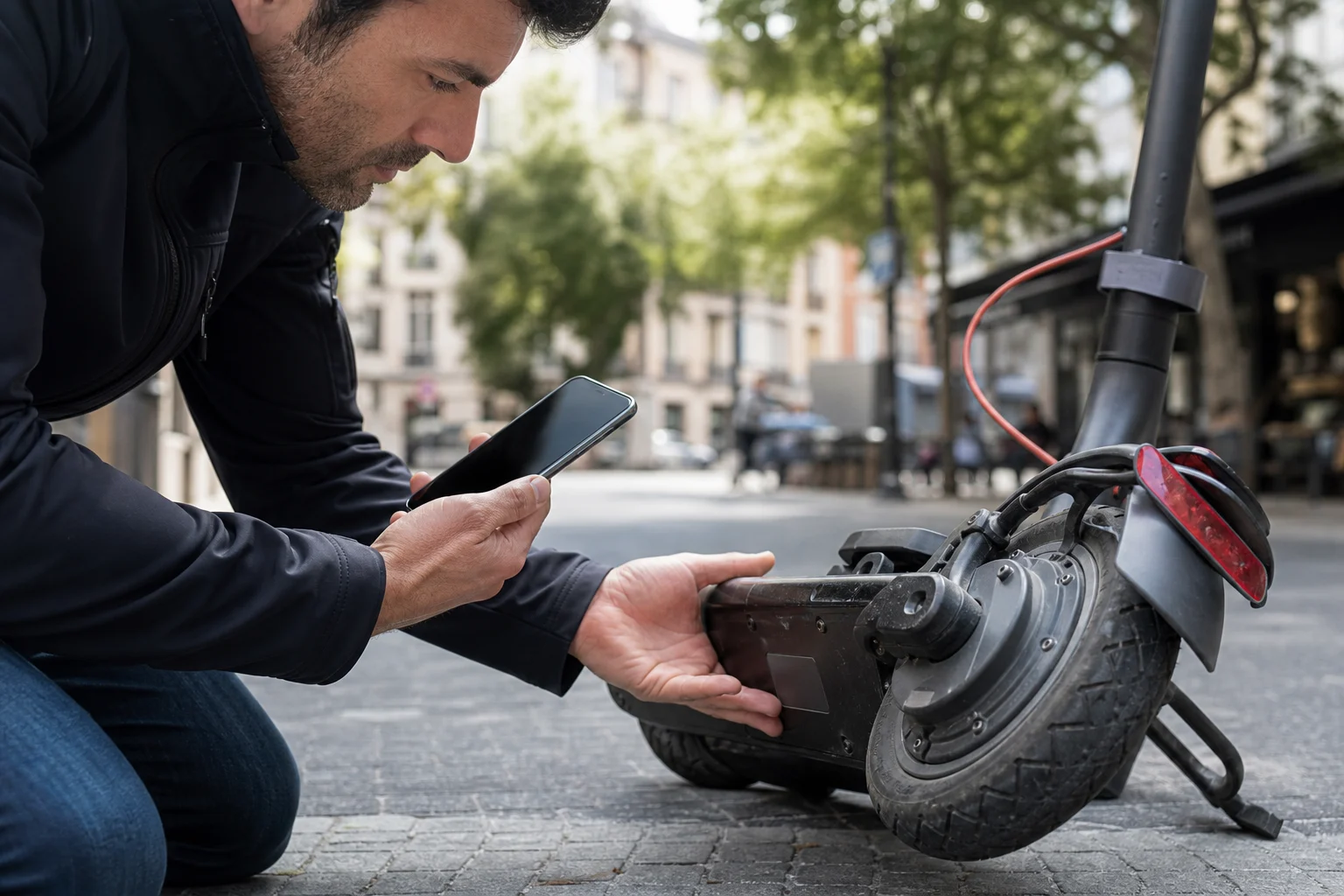
- Find the factory marking and photograph its details before paying a deposit.
- Search the DGT list for the exact make and model, and check the certificate number.
- Check that the vehicle is registered and displays its identification label.
- When buying used, confirm who is recorded as the holder and arrange the transfer after purchase.
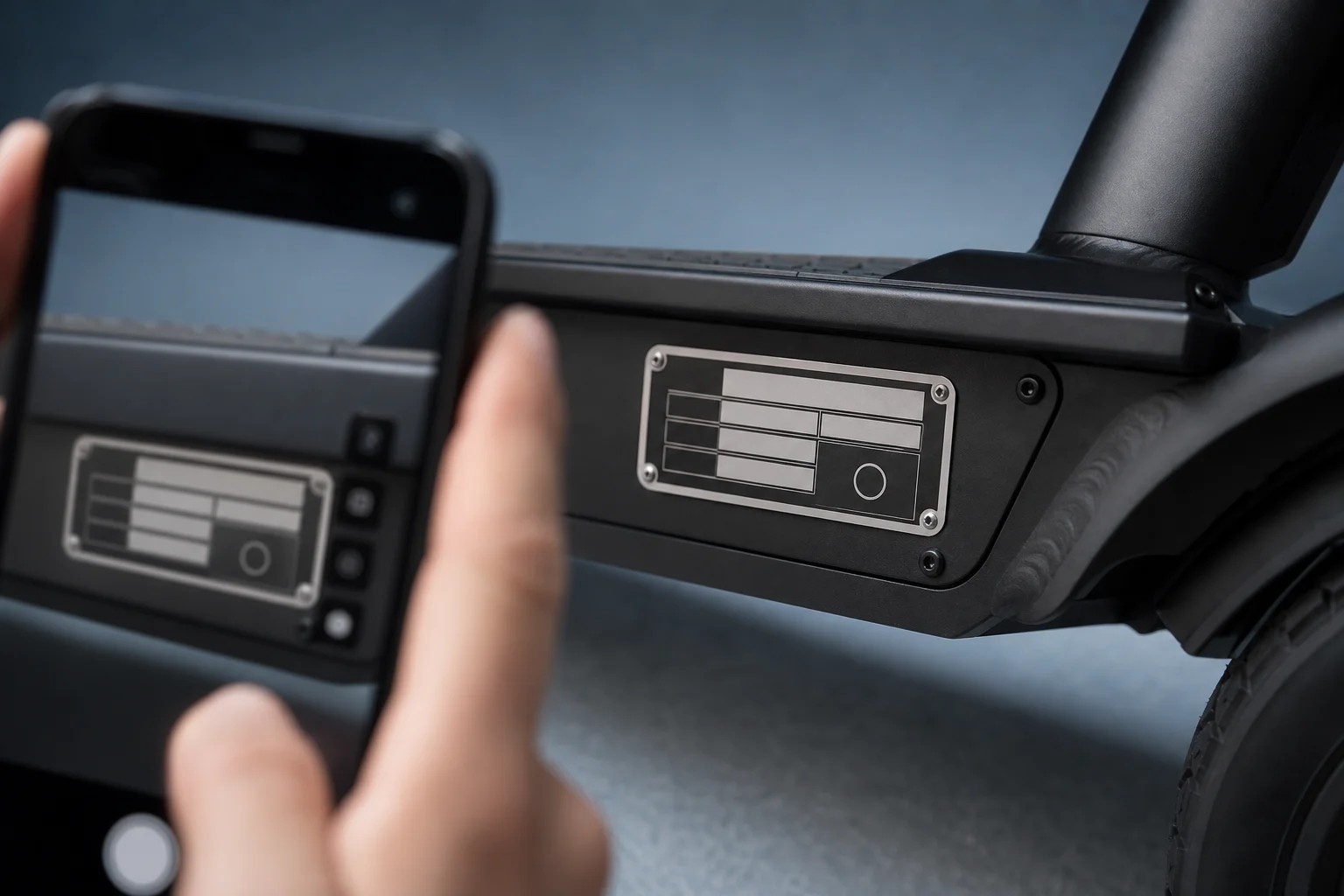
What the VMP certificate of circulation certifies, and what it does not
The VMP certificate of circulation is not a commercial label or a general statement from the shop. The rules define it as a document issued by a competent third party appointed by the Central Traffic Headquarters. Its purpose is to confirm that the vehicle submitted for testing meets the technical requirements that apply to it.
This is why you need to be precise about the model. Certification does not automatically carry across between products from the same make or between scooters with similar names. The regulations distinguish between model and version using the data in their specifications; a difference in version can be decisive. Ask the seller for the full designation as it appears on the marking, and do not rely on a promotional image or a screenshot of another product’s specification sheet.
Do not confuse a VMP certificate of circulation with stated power or the presence of accessories either. The DGT states that certified VMPs incorporate anti-tampering systems for speed and power. A scooter advertising a particular power output does not prove that it is certified.
Section references: Real Decreto 970/2020: definición y certificado de circulación VMP ↗ · DGT: recordatorio sobre VMP certificados, marcaje y listado ↗
- Be wary of imprecise claims such as “suitable for city use”, “legal” or “with European certificate” if the VMP certificate number is not provided.
- Request a clear photograph of the marking before travelling to view a scooter advertised at a distance.
- Do not assume that a variant with a different name, battery or equipment is covered by another version’s certificate.
- Certified VMPs have anti-tampering measures for both speed and power.
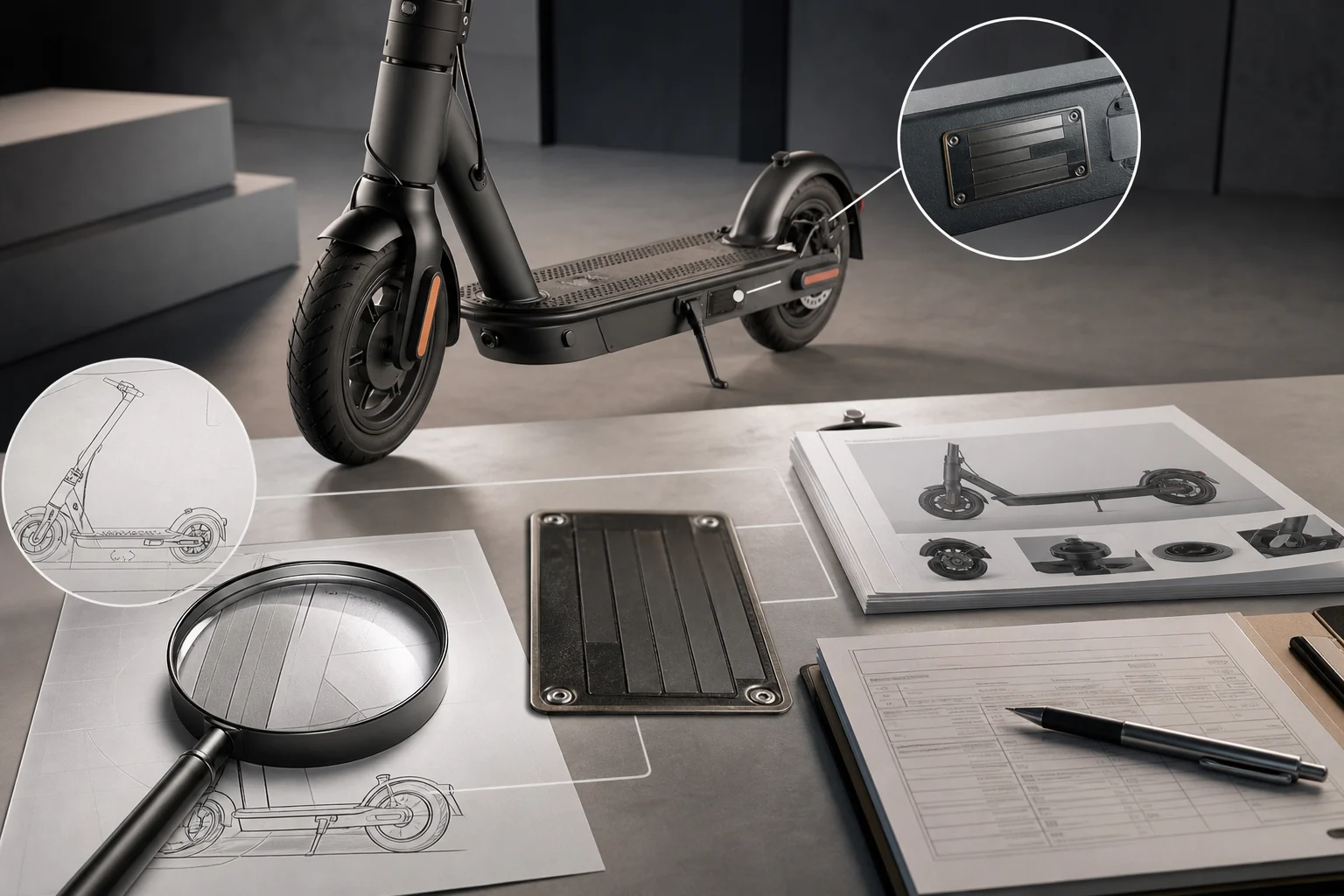
How to use the DGT’s official list of certified vehicles
The DGT publishes a separate official list for VMPs intended for personal transport and those intended for goods transport or other services. For the usual purchase of a single-seat scooter, consult the personal transport section. The list shows, at a minimum, the make, model and VMP certificate number.
Make the search with the scooter in front of you or with good-quality photographs. First compare the make. Then check the exact model name. If the marking or documentation identifies a version, check that too. Finally, make sure that the unit’s certificate number matches the list. A partial match—for example, the same make and a very similar designation—does not remove the need to check the remaining details.
Keep a screenshot or link to the entry you find, together with images of the marking, in your purchase file. It does not replace the applicable procedures, but it helps document which unit was checked and which data were used for the verification.
Section references: DGT: Vehículos de Movilidad Personal (VMP) ↗
- Go to the DGT VMP page and open the list of certified makes and models for personal transport.
- Search by make and compare the model exactly, without abbreviating it or replacing it with a range name.
- Match the result to the certificate number shown on the factory marking.
- If you cannot find an unambiguous match, ask the seller for documentary clarification and postpone the purchase.
Documentation and identification: what to ask the seller for
The factory marking is the basis for identifying a specific unit. According to the DGT, it must show the maximum speed, serial number, certificate number, year of manufacture, make and model. Check it directly: a blurred photograph, a damaged plate or details that conflict with the listing are reasonable grounds to stop the purchase.
As well as checking the certificate of circulation, request evidence that the VMP is registered and carries the required identification label. The current rules require a certificate of circulation, registration in the National Vehicle Register, and the label to be displayed in accordance with the regulations. Do not treat these three requirements as alternatives.
It is advisable to record in writing in the sale contract the details identifying the scooter: make, model, serial number and, where applicable, the certificate number. This is a practical measure to ensure that the unit handed over is the one checked and to facilitate the ownership transfer.
Section references: Real Decreto 52/2026: Registro de Vehículos Personales Ligeros ↗ · DGT: recordatorio sobre VMP certificados, marcaje y listado ↗
- A full, legible photograph of the factory marking.
- Make, model, serial number, year of manufacture, maximum speed and certificate number checked against the relevant information.
- Proof of registration and an identification label visible on the vehicle.
- A contract containing the unit’s full identification and the previous holder’s details when buying used.
The dates that change the decision: 2024, 2026 and 2027
VMPs marketed from 22 January 2024 must be certified. By contrast, those marketed up to 21 January 2024 without a certificate of circulation benefited from a transitional riding regime. That regime does not make the model certified or allow its use to be extended indefinitely.
The key date for these non-certified vehicles is 22 January 2027. On that day, their temporary identification ceases to have effect and they will no longer be allowed to circulate. Therefore, buying in 2026 a non-certified scooter from this group may offer a very limited period of lawful use, even if it can be temporarily registered today.
Since 2026, registration in the National Register and display of the identification label have also been compulsory. A non-certified VMP from the transitional period can be registered, but its technical record is limited to make, model and serial number and is exclusively temporary. If you are looking for a purchase to keep and use beyond January 2027, the prudent approach is to choose a unit with a valid certificate of circulation and also verify its registration status.
Section references: DGT: Vehículos de Movilidad Personal (VMP) ↗ · Real Decreto 52/2026: Registro de Vehículos Personales Ligeros ↗
- From 22 January 2024: marketed VMPs must be certified.
- Up to 21 January 2024: non-certified vehicles entered the transitional regime.
- Since 2026: certificate of circulation, registration and identification label are cumulative requirements for circulation.
- 22 January 2027: non-certified VMPs under the transitional regime will no longer be allowed to circulate.
Used vehicles and vehicles that may not be VMPs
When buying from a private individual, start with the physical identity, not the year stated in the listing. Match the serial number and marking against the contract, verify the certificate of circulation in the list, and ask whether the VMP is already registered. If it is, the buyer must apply for the transfer to register it in their name; for a change of ownership of a registered vehicle with a valid certificate of circulation, a thirty-day period is established, and the vehicle and previous holder must be identified.
Also check whether it has been modified. A scooter with illegible marking is a purchase with high documentary risk. Do not settle the doubt based on the advertised power or the fact that it has a helmet, lights or other accessories: advertised power does not prove that the unit is a certified and correctly identified VMP.
Finally, check that the vehicle fits the definition of a VMP. It must have one or more wheels, be designed for one rider, have exclusively electric propulsion, and a maximum design speed between 6 and 25 km/h. Excluded vehicles include, among others, non-self-balancing vehicles with a seat, those intended for competition, those intended for people with reduced mobility, those exceeding certain voltage limits, and those covered by Regulation (EU) 168/2013. If it does not fit, it should not be assessed using the VMP certificate of circulation: it may belong to another category and be subject to different rules.
Section references: DGT: Vehículos de Movilidad Personal (VMP) ↗ · Real Decreto 52/2026: Registro de Vehículos Personales Ligeros ↗ · Real Decreto 970/2020: definición y certificado de circulación VMP ↗
- Do not buy a registered used vehicle without enough information to identify the previous holder and process the transfer.
- Apply for the ownership transfer within thirty days where it applies to a registered vehicle with a valid certificate of circulation.
- Reject units with illegible serial or certificate numbers or discrepancies between the plate and the listing.
- If it has a seat and is not self-balancing, is designed for competition or does not meet the definition, do not assume it is a VMP.
What is a VMP certificate of circulation?
The VMP certificate of circulation is a specific document confirming compliance with the technical requirements for the tested vehicle. To verify it, you must compare the make, model and certificate number against the DGT’s official list.
Can a scooter without a VMP certificate of circulation circulate in 2026?
It can only fall under the transitional regime if it was marketed by 21 January 2024. That regime ends on 22 January 2027. In addition, the current rules require registration in the National Register and a displayed identification label.
What details must appear on the factory marking?
The DGT states that it must include maximum speed, serial number, certificate number, year of manufacture, make and model. These details allow a specific unit to be checked against the official list.
What should I do if I buy a registered VMP scooter second-hand?
You must apply for the transfer to register it in your name. For vehicles registered with a valid certificate of circulation, the rules set a thirty-day period and include identification of the vehicle and the previous holder among the required details.
Does motor power determine whether it is legal as a VMP?
No. Advertised power does not replace the certificate of circulation or verification of the model’s identity. The DGT states that certified VMPs incorporate anti-tampering systems for both speed and power.