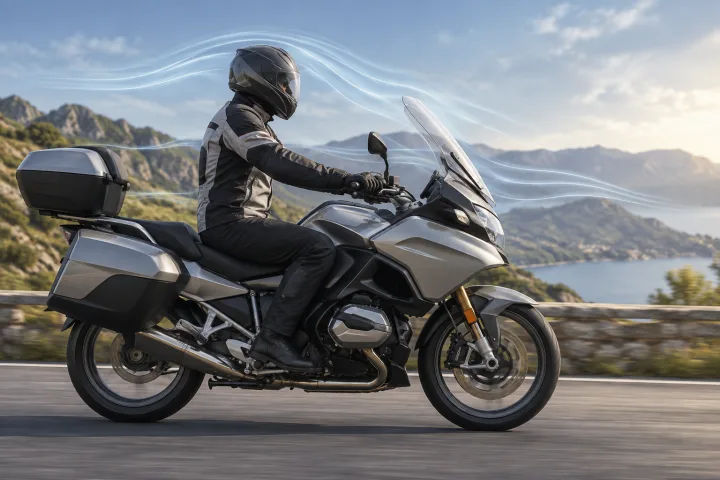
Crosswinds on a Motorcycle: How to Anticipate Gusts
Bridges, tunnel exits and overtaking can expose a motorcycle to sudden changes in the wind. These tips can help you prepare your route and decide when to stop or postpone your journey.
Key points
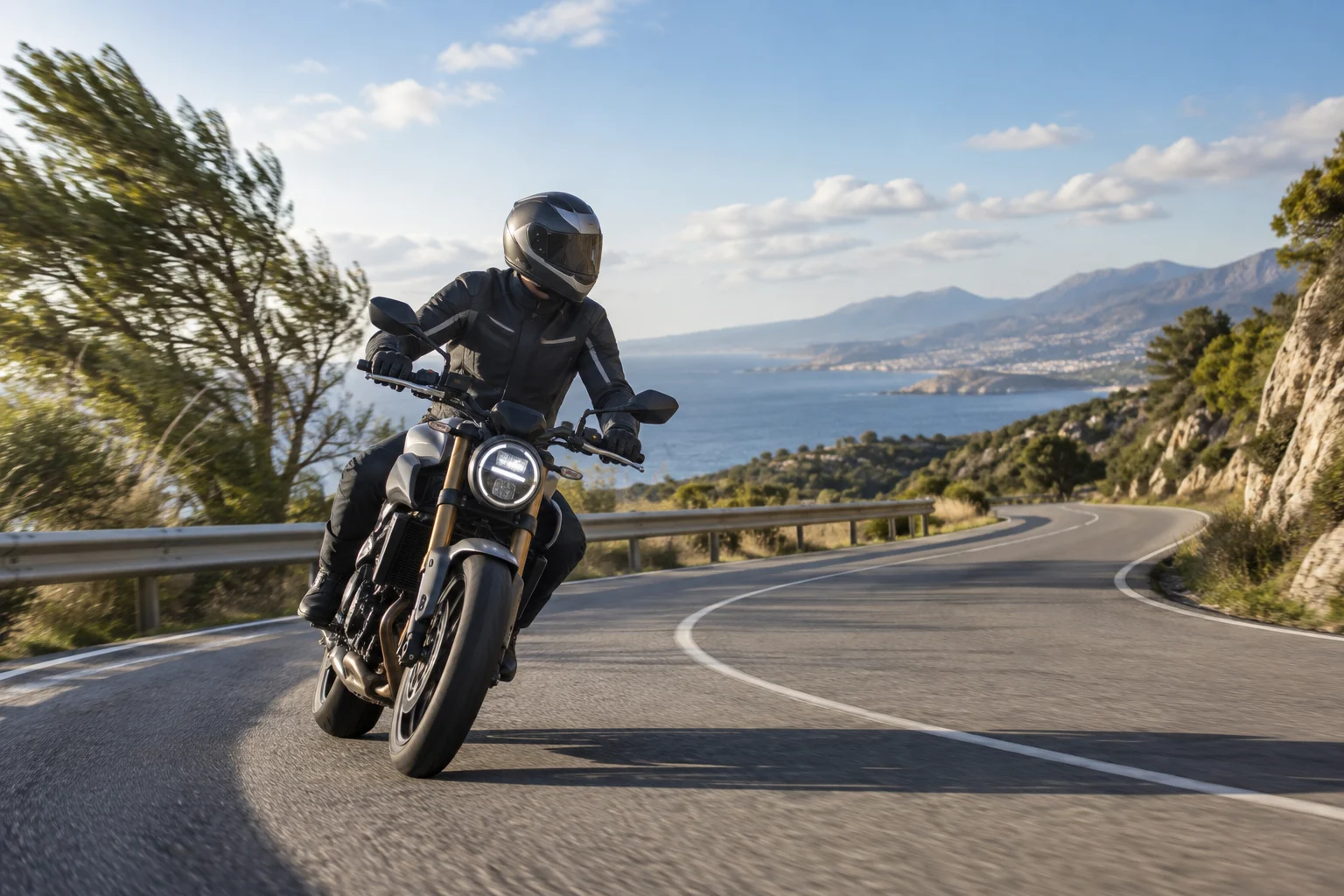
Crosswinds can push a motorcycle off course, especially in open areas, tunnel exits and when passing large vehicles. Check the route forecast, ride at a moderate speed and avoid overtaking if gusts make it difficult to maintain your line.
Why a gust can push a motorcycle off course
A crosswind gust can push a motorcycle off its line. Spain’s Directorate-General for Traffic (DGT) warns that very strong winds can destabilise it, particularly in open areas and when passing large vehicles. It is not just a matter of comfort: if the force changes suddenly, it can become harder to maintain your chosen line.
The wind may not feel the same throughout the journey, either. Some stretches may be sheltered while others are exposed, so apparently calm riding does not guarantee that conditions will be the same further along. There is therefore no single technique or speed that works for every motorcycle, road and gust. The priority is to anticipate conditions, moderate your speed and assess whether it is safe to continue.
Section references: Conductas imprudentes en motocicleta: meteorología adversa ↗
- Pay attention to your line and changes in the force of the wind, not just how windy it feels overall.
- Bear in mind that an open area or the proximity of a large vehicle can change how exposed you are.
Bridges, tunnels and open areas: where to expect changes
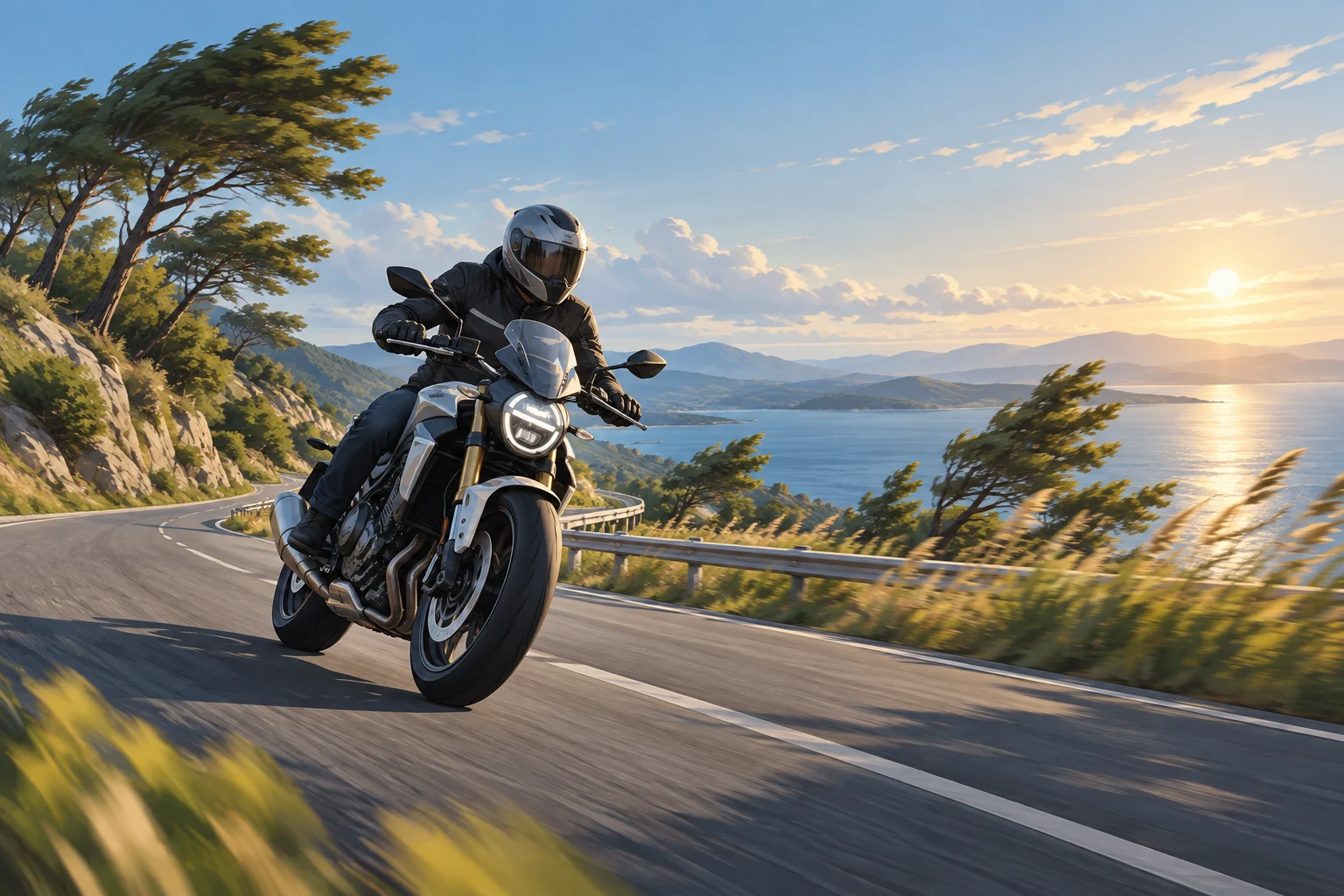
Take extra care as you approach bridges and other exposed areas. The DGT notes that wind socks are often installed on bridges and in sensitive areas to show the wind direction. Vegetation can also provide a visual indication of which way the wind is blowing, although looking at it alone cannot tell you how gusts will develop.
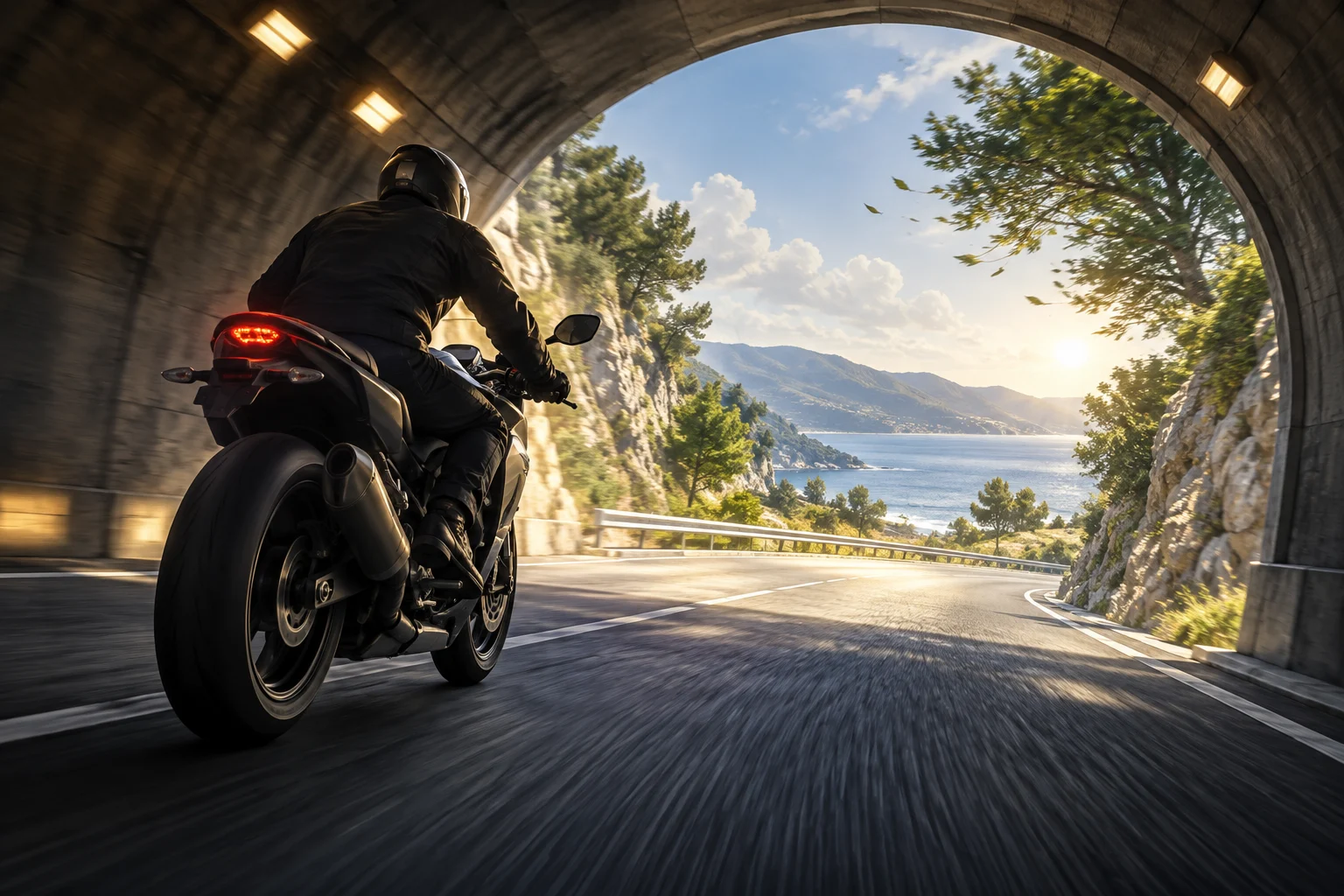
Tunnel exits are another place where it pays to anticipate changing conditions. Once you leave the shelter of a tunnel, crosswinds may appear and push the vehicle off course. On a motorcycle, the prudent approach is to recognise the change in surroundings and be prepared for exposure to vary, rather than assuming conditions will remain sheltered because they were on the previous stretch.
You should also take care when passing a large vehicle. The DGT describes the so-called screen effect: the force on you changes as you ride alongside and then pass the large vehicle. It therefore recommends avoiding overtaking in strong winds. If the wind makes it difficult to maintain a stable line, do not begin an overtaking manoeuvre.
Section references: Conducir a través del vendaval ↗ · Ráfagas peligrosas ↗ · Ráfagas + túnel + adelantamientos ↗
- Before a bridge, tunnel exit or open stretch, watch your surroundings and look for visible signs of wind.
- Avoid overtaking large vehicles when gusts are strong or you are finding it hard to maintain your line.
How to adapt your riding and attention
The DGT’s motorcycle safety manual recommends keeping a firm grip on the handlebars, riding in the centre of the lane and maintaining a moderate speed. These are general guidelines for dealing with gusts; they are not a manoeuvre that guarantees stability in every circumstance. If the force of the wind is difficult to control, do not rely on a particular speed or assume that every motorcycle will respond in the same way.
The DGT’s general recommendations for riding in windy conditions include reducing your speed and increasing your following and side-to-side distances. In practice, that means leaving more room around other vehicles and avoiding situations that require you to react with little space. Stay aware of your surroundings: large vehicles and exposed areas can make conditions change quickly.
Do not treat the centre of the lane as an automatic rule if the situation requires you to assess the space available: the official recommendation for motorcycles is to ride in the centre, but you must always take traffic and actual conditions into account. If you cannot maintain a stable line or anticipate what is happening around you, the prudent choice is to find a suitable place to stop, away from the road.
Section references: Conductas imprudentes en motocicleta: meteorología adversa ↗ · Ráfagas peligrosas ↗
- Keep a firm grip on the handlebars and ride at a moderate speed, without relying on a universal figure.
- Increase your following and side-to-side distances, and avoid overtaking in strong winds.
- If riding becomes difficult or dangerous, make stopping in a safe place your priority.
What to check before setting off
Do not just check the forecast for your starting point. AEMET offers MeteoRuta, which lets you check weather conditions relevant to driving, including wind, along a route and see how they are expected to change by the hour over the next 24 hours. You can select your origin, destination and departure time, which can help you identify periods or stretches that need particular attention.
As a further check, AEMET’s hourly forecast for municipalities includes wind direction, speed, maximum gusts and weather warnings. Reviewing these details for towns along your route can give you a more complete picture than a general forecast. Also check the DGT’s traffic recommendations before setting off, especially if your journey includes exposed roads.
Use the forecast to help you decide, not as a guarantee that the wind will be uniform throughout your journey. If your route crosses open areas, bridges or tunnel exits, include those points in your assessment. If the data or warnings indicate conditions that concern you, consider changing your departure time or route, or postponing your journey.
Section references: MeteoRuta: servicio meteorológico para la red vial ↗ · Predicción por horas para municipios ↗ · Recomendaciones de tráfico ↗
- Check how wind conditions and forecast gusts may change along your itinerary and at your departure time using MeteoRuta.
- Check hourly wind direction, speed, maximum gusts and warnings for towns along your route.
- Review the DGT’s traffic information and reassess your plan if conditions change.
When to rethink or stop your journey
There is no universal safe speed for riding in crosswinds: the official sources cited do not specify a figure for motorcyclists. The DGT’s specific advice is to maintain a moderate speed, but your decision depends on whether you can continue riding under control and how conditions along the route are developing. A number on its own cannot replace that assessment.
Before setting off, rethink your journey if the forecast, gusts or warnings make the route seem difficult to tackle. If the wind makes riding difficult and dangerous while you are on the road, the DGT recommends stopping away from the road, in a suitable place, and waiting for the conditions to ease before continuing. Do not stop in an exposed spot or on the carriageway.
As a final check, ask yourself whether you have reviewed the whole route, can avoid overtaking large vehicles and have a reasonable alternative for waiting or changing your plan. If the answer to any of these questions is no and gusts are compromising your control, postponing the journey is a prudent option. No riding guideline removes the risk when conditions make it unsafe to continue.
Section references: Conductas imprudentes en motocicleta: meteorología adversa ↗ · Recomendaciones de tráfico ↗
- Before setting off: check your route, hourly forecast, gusts and warnings.
- On the road: avoid overtaking in strong winds and leave plenty of space around you.
- If the wind makes riding dangerous: stop away from the road in a suitable place and wait for conditions to improve.
What is a safe speed for riding a motorcycle in a crosswind?
There is no universal figure in the recommendations consulted. The DGT advises riding at a moderate speed; if gusts make it difficult to maintain your line or make riding dangerous, it is best to stop in a suitable place.
Should I overtake a lorry in strong winds?
The DGT recommends avoiding overtaking in strong winds. The force on you can change as you pass a large vehicle, because of the so-called screen effect.
Where can I check the forecast wind along a route?
AEMET offers MeteoRuta, which shows how wind along your itinerary is forecast to change by the hour over the next 24 hours. You can also check the hourly forecast for municipalities, which includes wind direction, speed, maximum gusts and warnings.
What should I do if gusts make riding dangerous?
The DGT recommends stopping away from the road, in a suitable place, and waiting for the conditions to ease before continuing your journey.