Car for high-mileage motorway driving: what to choose and check before buying
The right car for frequent motorway travel is chosen by matching your real routes with comfort, WLTP consumption, range, capacity, driver aids and ownership costs. This guide provides a method for comparing new and used cars without relying solely on the engine badge.

Key points
For frequent motorway driving, no powertrain is automatically best simply because of high annual mileage: compare the exact version against your routes, occupancy, stops and real charging access. Before buying, prioritise driving position, refinement, WLTP phase data, tyres, the driver aids actually fitted and, for a used car, its documented history.
The short answer: the best motorway car is the one that suits your repeated route
If you drive many motorway kilometres, do not choose a powertrain solely because your annual mileage is high. Start by describing the use that will be repeated: distance between stops, type of road, trip frequency, occupants, luggage and the practical ability to refuel or charge. Then compare specific versions, not the model in the abstract.
To decide between petrol, diesel, hybrid, plug-in hybrid or electric, gather the official WLTP consumption, electricity consumption and declared WLTP range figures for each version. European type approval includes these data, so they provide a common basis for comparison. For motorway use, also request the WLTP results for the “high” and “extra high” phases, in addition to the combined figure: the latter does not replace the declared performance in the phases that most closely resemble faster driving.
Comfort deserves the same weight as energy use. A car that forces you to correct your posture, transmits vibrations or creates too much noise may be unsuitable even if its consumption figures are appealing. Spain’s DGT links excessive vibrations and a poorly ventilated or hot cabin with more uncomfortable and tiring driving.
| Step | What you need to define | Document or check to use |
|---|---|---|
| 1. Real use | Kilometres per trip, frequency, passengers, luggage and stops | Record of your usual journeys |
| 2. Energy | Consumption, electricity consumption and range of the exact version | WLTP data and certificate of conformity for a new vehicle |
| 3. Comfort | Driving position, visibility, noise, vibrations and climate control | Motorway test drive |
| 4. Equipment | Driver aids fitted to that individual car | Trim specification, configurator and physical inspection |
| 5. Used-car risk | ITV, mileage, encumbrances, maintenance and recalls | Full DGT report |
Section references: DGT: conducir con fatiga ↗ · Reglamento (UE) 2024/1257: Euro 7, consumo, energía y autonomía ↗ · Reglamento de Ejecución (UE) 2025/1707: valores WLTP por fase ↗
- First rule out cars that do not meet your needs for seats, luggage and stops.
- Always compare the exact trim, model year, tyres and powertrain.
- Prioritise a motorway-speed test drive and the documents for the individual car.
- Calculate the ownership budget, not just the purchase price or advertised consumption.

Define the mission before looking at body styles and engines
It is worth turning a general impression — “I travel a lot” — into a one-page use profile. Note your annual mileage, but also the distance of your usual trip and your longest trip, how many days a week you drive, whether you drive at night, and how many people and bags you carry. These details determine whether the practical limit is range, stops, boot space, available room or accumulated fatigue.
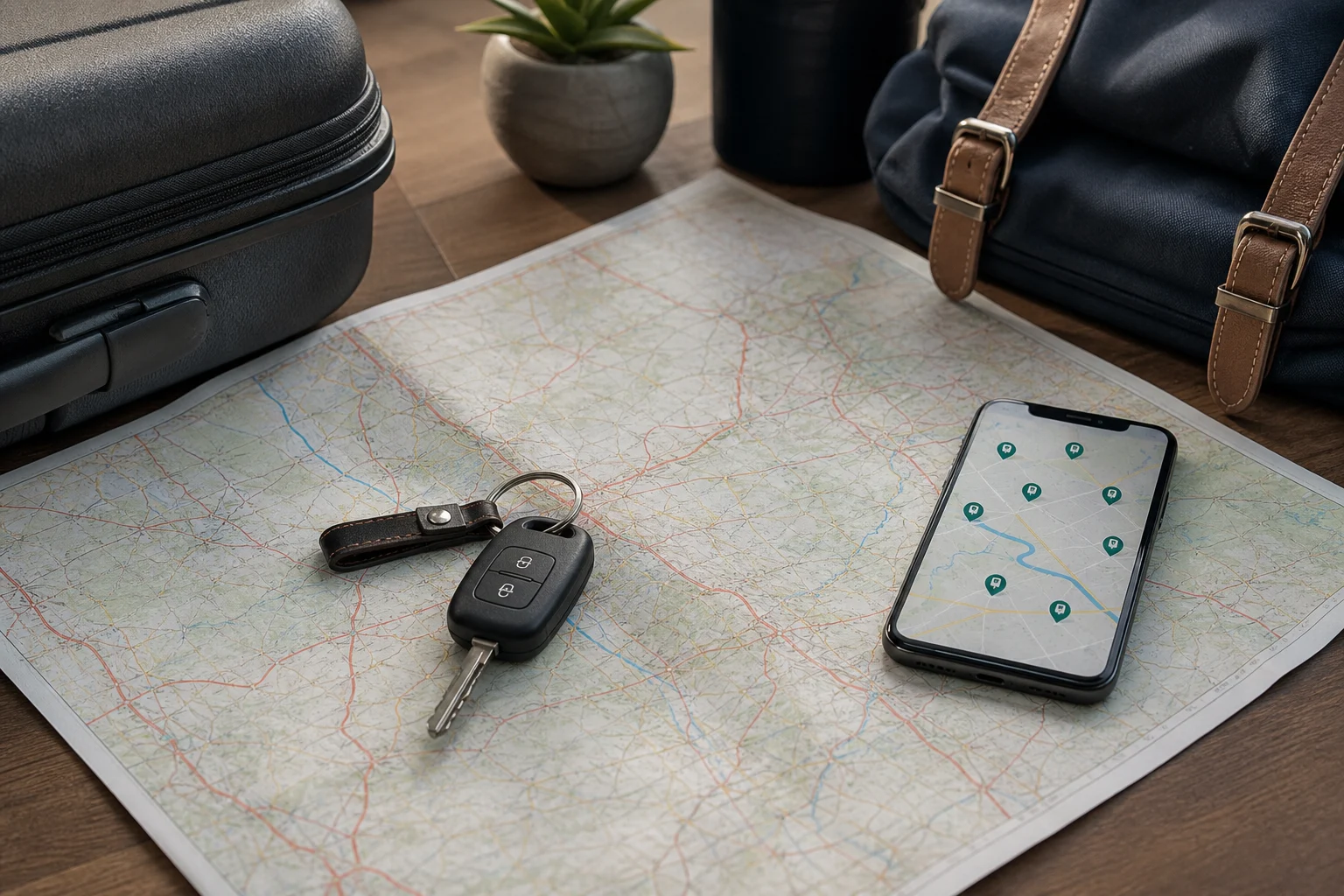
Charging availability should not be assessed based on a general idea that there are chargers on the roads. Check the specific points on your routes and at your destinations, and plan an alternative in case a point is unavailable. The European Regulation on alternative fuels infrastructure sets deployment targets on specified stretches of the trans-European network and within set deadlines; it does not guarantee uniform coverage on every Spanish motorway.
For an electric car, request the declared WLTP electric range and electricity consumption of the chosen configuration. For a plug-in hybrid, distinguish between equivalent electric range, electricity consumption and values published for different battery states of charge. If you cannot charge regularly where the car spends many hours, this must explicitly weigh in your comparison rather than assuming that a plug will be available.
Section references: Reglamento de Ejecución (UE) 2025/1707: valores WLTP por fase ↗ · Reglamento (UE) 2023/1804: infraestructura de recarga ↗
- Note one weekly route and one particularly demanding holiday or work route.
- Separate the stops you would make for rest from those imposed by energy needs.
- Check charging at the start, destination and regular corridors, with alternative points.
- Assess the car when loaded: occupants, luggage and accessories you normally carry.
Comfort and body style: check what a specification sheet cannot settle
A hatchback, saloon, estate and SUV can all be valid candidates if they meet your mission. Do not use body style as a shortcut for inferring comfort, refinement or capacity: compare the space you actually need and verify the result in person. Priorities may differ for someone travelling alone or as a couple with little luggage and someone who regularly carries several passengers and suitcases.
On the test drive, adjust the seat, head restraint, steering wheel, mirrors and climate control before setting off. If possible, drive a motorway section at a legal speed and check whether you can maintain a relaxed position, see the instruments properly and reach essential controls without taking your attention away. Also assess perceived noise, vibrations over different road surfaces and ventilation effectiveness. These are not approved comfort figures, but they are relevant variables for intensive use.
Check access to the rear seats and boot with your usual luggage. If buying used, inspect wear on the seat, steering wheel, controls and seals, not as standalone proof of mileage but as part of an inspection consistent with the overall condition, available records and ITV history.
Section references: DGT: conducir con fatiga ↗
- Do the steering wheel and seat adjustments allow a stable, relaxed driving position?
- Is front, side and rear visibility sufficient for your height and driving position?
- Do noise and vibrations allow you to hold a conversation without effort?
- Do passengers and luggage for your most common trip fit without improvisation?
Energy, fuel tank, battery and tyres: compare the exact version
Request a comparison sheet for each candidate. Include fuel or energy type, combined WLTP consumption, high and extra-high WLTP values, electric range where applicable, tyre size and price. Do not mix data from different trims or model years: make sure each figure belongs to the configuration you are assessing.
The certificate of conformity is a primary source for verifying the main characteristics and technical performance of a type-approved new vehicle; it must be provided to the buyer free of charge. Use it to cross-check commercial information when completing the purchase. For a used car, request the available documentation and confirm exactly which specification applies to that individual vehicle.
Tyres deserve a specific review because they affect everyday use. The European label makes it possible to compare rolling resistance, wet grip and external rolling noise. The latter does not describe the noise you will hear inside the cabin; nor does the label replace confirming the approved tyre size and the tyres actually fitted to the car. Check condition, wear and consistency between axles on a used vehicle.
Section references: Etiqueta europea de neumáticos ↗ · Reglamento de Ejecución (UE) 2025/1707: valores WLTP por fase ↗ · Reglamento (UE) 2018/858: certificado de conformidad ↗
- Record the high and extra-high WLTP values alongside the combined figure.
- For an electric or plug-in hybrid, add declared WLTP electric range and electricity consumption.
- Cross-check the car’s tyre size against its documentation and consult its European label.
Motorway driver aids: useful, but never a substitute for the driver
For repeated trips, verify which driver aids are fitted to the individual car. Adaptive cruise control can accelerate or brake to maintain the set speed and a safe distance, but it may be optional. Systems related to lane control and speed can also vary by trim, model year, Spanish market, purchased package or subscription.
Do not confuse assistance with autonomous driving. The DGT states that the driver must remain continuously attentive to traffic and ready to take back control. Euro NCAP also assesses assistance competence and safety backup, not a promise of full automation. Its assisted-driving ratings can provide an additional reference, but they do not prove that every example of a model has the assessed system; many are optional.
Before signing, access the car’s menus and check the functions present, their warnings and their conditions of use in the manual. When comparing adverts, do not assume that phrases such as “driver aids” include adaptive cruise control or lane centring. Request the equipment list for that individual car and cross-check it against the manufacturer’s documentation.
Section references: DGT: vehículos con conducción asistida y seguridad vial ↗ · Euro NCAP: Assisted Driving gradings ↗ · Euro NCAP: protocolo de conducción asistida v2.0 ↗
- Confirm whether adaptive cruise control is fitted and how it operates.
- Identify whether the system only warns, intervenes or centres the vehicle in the lane.
- Check the trim, model year, market and any packages or subscriptions.
- Remain attentive and keep your hands ready to control the car at all times.
New or used: complete the purchase with documents and a checklist
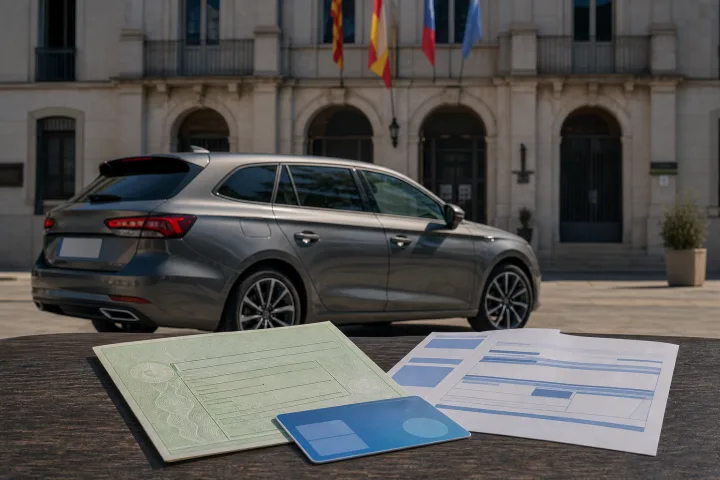
For a new car, keep the final configuration, type-approved WLTP figures and certificate of conformity. For a used car registered in Spain, request the full DGT report before buying. It allows you to review ITV history, mileage, number of owners, encumbrances, outstanding recalls and available maintenance data. The DGT specifically advises requesting it before purchasing the vehicle in order to identify, among other issues, seizure orders, administrative or judicial holds (precintos) or insolvency proceedings.
When considering a high-mileage car for extensive travel, check that its condition, documentation and available maintenance are consistent. Check that the advert, instrument cluster, ITV records and documents contain no contradictions, and that any outstanding recalls have been completed.
Finally, add the acquisition cost to energy, tyres, maintenance, insurance and finance, if applicable. An honest comparison requires applying your mileage and route to all candidates using the same criteria. The annual vehicle cost tool, together with the energy consumption and cost per kilometre calculation, helps rank alternatives, but does not replace checking the individual car.
Section references: DGT: informe de un vehículo ↗
- Request the full DGT report before buying a used car registered in Spain.
- Compare ITV history and mileage with the car’s condition and available documentation.
- Check for administrative or judicial encumbrances and outstanding recalls.
- Keep the configuration sheet, documents and complete ownership budget before deciding.
Which car is suitable for driving many motorway kilometres?
The right one is the car that matches your routes, stops, occupants, luggage and real charging access. Compare the exact version’s combined, high and extra-high WLTP consumption and, where relevant, its declared WLTP electric range and electricity consumption; then validate driving position, noise, vibrations and equipment.
Is combined WLTP consumption enough to compare motorway cars?
No. For predominantly motorway use, it is advisable to add the high and extra-high WLTP values for the exact version, because type approval publishes these phases in addition to the combined figure.
Do motorway driver aids allow you to stop paying attention?
No. The DGT states that attention to traffic must be maintained continuously and that the driver must be ready to take control. You must also confirm that each driver aid is fitted to the car you intend to buy.
What should I request when buying a used car for extensive travel?
Request the full DGT report before buying it. It lets you check ITV history, mileage, owners, encumbrances, outstanding recalls and available maintenance data, and also warns of possible seizure orders or administrative or judicial holds (precintos).