Used car mileage: how to check it is consistent before buying
Learn how to compare a used car’s mileage against the DGT report, ITV records, Spanish circulation permit and maintenance history before completing the purchase.
Key points
A used car’s mileage is more credible when dated readings from the DGT, Spanish ITV roadworthiness inspections and maintenance records follow a logical sequence and match the available documentation. A discrepancy alone does not prove tampering, but a rollback or lack of documented explanation justifies pausing and requesting an independent inspection.
The basic rule: compare a history, not an isolated figure
Checking a used car’s mileage involves more than looking at the number in the advert or on the instrument cluster. The useful question is whether that number fits into a timeline of dated documents: Spanish ITV roadworthiness inspections, available maintenance records, the Spanish circulation permit and a report from the Directorate-General for Traffic (DGT). The more independent readings there are, and the more orderly they are, the easier it is to assess whether the advertised figure is consistent.
Low mileage does not, by itself, prove that a particular vehicle is the better purchase. If there are few documents, the prudent approach is to treat it as a figure that still needs confirming, rather than as an advantage that has already been demonstrated. Conversely, a high reading backed by successive records with no contradictions provides clearer traceability than a low figure with no supporting evidence.
The aim is not to diagnose fraud at a glance. Interior wear, a verbal explanation or a period without invoices may justify questions, but none is conclusive evidence on its own. ITV regulations classify an odometer that is clearly tampered with or clearly out of service as a major defect.
Section references: Informe de un vehículo ↗ · Real Decreto 920/2017, de 23 de octubre, por el que se regula la inspección técnica de vehículos ↗
- Give priority to documents that show an identifiable date and mileage reading.
- Compare readings from different sources, not only documents supplied by the seller.
- Distinguish between a doubt that can be clarified and a chronological inconsistency that should not be ignored.
- Do not confuse a Euro NCAP rating with information used to verify mileage: it appears as separate information in the DGT report.
What each document adds to the comparison
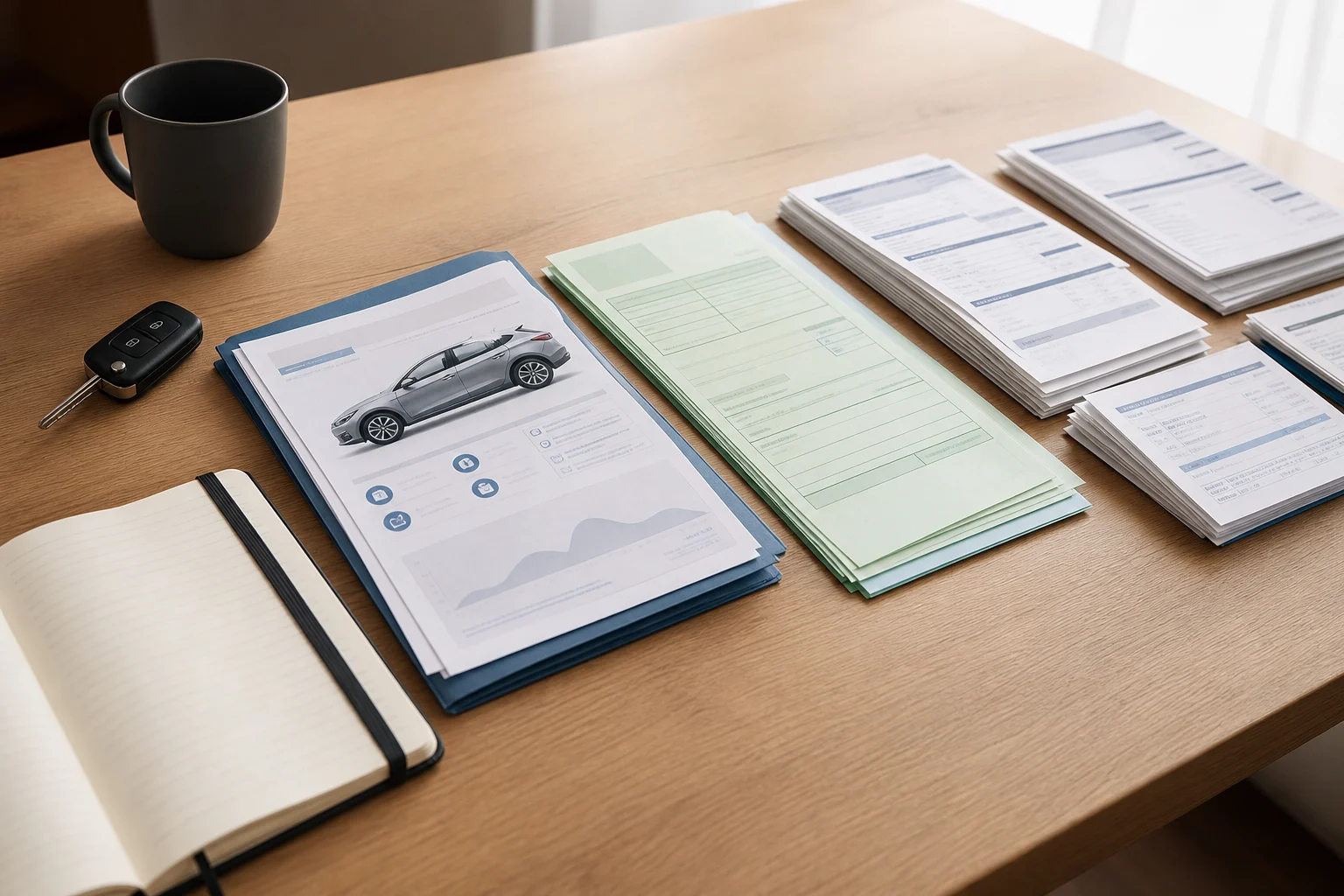
The advert establishes the mileage offered by the seller and lets you keep an initial reference before travelling to see the car. Then ask for that figure to be comparable with documents. The Spanish circulation permit identifies the vehicle’s ownership and, since 2015, includes mileage and information about ITV validity; a new car does not show mileage on this document.
The full DGT report is the most useful starting point because it includes, among other information, ITV history and mileage. It may also show servicing and repairs recorded by garages affiliated with the electronic maintenance book. This is valuable when building the timeline, but it does not make the report a universal history of every garage that has worked on the car.
Invoices, the maintenance book or a digital history can add dates, mileage and work carried out. Check that the vehicle is identified sufficiently and that readings progress logically. The absence of invoices does not prove that the car was not maintained, but it does leave part of its history undocumented; do not fill that gap with assumptions.
| Source | What it lets you check | Limitation to bear in mind |
|---|---|---|
| Advert and seller’s statement | The figure offered before purchase | They do not replace independent dated records |
| Spanish circulation permit | Vehicle identity, ownership and, since 2015, mileage and ITV information | A new car does not show mileage in this document |
| Full DGT report | ITV history and mileage; possible maintenance information | Maintenance records depend on garages affiliated with the electronic maintenance book |
| Invoices, maintenance book or digital history | Dates, mileage and work carried out when recorded | They may not cover the vehicle’s entire life |
Section references: Informe de un vehículo ↗ · Libro electrónico de mantenimiento ↗ · La documentación de un vehículo ↗
- Advert: note the stated mileage and save a copy before viewing the car.
- Spanish circulation permit: compare the vehicle’s identity, ownership and mileage where it is shown.
- Full DGT report: check the mileage and ITV history before committing to a deposit.
- Maintenance: arrange servicing records, recorded mileage and garage details where records exist.
- Invoices: use them to confirm dated milestones, not as a replacement for comparing the entire sequence.
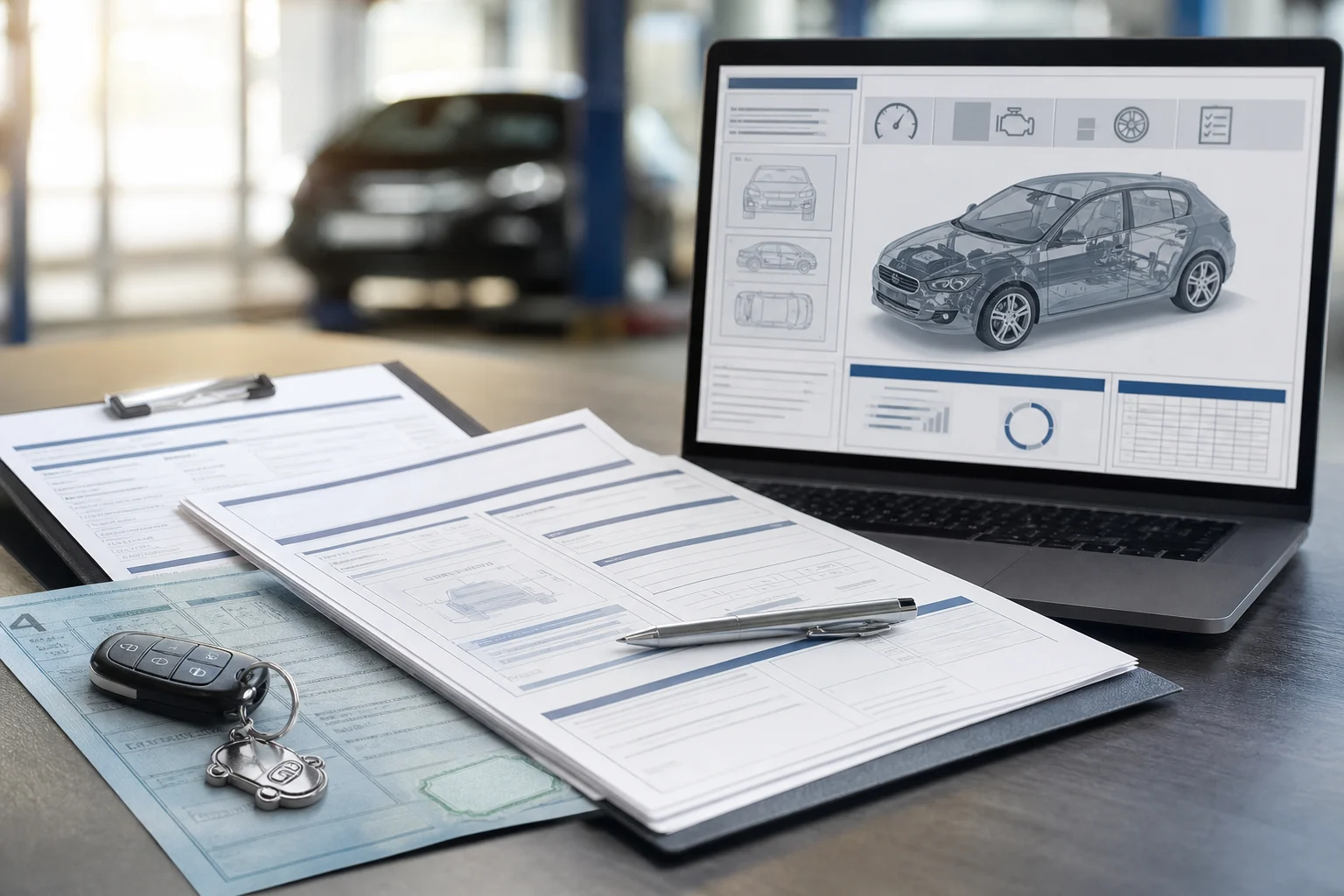
DGT report: request it before purchase
Before purchasing, request a DGT vehicle report and choose the full report if you need to check the mileage. Anyone may request vehicle reports, except for the report on vehicles registered in the requester’s name, which is reserved for the vehicle owner or an authorised person. If the reduced report shows an issue, the DGT recommends requesting the full report or consulting Traffic before continuing with the purchase.
When reviewing it, focus on the dates and mileage readings in the ITV history, then look for servicing or repairs recorded in the electronic maintenance book. Do not simply check that a mileage figure exists: note down every available reading so that you can compare it with the invoices and the figure in the advert.
There is an important caveat for imported cars. The DGT states that its reports concern vehicles registered in Spain. Therefore, the report may help assess its traceability from Spanish registration onwards, but it cannot document its earlier use in another country. Request specific documentation for that period or consider that there is a period without Spanish traceability.
Section references: Informe de un vehículo ↗ · Comprar un vehículo de segunda mano ↗
- Request the full report before purchase if you need to check the mileage.
- Review the ITV sequence and mileage, rather than simply confirming that a report exists.
- Check whether there are electronic maintenance-book entries and what mileage they record.
- If it is imported, clearly separate the Spanish history from the period before registration in Spain.
- If the reduced report indicates an issue, do not proceed without expanding on it through the full report or an enquiry to Traffic.
A practical method: build a timeline of readings
First gather the advertised mileage, the reading shown by the car and all dated readings appearing in the DGT report, ITV documents and maintenance records. Arrange them from oldest to newest. For each one, note the date, mileage, source and, where applicable, the garage. This method can reveal a reasonable sequence, periods without records and contradictions that would remain hidden if the papers were viewed separately.
An upward progression does not remove every doubt, but it is the pattern you should expect between comparable readings. If a later reading is lower than an earlier one, there is a rollback requiring a documented explanation. ITV regulations cover tampering intended to reduce or misrepresent the recorded distance; if it is identified during an inspection, it must be reported to the competent regional metrology authority.
A gap without traceability does not automatically mean that the odometer has been altered. However, the more important it is to your purchasing decision, the more reasonable it is to request documents that clarify it or arrange a professional inspection. The DGT recommends having the vehicle checked by a professional.
Section references: Libro electrónico de mantenimiento ↗ · Comprar un vehículo de segunda mano ↗ · Real Decreto 920/2017, de 23 de octubre, por el que se regula la inspección técnica de vehículos ↗
- Copy readings exactly, without rounding them or reconstructing them from memory.
- Sort by date, not by the order in which the seller hands over the documents.
- Mark rollbacks and undocumented periods in a different colour.
- Request an explanation supported by documents if a later reading is lower.
- Finally, compare the latest documented reading with the instrument cluster and the advert.
How to respond to a discrepancy: clarify, inspect or pause
Not all discrepancies matter equally. Incomplete documentation or low mileage that does not yet match the available records calls for clarification and more evidence, not an accusation. Ask the seller for invoices, the available maintenance book or digital history, and an organised explanation of periods that are not covered. A useful answer can be verified: it provides dates, readings and documents; a solely verbal answer leaves the doubt unresolved.
Pause your decision if there is a rollback between dated readings and no consistent documentary explanation is provided, if the odometer is clearly out of service, or if the documentation does not allow the records to be reliably linked to the car. ITV regulations classify an odometer that is clearly tampered with or clearly out of service as a major defect. In these cases, prudence means not turning a significant uncertainty into a rushed purchase.
An independent professional inspection is particularly reasonable when the timeline contains significant gaps, the purchase value makes resolving the doubt important, or the documentation does not allow a clear conclusion. It does not replace the documents, but it follows the DGT recommendation to have the vehicle checked by a professional.
Section references: Comprar un vehículo de segunda mano ↗ · Real Decreto 920/2017, de 23 de octubre, por el que se regula la inspección técnica de vehículos ↗ · Inspección Técnica de Vehículos (ITV) — Manual de procedimiento, versión 7.9 ↗
- Ask: “Which dated document explains this mileage difference?”
- Request legible copies of the records mentioned by the seller.
- Do not treat wear or a low figure as isolated proof of fraud.
- Request an independent inspection when there is insufficient traceability for an informed decision.
- Pause the transaction if there is an unexplained rollback or an odometer that is clearly out of service.
Does a DGT report always confirm a used car’s true mileage?
The full report includes mileage and ITV history, making it an essential source for comparing dated readings. It should be compared with the available maintenance documentation and the car itself; in addition, electronic maintenance-book entries only come from affiliated garages.
Is a car with low mileage and few invoices automatically ruled out?
Not automatically. Missing invoices leave periods without traceability, so it is advisable to request clarification and additional documentation. If that uncertainty remains significant, an independent professional inspection is a prudent option.
What should I do if an older ITV record shows more mileage than a later reading?
Treat it as a significant inconsistency and request a documented explanation before proceeding. Regulations cover tampering intended to reduce or falsify the recorded distance; it is not advisable to complete the purchase based only on a verbal explanation.
Can a DGT report show the history of an imported car before it arrived in Spain?
Not on its own. The DGT states that its reports concern vehicles registered in Spain, so Spanish traceability must be distinguished from the period before the car was registered there.
Can anyone request a DGT vehicle report?
Yes, except for the report on vehicles registered in the requester’s name, which is reserved for the vehicle owner or an authorised person. Before buying, the full report lets you review the available ITV history and mileage.