Blind spots and large vehicles: how to drive more safely
A practical guide to driving a passenger car around trucks and buses: overtaking, turns, lane changes, assistance systems and essential checks.
Key points
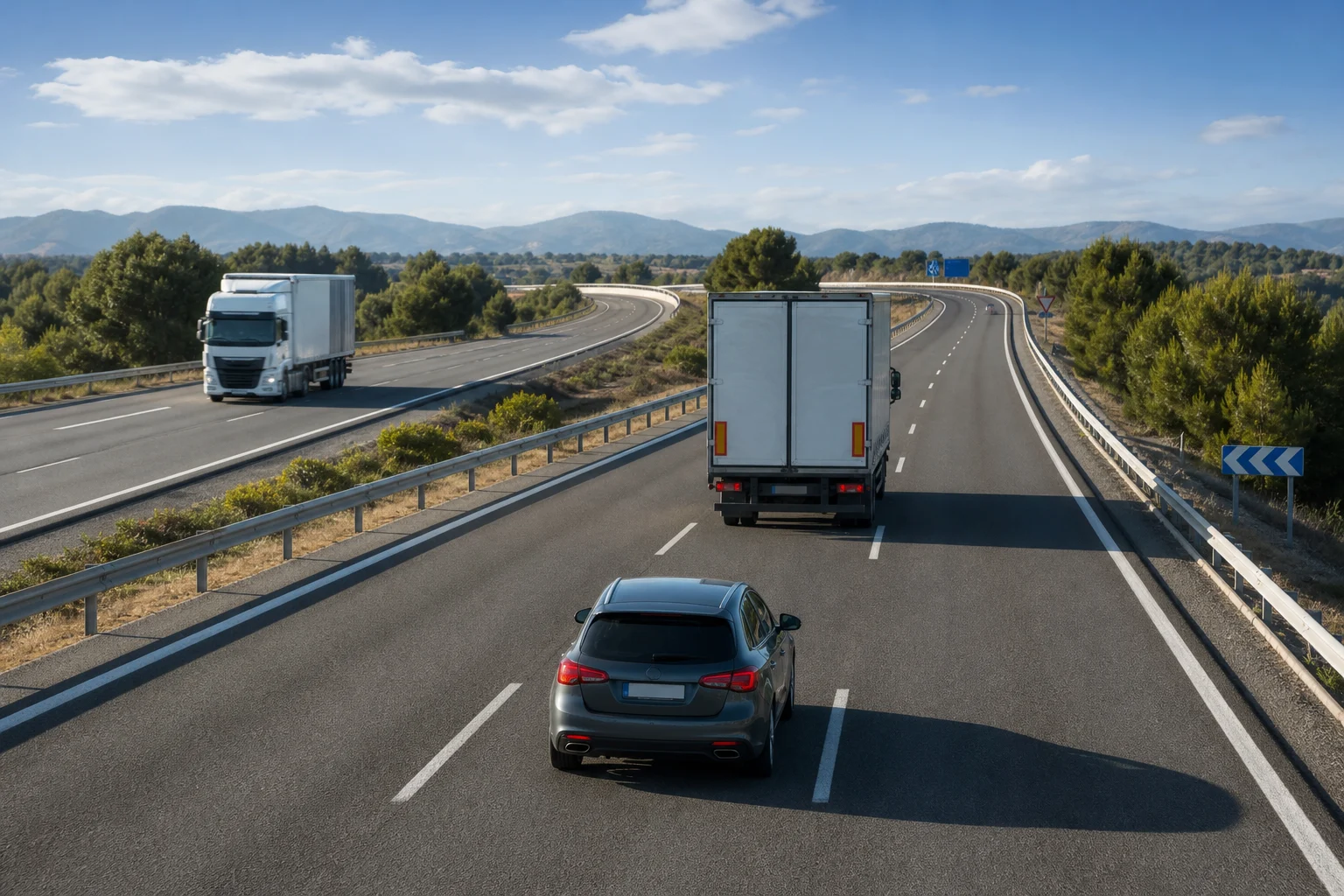
Heavy vehicles have more blind spots than passenger cars because of their size. To share the road with them, avoid staying alongside, aim for mutual visibility and postpone a manoeuvre when there is not enough space or margin.
The essential rule: do not stay alongside a large vehicle unnecessarily
Knowing how to avoid blind spots when driving a car does not mean relying solely on an electronic warning. The decisive preventive measure is to position the car so that the driver of the other vehicle can notice its presence, while avoiding staying alongside a heavy vehicle unnecessarily.
Spain's Directorate-General for Traffic (DGT) notes that heavy vehicles have more blind spots than passenger cars because of their size. In addition, their large bulk can make it harder for the driver of a car travelling too close to see, a limitation that is especially relevant in rain or on wet roads.
Section references: DGT: precaución al circular junto a vehículos pesados ↗ · Reglamento General de Circulación: texto consolidado consultado ↗
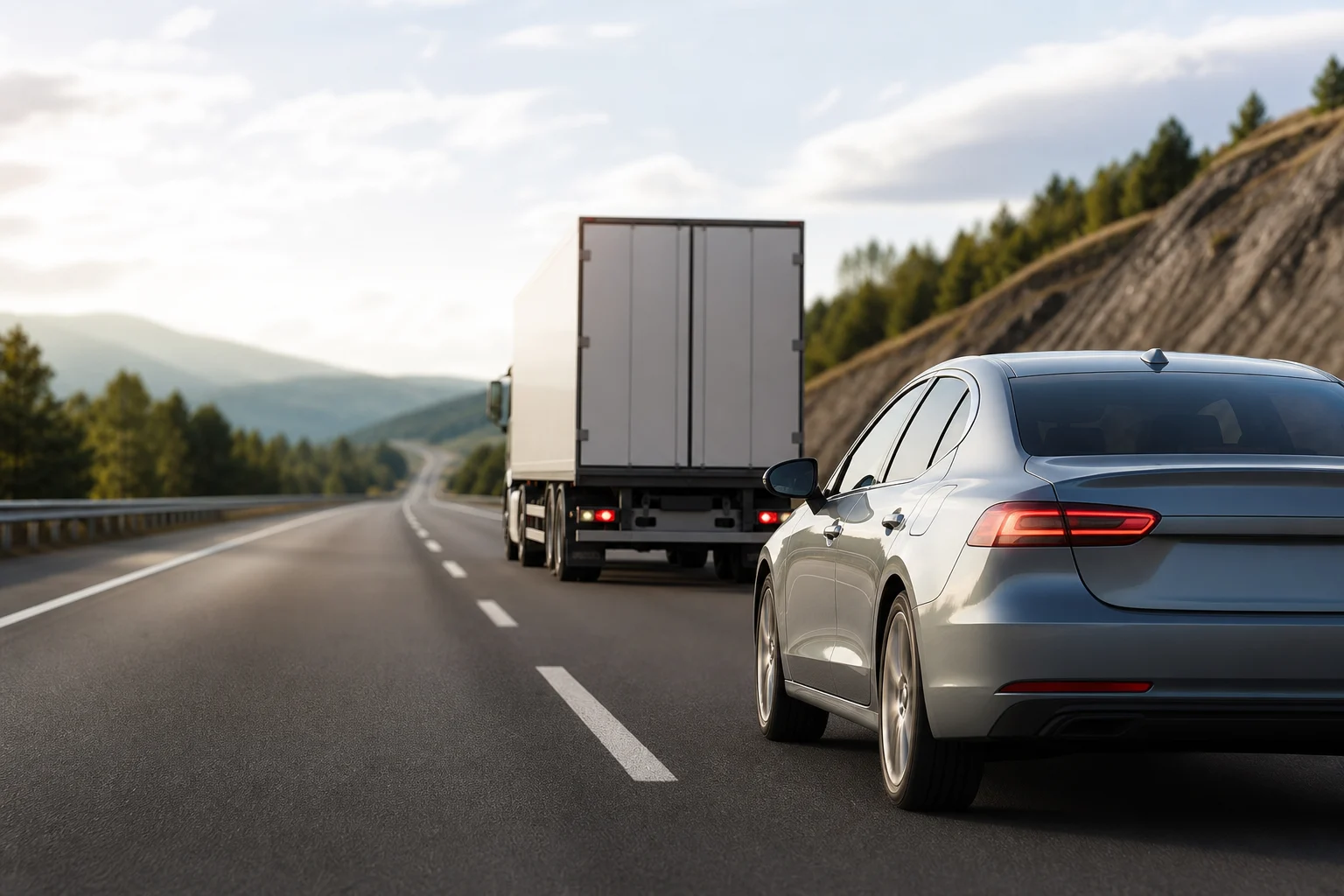
Why blind spots are particularly relevant on heavy vehicles
The DGT explicitly states that a heavy vehicle has more blind spots than a passenger car because of its size. When overtaking or changing lanes, it recommends checking that the driver of the heavy vehicle has noticed the other road user, paying particular attention to motorcycles and bicycles.
Section references: DGT: precaución al circular junto a vehículos pesados ↗ · Reglamento General de Circulación: texto consolidado consultado ↗ · DGT: señalización voluntaria de peligro de ángulos muertos ↗
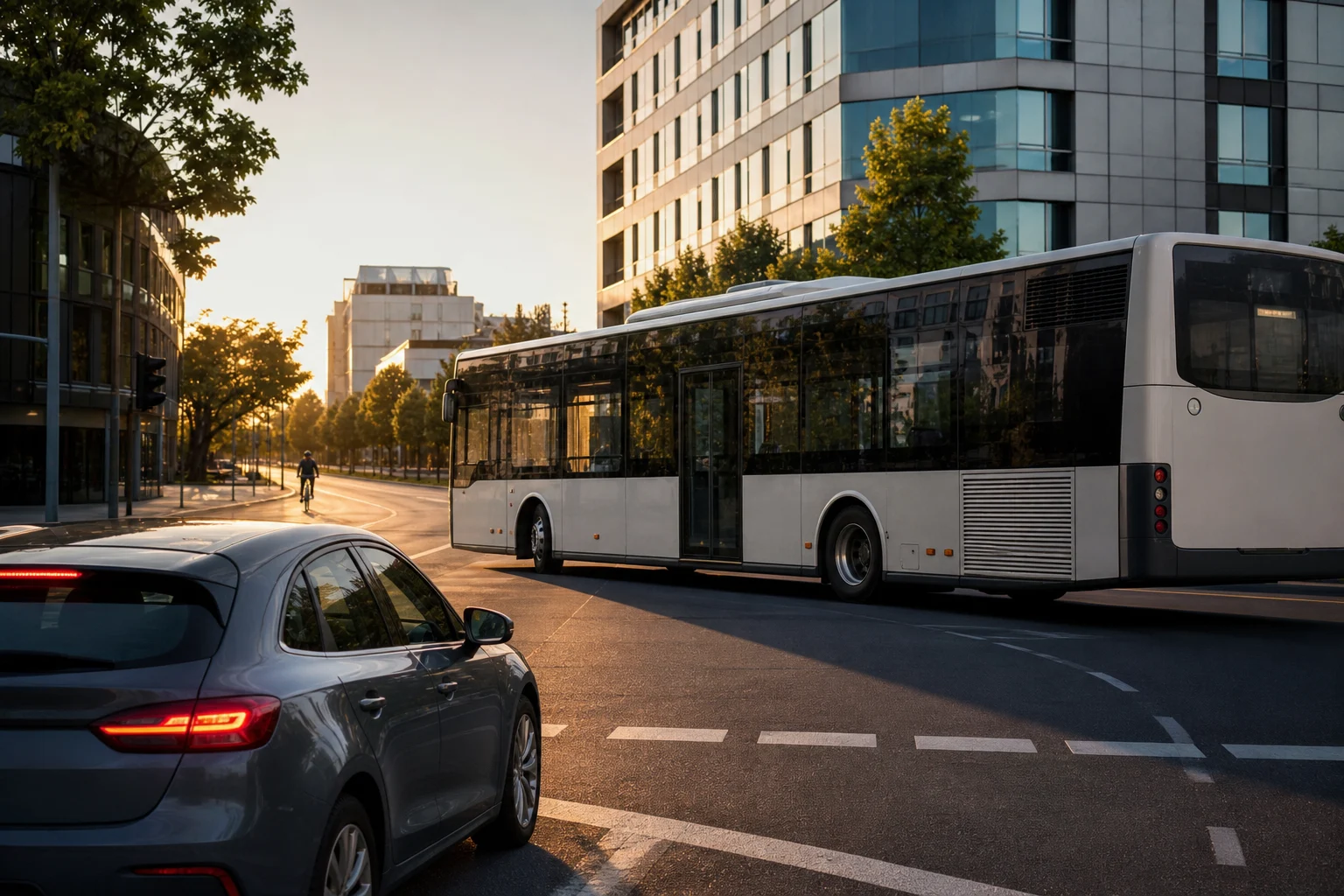
Overtaking, joining and lane changes: decide before travelling alongside
Overtaking a heavy vehicle requires a more cautious assessment. Behind a truck, the field of vision is reduced, and its length affects the time and distance needed to complete the manoeuvre. Before moving sideways, check that there is enough clear space, signal your intention in advance and do not start if the situation is dangerous. Spain's General Traffic Regulations require drivers to refrain from doing so when that space is not available.
Do not get too close to the rear in order to “peek out”: this reduces your forward view even further. If the road, traffic or visibility do not allow you to decide clearly, wait behind the truck at a safe distance until there is a safe opportunity. It is better to lose a few seconds than to start a manoeuvre without enough margin to complete it.
Once you have started overtaking, avoid travelling alongside for longer than necessary. The DGT advises returning to the right-hand lane when the truck is visible in the interior rear-view mirror, while keeping a safe distance behind it. The same logic applies when joining or changing lanes: signal, check that the lane is clear and respect the priority of whoever is already travelling in it. Do not force your way in expecting the other driver to detect you or alter their path.
Section references: DGT: precaución al circular junto a vehículos pesados ↗ · Reglamento General de Circulación: texto consolidado consultado ↗
- Before overtaking: leave enough distance behind, ensure forward visibility, clear space and advance signalling.
- During the manoeuvre: avoid travelling alongside for longer than strictly necessary.
- When finishing: return to the right only when the overtaken vehicle is visible in the interior rear-view mirror, and keep separation.
- When joining: if there is no safe gap, do not enter; adapt your decision to the priority of traffic already occupying the lane.
Turns, stops and opening doors: do not encroach on other road users' space
In urban areas, a truck or bus may need to swing wide and occupy more than one lane to complete a turn. When a passenger car pulls alongside or tries to pass through what appears to be a free gap, it may encroach on precisely the space the large vehicle needs. The DGT recommendation is to stay behind without occupying that space.
As the driver of a passenger car, anticipate this need when approaching an intersection: observe the large vehicle's signals and remain behind without occupying the space it needs to turn. If you are going to turn your car, you must signal it sufficiently in advance and refrain from doing so if you cannot complete the manoeuvre safely. This check must include whether the manoeuvre can be made without danger, paying particular attention to motorcycles and bicycles.
Prevention continues when stopping the car. Before opening a door or getting out, the Regulations require you to make sure that this does not create danger or hinder other road users, specifically mentioning bicycle riders. Check your surroundings before operating the door.
Section references: DGT: precaución al circular junto a vehículos pesados ↗ · Reglamento General de Circulación: texto consolidado consultado ↗
- When a truck or bus is about to turn, stay behind and do not occupy the swept path of its manoeuvre.
- Before turning your car, signal and confirm that you will not cut off a nearby road user.
- Before opening the door, check that a bicycle or another road user is not approaching from the side.
Mirrors and detectors: useful aids, but not substitutes
Before making a lateral manoeuvre, the Regulations require checking that there is enough clear space and that it can be done safely.
Blind-spot monitoring systems are designed to alert the driver to vehicles in the blind spot. Euro NCAP assesses the information that the system provides in relation to specific target positions; this illustrates that their function is to inform or warn, not to decide the manoeuvre for the driver. As an example of how it works, Ford describes its BLIS system as using sensors and a warning light in the exterior mirrors when it detects another vehicle.
Ford Spain states that its driver-assistance functions are complementary and do not replace the driver's attention, judgement or control of the vehicle. Before changing lanes, the decision must be based on signalling, checking that there is enough space and respecting the priority of whoever is already travelling in the lane.
It is also advisable to interpret blind-spot stickers on professional vehicles with caution. The DGT states that this signage is voluntary for certain categories of passenger, goods and urban-waste transport; it is not a general obligation for all heavy vehicles. The absence of a sticker does not remove blind spots.
Section references: DGT: señalización voluntaria de peligro de ángulos muertos ↗ · Euro NCAP: protocolo técnico de evaluación de monitorización de ángulo muerto ↗ · Ford España: funcionamiento declarado del sistema BLIS ↗ · Ford España: límites generales declarados para asistencias a la conducción ↗
- Use a blind-spot warning as additional information before checking that the manoeuvre can be completed safely.
- In Ford's BLIS example, if there is a warning, check the surroundings and do not complete the lane change until you can confirm that there is safe space.
- Even if there is no warning, you must signal, check that there is enough space and respect the priority of whoever is already travelling in the lane.
- Do not assume that a vehicle has no blind spots because it has no warning sticker.
Checklist before every manoeuvre near a large vehicle
A sequence can help organise the checks beforehand. It is useful in urban areas, ring roads, conventional roads and motorways, although the necessary margin will depend on visibility, traffic and how each situation develops.
Keep a safe alternative available: continue behind, remain in your lane or wait. If you cannot confirm space and margin, wait before starting the manoeuvre.
| Situation | Main risk | Recommended preventive behaviour |
|---|---|---|
| Behind a truck before overtaking | Reduced field of vision and insufficient space to complete the manoeuvre | Keep a safe distance, check for clear space and wait if overtaking may be dangerous. |
| Travelling alongside a heavy vehicle | Prolonging travel alongside the heavy vehicle | Avoid prolonging the parallel position; overtake only when it can be completed with sufficient margin. |
| Lane change or joining | Entering an occupied lane or failing to respect priority | Signal in advance, check the surroundings and respect the road user already travelling in the lane. |
| Truck or bus turning in the city | Encroaching on the extra space the large vehicle needs to turn | Stay behind without occupying the manoeuvre space. |
| Turning or opening a door near other road users | Creating danger for motorcycles, bicycles or other road users | Signal and check that the manoeuvre can be made safely; before opening, ensure that nobody is obstructed or put in danger. |
| Blind-spot warning active or inactive | Over-relying on an assistance system | Treat it as complementary information and maintain attention, judgement and control of the vehicle. |
Section references: DGT: precaución al circular junto a vehículos pesados ↗ · Reglamento General de Circulación: texto consolidado consultado ↗
- Observe: keep your distance and check mirrors before approaching or moving sideways.
- Identify the risk: assess whether the large vehicle may turn or whether motorcycles, bicycles or other road users are nearby.
- Signal: give sufficient advance warning of your intention.
- Check: confirm that there is enough clear space and respect the priority of the lane you intend to occupy.
- Proceed or wait: if you cannot confirm mutual visibility, space and margin, do not start the manoeuvre.
- Finish with distance: after overtaking, wait until you can see the truck in the interior rear-view mirror before returning to the right-hand lane, and leave space behind.
What should I check before a lateral manoeuvre?
Before manoeuvring, the Regulations require you to check that there is enough clear space and that the manoeuvre can be made safely. Keeping your distance and not travelling alongside unnecessarily reduces exposure to risk.
When should I abandon an attempt to overtake a truck?
When you cannot check that there is enough clear space, or when visibility, traffic or the vehicle's length make it doubtful that you can complete the manoeuvre with enough margin. The recommendation is to wait behind at a safe distance until a safe opportunity arises.
What does a blind-spot sticker on a truck mean?
It warns of the danger of positioning yourself in areas that are not visible to its driver. The DGT states that this signage is voluntary for certain categories of transport vehicles; it is not a general obligation for all heavy vehicles, and its absence does not remove blind spots.
Can I change lanes if the blind-spot detector does not warn me?
Not for that reason alone. These systems warn of vehicles in the blind spot, but they are complementary. The driver must still check that there is enough space, respect the priority of whoever is already travelling in the lane and retain control of the manoeuvre.