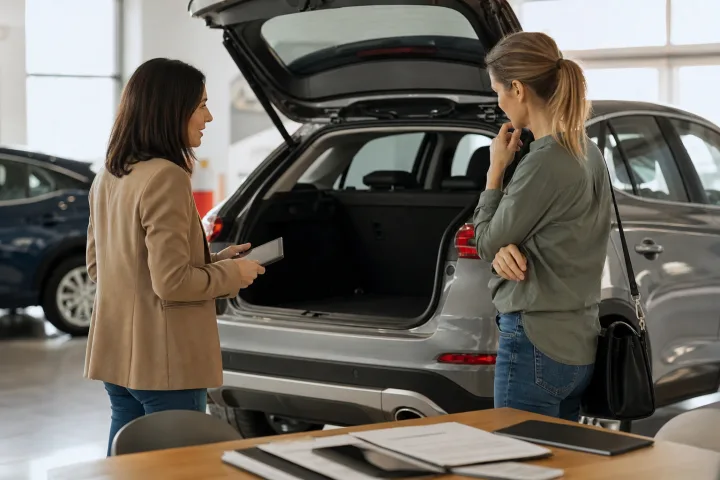
Garage quote: how to read it, compare it and avoid surprises
A practical method for reviewing two or more repair quotes before authorising the work: which documents to request, which fields to compare and what to do if the job needs to be extended.

Key points
To compare garage quotes, looking only at the final total is not enough: check that they describe the same job, identify the vehicle, parts and operations, break down the price, and state their validity period and approval. If extra work arises, ask for its cost and give explicit consent before extending the repair.
The quick answer: compare the scope before the final figure
A useful quote lets you know what will be done and how much each part of the job costs. Before accepting it, check that it identifies the garage, the customer and the car, lists the planned repairs and the items to be repaired or replaced, and shows a broken-down total price. It should also include the date, the provider's signature, the expected delivery date, the validity period and space for your acceptance.
The practical rule is simple: two proposals are comparable only if they refer to the same vehicle, the same reason for bringing it in and the same operations. A lower total may cover fewer planned jobs, different parts or line items that are not separately shown. Do not authorise a repair simply because one overall figure appears lower.
In Spain, you are entitled to a written quote with a minimum validity of twelve working days. The garage may start the service once you have given your consent or have demonstrably waived the quote. Keep the version you accepted: it will be the reference document for checking what was ordered later.
Section references: Regulación estatal de talleres: presupuesto, resguardo, recambios, factura, garantía y reclamaciones ↗
- Do not compare only the final amount: compare the operations, parts and conditions first.
- Check that the make, model, registration number and mileage match your car.
- Check the expected delivery date and validity period before signing.
- Do not confuse a verbal explanation with a written quote that has been accepted.
What information to provide and when to request it
Request the quote before authorising the repair, and provide the same details to every garage. The legally required vehicle identification includes make, model, registration number and kilometres travelled; checking them prevents a proposal being prepared for a version, engine or mileage that differs from the actual vehicle.
As well as those details, describe in writing why you are contacting the garage and any maintenance work you want included. The aim is not to diagnose the issue yourself, but to define the job you want priced. If a garage needs to inspect the car to specify the work, ask for it to be clear whether you are leaving it there for a quote to be prepared or for repair.
This distinction matters because the deposit receipt must state that purpose. When the vehicle is left for repair, it must include a brief description of the services and amounts already known. A quote signed by both parties may also serve as a deposit receipt.
Section references: Regulación estatal de talleres: presupuesto, resguardo, recambios, factura, garantía y reclamaciones ↗
- Give every garage the same identification details and description of the job.
- State whether you are seeking a prior quote or are already authorising a repair.
- When leaving the car, keep the deposit receipt or the signed quote that serves that purpose.
- Ask for any observation relevant to the scope to be documented, not just communicated verbally.

How to read each line item without assuming details that are not stated
Start with the planned operations. They should make it possible to distinguish which repair or activity is proposed and which item will be repaired or replaced. If the document uses generic wording that does not reveal the actual scope, ask for it to be specified before assessing the price. The lack of a description of repairs and of a broken-down price is among the irregularities identified by the Administration in its market surveillance of garages.
Then review the financial breakdown. The quote must state a broken-down total price. To compare rigorously, it may be useful to ask for labour, spare parts, materials or consumables, and discounts where the garage applies them, to be shown separately. The hours worked and the amount for each item are details expressly required on the invoice by the rules; asking for this in advance in the quote is a useful transparency criterion, not a requirement to be confused with the quote's legal minimum content.
Do not assume the type of part if it is not declared. As a general rule, installed parts, items or assemblies must be new and suitable for the vehicle model. The regulations allow exceptions under certain conditions; where reconditioned or rebuilt items are used in the circumstances provided for, the garage must disclose their origin and warranty. Ask what will be fitted and request that the answer be included in the proposal or its extension.
When the work is complete, compare the invoice with the accepted quote. The invoice must be itemised and identify the charges, operations carried out, parts or items used and working hours, with an amount for each item. The garage must hold documents proving the origin and price of the spare parts used and, unless you expressly state otherwise, must give you the replaced parts.
Section references: Regulación estatal de talleres: presupuesto, resguardo, recambios, factura, garantía y reclamaciones ↗ · Ley General para la Defensa de los Consumidores y Usuarios: reparación y servicios posventa ↗ · Control de mercado de talleres de reparación de automóviles ↗
- Operations: what specific repair will be carried out?
- Items: which part or assembly will be repaired or replaced?
- Amounts: can you identify the broken-down total price?
- Spare parts: does it state whether the part is new or, where applicable, its origin and warranty?
- Completion: does the invoice reflect what was authorised and detail operations, parts and hours?
Quote, deposit receipt, repair order and invoice: they do not serve the same purpose
The quote is used to define and price work before authorising it. It must include the planned repairs, the items to be repaired or replaced, the broken-down total price, its validity period and space for acceptance. It does not remove the need for the job to be described sufficiently: if there is not enough information to know what is being authorised, ask for it to be completed.
The deposit receipt proves that the vehicle has been left at the garage and must state whether it was left for a quote to be prepared or for repair. If the quote is signed by the garage and the user, it can fulfil this role. Keep it with subsequent documents, especially if the car remains there while the proposal is being assessed.
If a garage uses a “repair order” to record the request or job, it can help ensure that the reason for bringing the vehicle in and the work requested are clear. Check that you can link it to the quote if you want to know and accept an amount before the repair. The relevant authorisation must be capable of being linked to the proposed operations and price.
The invoice is issued when the work is finished and allows you to check what was done and charged. It must distinguish the line items and include work carried out, parts used, working hours and the amount for each. For a non-industrial vehicle repair, the minimum warranty is three months or 2,000 kilometres; where a part has a longer warranty period, that longer period applies to that part.
Section references: Regulación estatal de talleres: presupuesto, resguardo, recambios, factura, garantía y reclamaciones ↗ · Ley General para la Defensa de los Consumidores y Usuarios: reparación y servicios posventa ↗
- Quote: prices and allows acceptance of the planned work.
- Deposit receipt: proves the vehicle has been left at the garage and states why.
- Repair order: if used, it can help document the job and should be linked to the accepted quote.
- Invoice: proves the work ultimately carried out and the amounts charged.
- Keep all documents until the applicable warranty has expired.
Table for comparing two quotes and making an informed decision
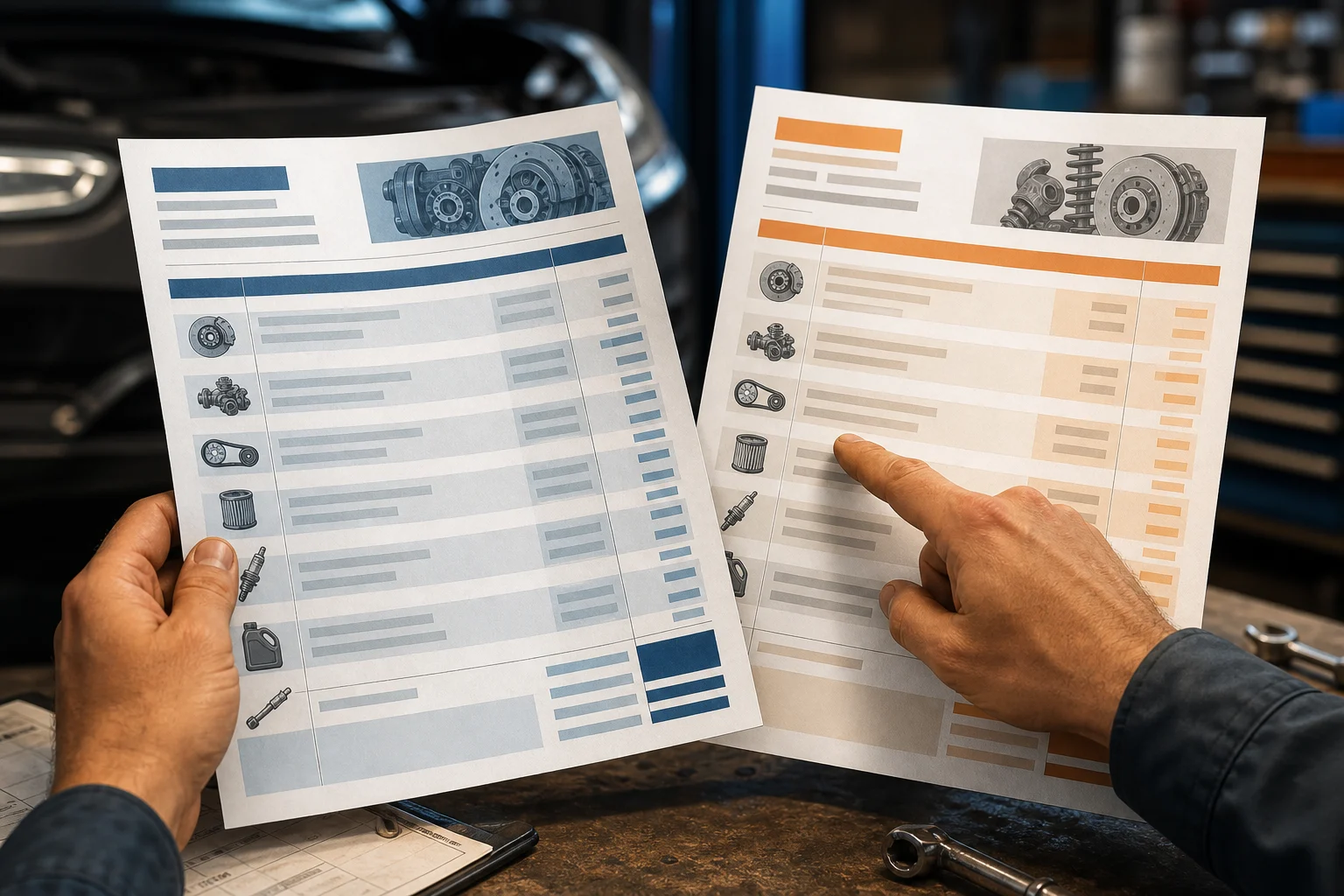
Copy the details from both documents into one table and flag any box you cannot complete. A difference does not automatically mean one offer is worse; it means you need to find out whether both proposals genuinely cover the same thing. If a line item does not appear, do not fill it in by guesswork: ask the garage and request a documented answer.
A sound decision comes after matching the scope, declared spare parts, conditions and total. If a price difference remains, you will have a real basis for comparison rather than two sums that include different work.
| Field | What should match or be clear | Useful question |
|---|---|---|
| Identification | Garage, customer, make, model, registration number and mileage | Does this quote correspond exactly to my vehicle? |
| Scope | Planned repairs and items to be repaired or replaced | Which operation or item explains this line item? |
| Price | Broken-down total price | What does this total include? |
| Dates and acceptance | Date, expected delivery, validity and space for consent | Until when can I accept this proposal? |
| Spare parts | Declared type of item; origin and warranty where applicable | Which part will be fitted and what warranty will it have? |
| Completion | Itemised invoice showing operations, parts and hours | How will the work ultimately carried out appear on the invoice? |
Section references: Regulación estatal de talleres: presupuesto, resguardo, recambios, factura, garantía y reclamaciones ↗ · Control de mercado de talleres de reparación de automóviles ↗
- Ask for clarification when you cannot link an amount to an operation or item.
- Check that the validity period is still current on both documents.
- Consider the applicable warranty alongside the scope and price, rather than as an isolated detail.
- Before accepting, confirm which proposal you are signing and on what date.
If additional work arises: stop comparing and authorise again
A repair may reveal faults or hidden defects that were not included in the original quote. In that case, the garage must notify you within a maximum of 48 hours and state their cost. Extending the repair requires your prior explicit consent. It is not enough to assume that the new work is a logical consequence of the first: it must be linked to a subsequent authorisation.
Request a written extension stating the defect or fault found, the additional operation proposed, the items that will be affected and the amount. Keep that acceptance with the original quote. This will allow you to distinguish the work initially contracted from the work authorised later.
Stop and ask for clarification if the planned repairs, items to be repaired or replaced, broken-down total price, validity date or acceptance space are missing. It may also be useful to clarify overly generic concepts or unidentified parts before comparing proposals. These are signs that you still do not have a comparable or sufficiently documented proposal.
If a disagreement arises, request and keep the quote, deposit receipt, authorisations and invoice. Garages must make complaint forms available to users. If they do not have them or refuse to provide them, you may submit your complaint through any method you consider appropriate.
Section references: Regulación estatal de talleres: presupuesto, resguardo, recambios, factura, garantía y reclamaciones ↗
- To keep a record, document in writing any extension whose cost and scope are not stated.
- Ask for the new work to be separated from the original quote.
- Check that your explicit consent is dated and can be linked to the extension.
- Collect the invoice and, unless you have expressly stated otherwise, the replaced parts.
- If there is a dispute, gather all documents before making a complaint.
Is the garage required to give me a written quote?
The user is entitled to a written quote. The garage may start the service once the user has given consent or has demonstrably waived the quote.
How long is a garage quote valid for?
National regulations establish a minimum validity of twelve working days. The document itself must state its validity period.
Can the garage charge more than quoted because of a new fault?
If faults or hidden defects arise during the repair, the garage must notify the user within a maximum of 48 hours and state their cost. Repairing them requires the user's prior explicit consent.
What must appear on the final invoice?
It must be itemised and identify charges, operations carried out, parts or items used and working hours, with the amount for each item.
What is the minimum warranty for a car repair?
For non-industrial vehicles, the minimum warranty is three months or 2,000 kilometres. If a part has a longer period, the longer period applies to that part.