Filament, LED or Matrix LED headlights: what to check
A headlight label does not, by itself, reveal its functions or the cost of a repair. Learn to distinguish the light source from adaptive systems and what to verify before buying.
Key points
Filament and LED identify light sources; Matrix LED describes a configuration, while adaptive functions are a separate matter. When comparing cars, confirm the equipment on the specific vehicle and ask what its repair would involve.
A headlight label does not tell the whole story
When comparing two cars, seeing “filament”, “LED” or “Matrix LED” in an advert can seem like a quick way to sort their equipment. However, those labels are not enough to describe all the system’s features.
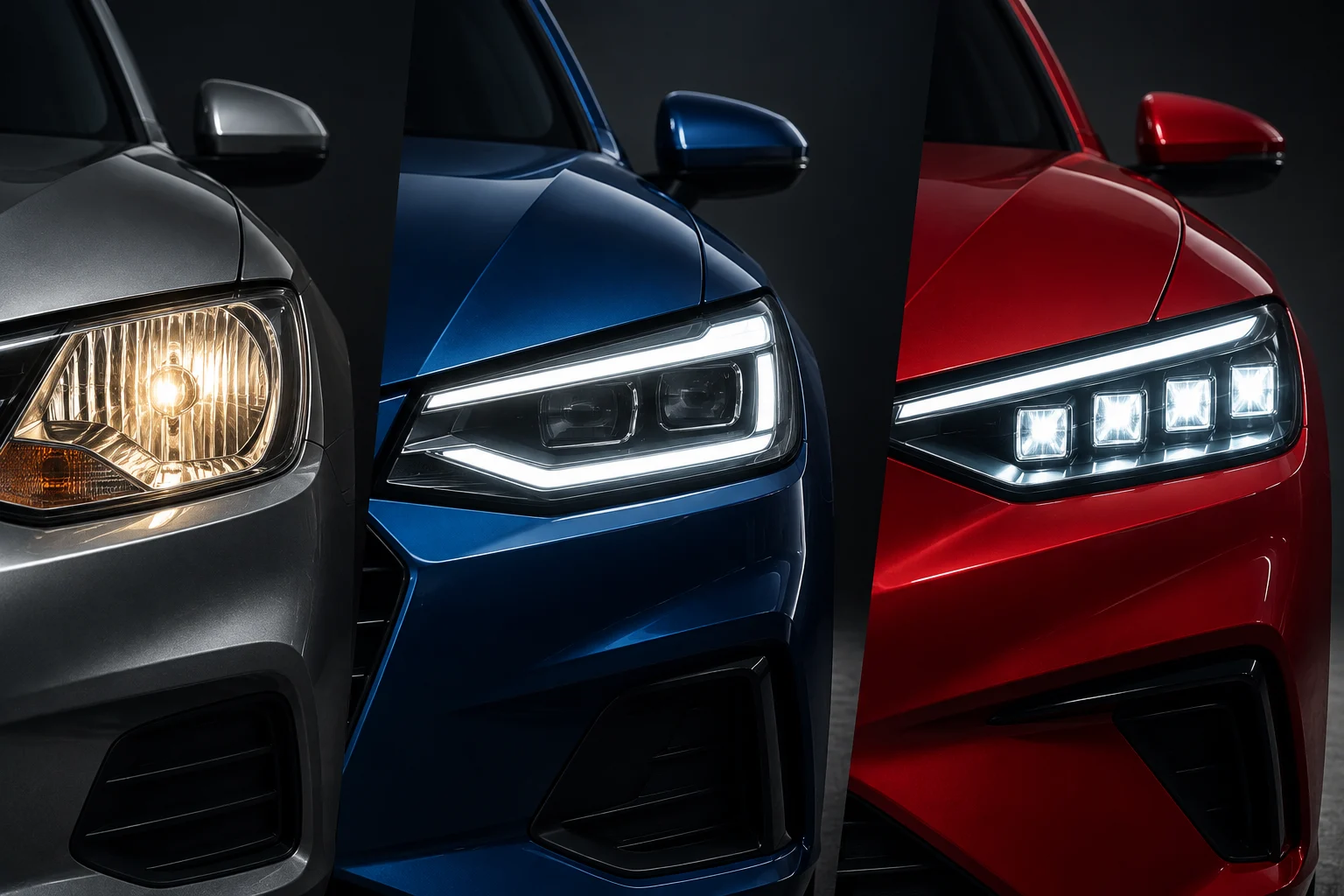
So, an advert saying a car has LED headlights does not establish that it has automatic high beams, adaptive lighting or matrix technology. Nor is the name of a trim line or grade enough: a function may be optional, and equipment can vary by version and configuration. For example, SEAT offered the Matrix LED headlights on the 2024 updated León as an option. That does not tell you what another León—or a specific vehicle—has.
Section references: Reglamento ONU n.º 123: sistemas de iluminación delantera adaptativa ↗ · Unidades de control electrónico en faros LED actuales ↗ · Nuevo SEAT León 2024: faros Matrix LED ↗
Filament, LED and Matrix LED: what each term describes
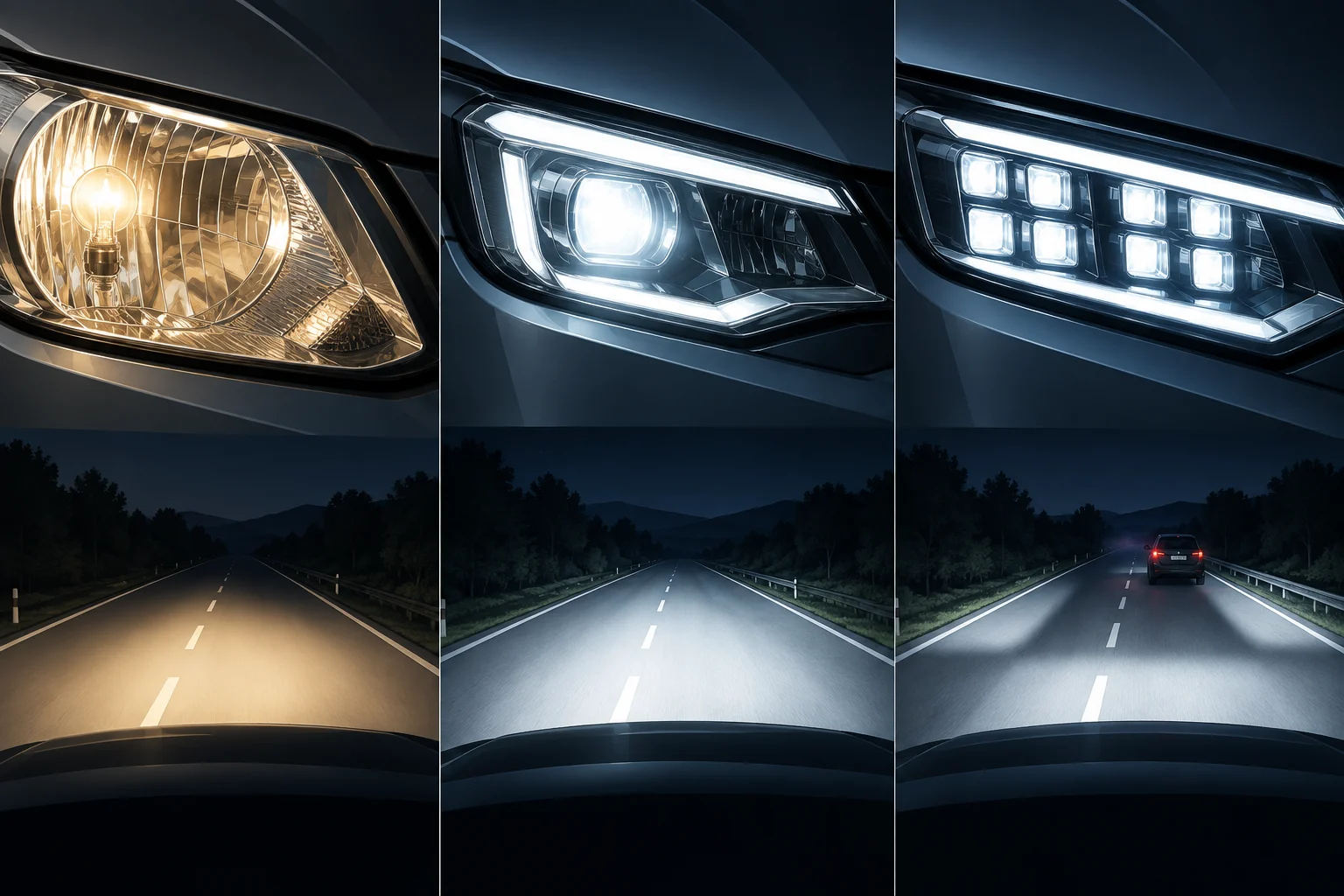
In this comparison, “filament” and “LED” refer to light sources distinguished under UN regulations. The regulation on LED light sources concerns their approval for use in approved lamp units; it does not, by itself, certify which headlights a particular car version has.
Matrix LED is not simply another way of saying “LED headlights”. In a matrix configuration, control units can activate individual LEDs depending on the situation; the exact configuration depends on the vehicle and system. The label alone does not specify which functions are available, how they are activated or what operating conditions the manufacturer sets.
| Term | What it describes | What it does not confirm by itself |
|---|---|---|
| Filament | A filament light source | Adaptive functions or the equipment on a particular version |
| LED | An LED light source | That the beam adapts or that the headlight is a matrix system |
| Matrix LED | A configuration with LEDs that can be controlled individually, depending on the vehicle and system | The exact equipment, available functions or whether a specific vehicle has it |
| AFS or adaptive system | Automatic adaptation of beams with different characteristics to changing conditions | That the light source is necessarily LED |
Section references: Reglamento ONU n.º 123: sistemas de iluminación delantera adaptativa ↗ · Unidades de control electrónico en faros LED actuales ↗ · Reglamento ONU n.º 128: fuentes luminosas LED ↗
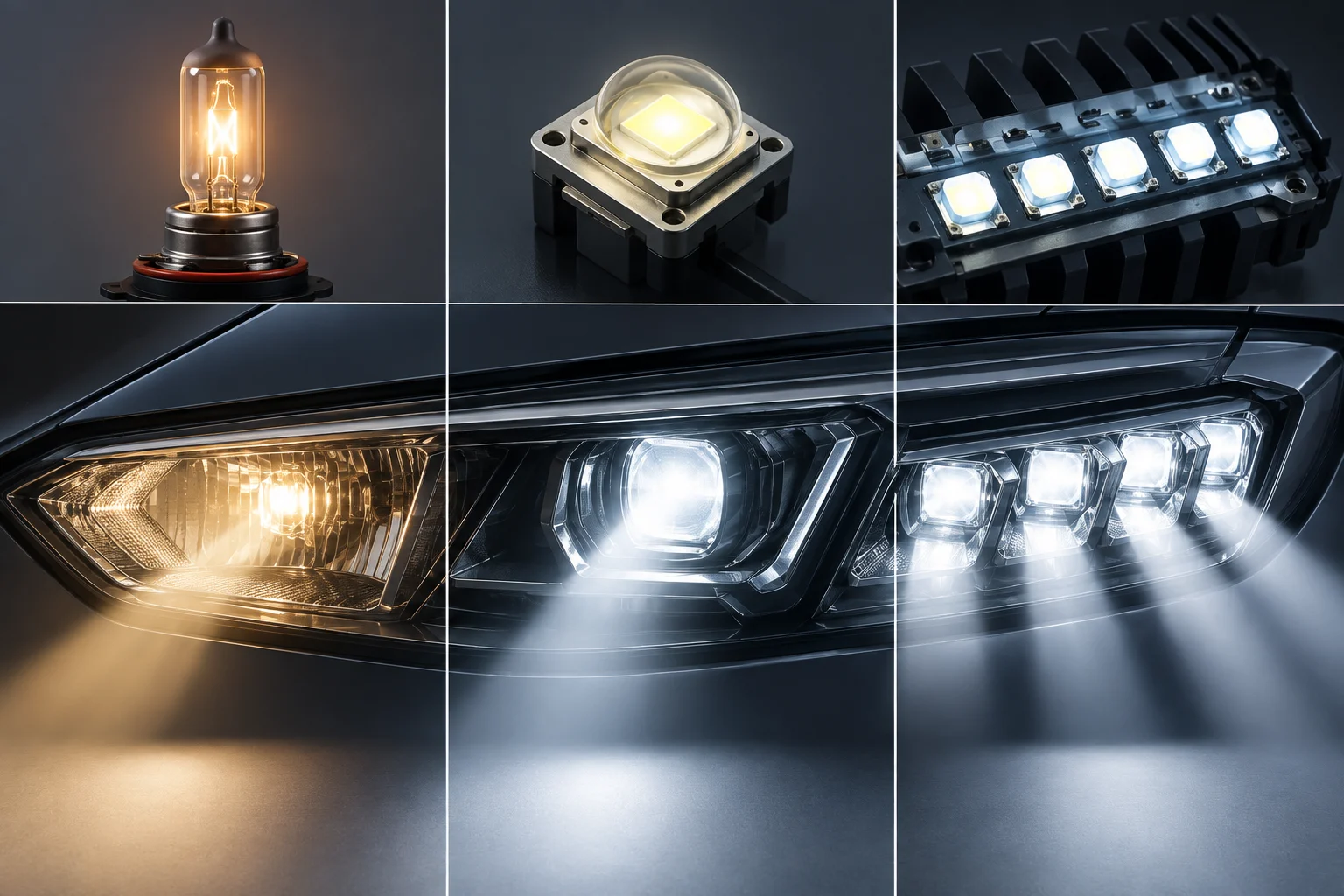
Light source and adaptive functions are two separate choices
The regulations define AFS by its ability to adapt beams with different characteristics automatically to changing operating conditions. HELLA also distinguishes LED-based low- and high-beam functions from the control that dynamically adapts light distribution in adaptive systems.
Section references: Reglamento ONU n.º 123: sistemas de iluminación delantera adaptativa ↗ · Unidades de control electrónico en faros LED actuales ↗
- Check the manual to see how each function is activated and what operating conditions it specifies.
- If a function is important to you, ask for written confirmation that the specific vehicle has it.
How to check the equipment on the vehicle you are buying
Check the specific car, especially if you are buying used or comparing vehicles from different years or trim levels. Start by asking for the equipment specification linked to that vehicle and compare it with the manual for its version. The manual can help you check the function’s name, how to use it and any limitations documented by the manufacturer; a brief sales description may not cover those details.
Then confirm with the seller or manufacturer whether the advertised headlight is standard or optional in that configuration. Do not infer the equipment from photographs: an image may show the assembly’s exterior design, but does not, by itself, document all its internal functions. Nor should you assume that another car with the same model or trim has the same equipment.
If the seller cannot substantiate a feature you consider essential, pause your comparison until you get a verifiable answer. Record the system’s exact designation and the document or confirmation that supports it. This is a practical way to avoid paying for an expectation created by an ambiguous label.
Section references: Unidades de control electrónico en faros LED actuales ↗ · Nuevo SEAT León 2024: faros Matrix LED ↗ · Reglamento ONU n.º 128: fuentes luminosas LED ↗
- Identify the vehicle’s make, model, year, version, trim and market.
- Compare the equipment specification and manual with confirmation from the manufacturer; check whether the headlight was optional.
- Ask separately whether the system is LED, adaptive or Matrix LED, and which functions it includes.
- If the documentation does not clarify an important point, ask for confirmation before completing the purchase.
Replacement and repair: ask about the assembly, not a generic figure
It is not sensible to claim that repairing an LED headlight always costs more, or that replacing a filament light source is always straightforward: the available information does not support generalising costs or procedures to every car. Headlight construction, control units and manufacturer requirements can vary between models. Ask about the specific part and the procedure planned for that vehicle.
HELLA states that after replacing a control unit or an LED headlight, the system may need adjustment using diagnostic equipment; this depends on the vehicle manufacturer, headlight type and control unit. This does not mean adjustment is required in every case. It does justify asking whether work on that model requires diagnostics, adjustment or additional checks.
If you are considering a used car, ask about any previous damage, replacement or repair to the light assembly, and request that the answer be checked against the manufacturer’s documentation or by a workshop familiar with the system. Avoid estimating costs based on a figure for another model: first establish whether the light source, a module, a control unit or the complete headlight is being replaced. If a system modification is being considered, check the applicable regulations and official approval information before carrying it out.
Section references: Unidades de control electrónico en faros LED actuales ↗ · Reglamentación y homologación de vehículos; Manual de Reformas vigente ↗
- Which specific component is being replaced: the light source, module, control unit or complete headlight?
- Does the manufacturer specify diagnostics or adjustment after this work on this version?
- What documentation supports the estimate, and what does it include?
- If a system modification is proposed, what approval requirements apply?
Choose by comparing confirmed features, not impressive names
When choosing between two cars, compare the documented functions with your needs and also consider the repair requirements for each vehicle.
Section references: Reglamento ONU n.º 123: sistemas de iluminación delantera adaptativa ↗ · Unidades de control electrónico en faros LED actuales ↗ · Nuevo SEAT León 2024: faros Matrix LED ↗
Does replacing an LED headlight always require electronic adjustment?
Not necessarily. HELLA says diagnostics or adjustment may be needed, depending on the manufacturer, headlight type and control unit. Confirm this for the specific model and work involved.