Driving in the Rain: What to Check on Your Car and How to Stay Safer
A practical guide to preparing your car for rain, adapting speed and following distance, and acting cautiously around puddles, reduced visibility and tunnels.
Key points
Rain reduces grip and visibility, so a car needs more room to stop. Checking tyres, lights and windscreen wipers, while driving more slowly and leaving a greater gap, are the basic measures to reduce risk.
What changes when driving on wet roads: less grip and less visual information
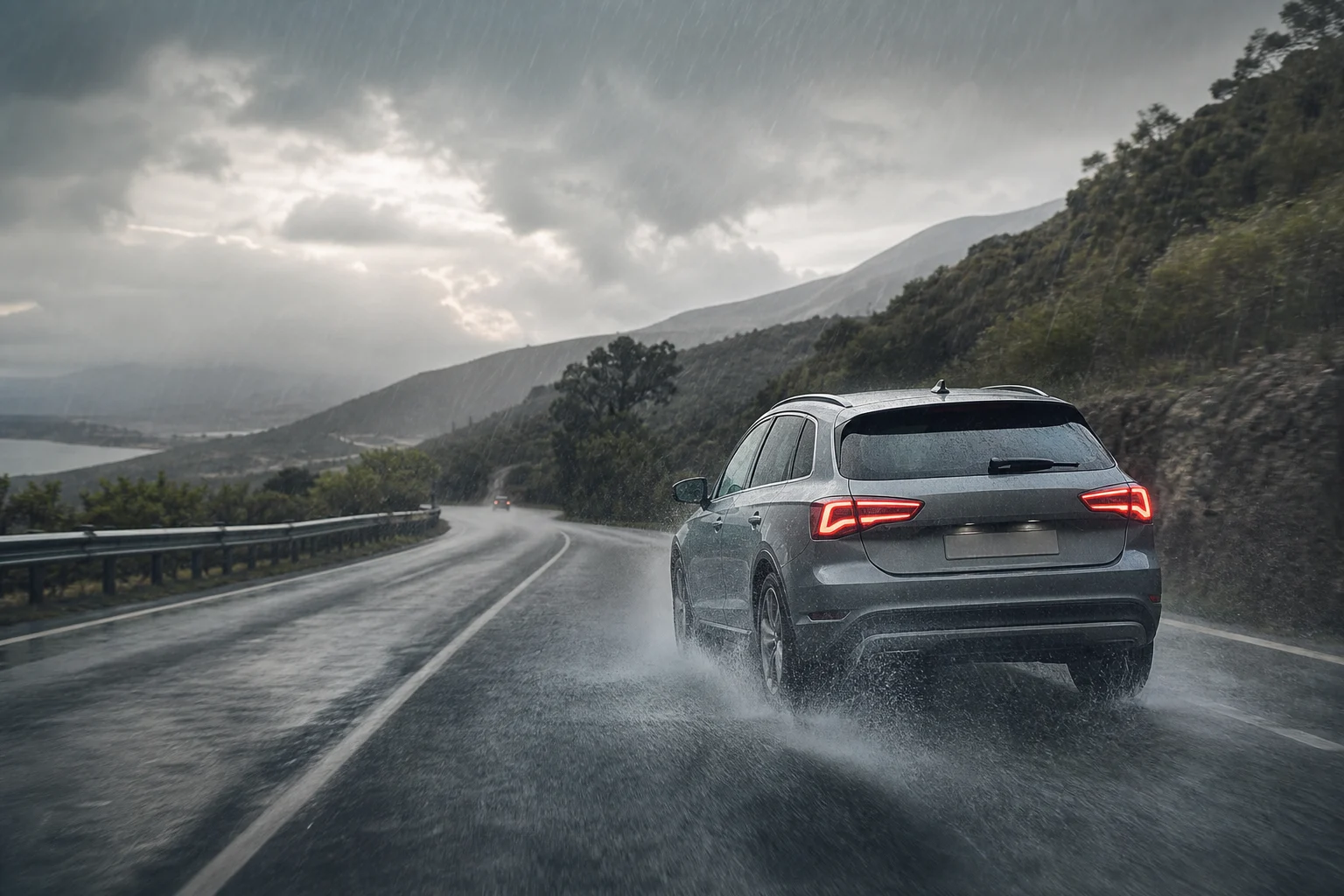
The short answer is simple: in rain, tyres have less grip on the road surface and the vehicle needs more metres to stop. This reduced grip is compounded by a perception problem: water building up on the windscreen, misted-up windows and spray from other vehicles can significantly reduce visibility.
That is why driving in the rain is not about applying an automatic manoeuvre or maintaining your usual pace. The most useful decision is to build in a margin before you need it: prepare the car, drive more slowly than a dry road would allow, leave a greater gap to the vehicle ahead and avoid abrupt changes in throttle or braking. The appropriate speed is the one that lets you remain in control and respond within the visibility available, not a fixed figure valid for every rainfall.
It is also worth assuming that conditions are not uniform. One section can change from damp to waterlogged, and visibility can worsen quickly. If it becomes clear that the rain makes it impossible to see safely, the DGT recommends interrupting the journey with great care off the road, never on the carriageway, until the downpour ends.
Section references: DGT: recomendaciones de tráfico ↗ · DGT: cómo conducir sin meterse en charcos ↗ · DGT: conducción invernal y lluvia ↗
- Less grip means more distance is needed to stop the car.
- Less visibility requires a greater anticipation margin.
- If rainfall makes it impossible to see, do not continue: find a safe place off the road to stop.
Before setting off: a brief check that matters in the rain
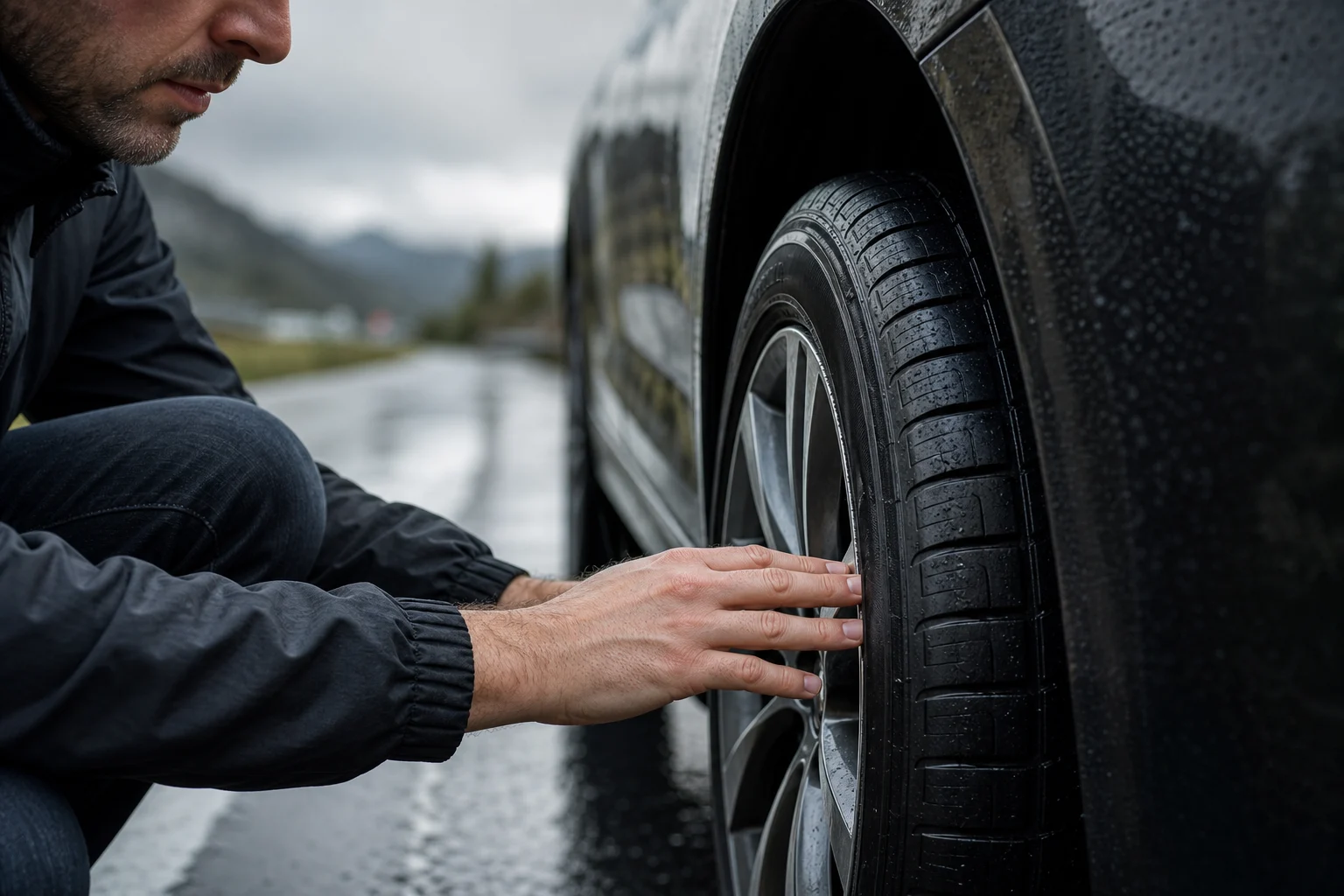
Preparation starts with the tyres. The DGT recommends checking pressure, tread and grooves. The DGT states a minimum tread depth of 1.6 mm, but the check should not be limited to confirming that this threshold is exceeded: insufficient tread is a factor that the DGT associates with aquaplaning.
Pressure should be the one recommended by the vehicle manufacturer. It is not advisable to improvise it for a rainy day or use the figure for another car as a guide: consult the specification that applies to your car and check all four tyres before a journey if there are doubts about their condition. If you find wear that leaves little tread or pressure that does not match the manufacturer's specification, the prudent decision is to correct it before driving in wet conditions.
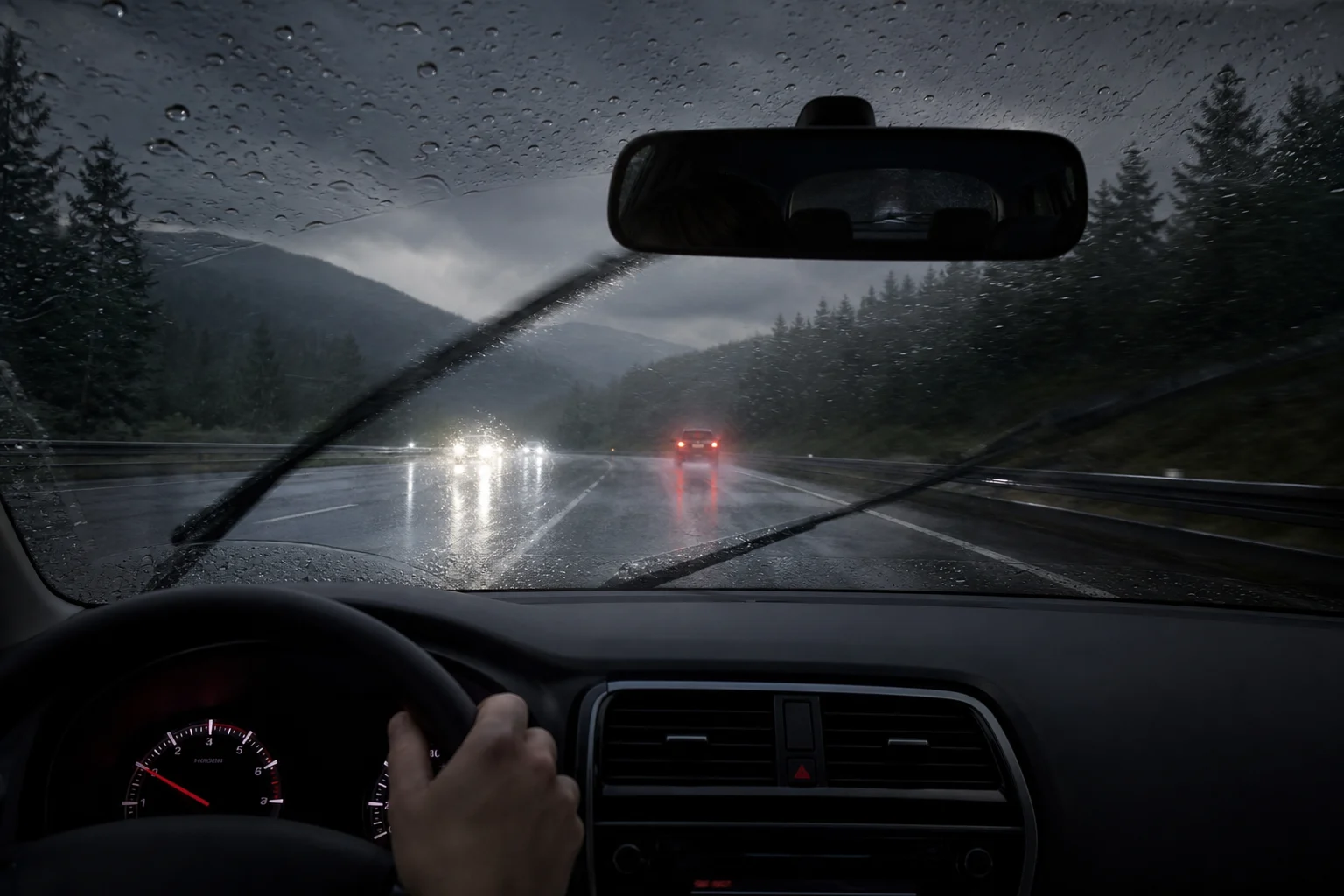
Complete the inspection with the lights, windscreen wiper blades and heated rear window. The DGT specifically points out the need to check that they work correctly. These checks are particularly relevant because rain can combine water on the windscreen, misting and reduced visibility caused by spray from other vehicles.
Section references: DGT: recomendaciones de tráfico ↗ · DGT: circular bajo la lluvia ↗ · DGT: conducción invernal y lluvia ↗
- Check tyre pressure, tread and grooves; the minimum tread depth is 1.6 mm.
- Use the pressure recommended by the vehicle manufacturer.
- Confirm that the lights, windscreen wipers and heated rear window work.
- Do not start a journey with worn tyres or visibility-related equipment that does not work correctly.
On the move: speed, distance and smooth controls
Once on the road, the DGT's general guidance is to drive more slowly and maintain an appropriate safety distance. Both measures complement each other: reducing speed gives you time to spot an incident and act; increasing the space to the vehicle ahead prevents you from depending on immediate braking when the road surface offers less grip.
Driving should be progressive. On a wet road, accelerating or braking sharply can cause a loss of traction and control. It is therefore advisable to anticipate changes in pace, avoid sudden pedal inputs and keep your line as smooth as possible. This is not about using an identical technique in every circumstance, but about not suddenly demanding from the tyre a level of grip that water may have reduced.
The decisive reference is not how other drivers were travelling before it started raining, but the conditions you can see now: water on the road, actual visibility, traffic and your car's ability to maintain sufficient spacing. When these factors worsen, the consistent response is to increase your margin, not try to compensate with faster reactions.
Section references: DGT: conducción invernal y lluvia ↗
- Reduce your speed compared with a dry road.
- Increase the distance to the vehicle in front.
- Anticipate braking and changes of pace.
- Avoid sudden acceleration and harsh braking.
Puddles and aquaplaning: identify the risk and avoid worsening the loss of grip
Aquaplaning occurs when the tyre is unable to clear water from the road. In this situation, control of the vehicle is compromised. It does not depend on a single cause: the DGT links this phenomenon to insufficient tread, low pressure, inappropriate speed and waterlogged areas.
Prevention starts before reaching the puddle: tyres in suitable condition, pressure specified by the manufacturer and a speed adapted to the amount of water. If accumulated water or the intensity of the rain does not allow you to assess the section safely enough, the DGT advises stopping carefully off the road when rainfall prevents the driver from seeing.
If aquaplaning occurs, avoid turning a loss of grip into a more violent action. The DGT recommends holding the steering wheel firmly, not braking hard and, when grip returns, correcting your line smoothly. This is safety guidance to remain calm and reduce abrupt reactions, not a substitute for the specific instructions in the vehicle manual.
| Risk | Factor that worsens it | Preventive measure |
|---|---|---|
| Less grip and more stopping distance | Wet road surface | Reduce speed and increase the safety distance |
| Reduced visibility | Water on the windscreen, misting and spray | Check windscreen wipers, heated rear window and lights |
| Aquaplaning | Low tread, low pressure, inappropriate speed and standing water | Check the tyres and adapt your speed |
| Loss of control | Sudden acceleration or harsh braking on wet roads | Use the throttle and brake smoothly |
Section references: DGT: recomendaciones de tráfico ↗ · DGT: circular bajo la lluvia ↗
- Low tread, low pressure, inappropriate speed and standing water encourage aquaplaning.
- Avoid hard braking if water causes a loss of grip.
- Hold the steering wheel firmly and correct smoothly when grip returns.
- If visibility is insufficient, stop off the road and never on the carriageway.
Heavy rain, fog and tunnels: use the correct lights and obey signs
In Spain, the General Traffic Regulations require the use of lights when heavy rain significantly reduces visibility. It is not a matter of convenience: seeing and being seen are part of the response to a situation in which water can conceal road references and make it harder for other drivers to notice the vehicle.
The rear fog light is not for general use in any light rain. The rules state that it should only be switched on in particularly unfavourable conditions, including very heavy rain. This distinction avoids using a light reserved for situations with severely compromised visibility when it is not appropriate.
Tunnels deserve additional attention, even if the rain remains outside. The DGT says to switch on the appropriate lights however short the tunnel may be. Before entering, pay attention to the signs: if the traffic light at the entrance is red or traffic is stopped inside, you must not enter. In rain, this discipline is even more important because the transition in light and the wet road surface place additional demands on driving.
Section references: DGT: consejos para conducir en túneles ↗ · Reglamento General de Circulación, artículo 106 ↗
- In heavy rain that significantly reduces visibility, use the mandatory lights.
- Reserve the rear fog light for particularly unfavourable conditions, such as very heavy rain.
- Switch on the appropriate lights when entering a tunnel, even if it is short.
- Do not enter a tunnel if the entrance traffic light is red or traffic is stopped inside.
Common mistakes and a final checklist before setting off
The most repeated mistake is treating a wet road as though it were dry: keeping the same pace, reducing the gap or putting off replacing tyres with little tread. It is also a mistake to wait until visibility worsens to find out that the wiper blades, heated rear window or lights are not doing their job.
Another risk is reacting abruptly to a situation involving water. Harsh braking and sudden acceleration can cause a loss of traction and control; and, in the event of aquaplaning, braking hard goes against the DGT recommendation. The sensible alternative is preventive: check beforehand, slow down in advance and decide to stop if the rain removes the visibility needed to continue.
This list does not replace your vehicle manual or the instructions of road authorities. Its value lies in turning official recommendations into a simple routine before every journey when rain is forecast.
Section references: DGT: recomendaciones de tráfico ↗ · DGT: circular bajo la lluvia ↗ · DGT: conducción invernal y lluvia ↗
- Tyres: manufacturer-recommended pressure, tread and grooves checked.
- Visibility: lights, windscreen wipers and heated rear window checked.
- Driving: lower speed, greater distance and progressive actions.
- Standing water: avoid demanding abrupt manoeuvres from the vehicle.
- Rain that prevents you from seeing: stop carefully off the road, never on the carriageway.
- Tunnels: appropriate lights switched on and entry only if signs permit it.
What should I check on my car before driving in the rain?
Check tyre pressure, tread and grooves; the DGT states a minimum tread depth of 1.6 mm. Also check that the lights, windscreen wipers and heated rear window work correctly.
Why should I leave a greater safety distance when it rains?
Because a wet road reduces tyre grip and more metres are needed to stop the vehicle. A larger gap provides room to anticipate and brake progressively.
What is aquaplaning?
It is the situation in which the tyre cannot clear water from the road. The DGT associates it, among other factors, with low tread, low pressure, inappropriate speed and standing water.
What should I do if rain is so heavy that I cannot see properly?
The DGT recommends stopping with great care off the road, never on the carriageway, until the downpour ends. In heavy rain that significantly reduces visibility, lights are mandatory.
When can I use the rear fog light in rain?
The General Traffic Regulations reserve it for particularly unfavourable conditions, including very heavy rain; it should not be used generally in any rainfall.