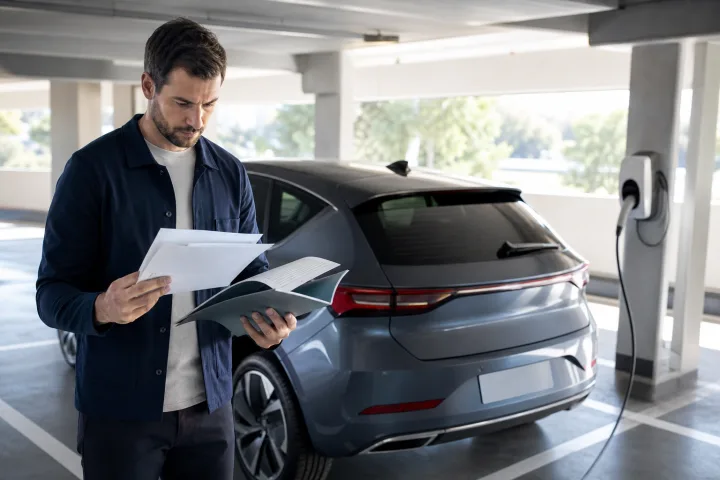
Car parked for several weeks: how to care for the low-voltage battery and when to consult the manual
Leaving a car parked for several weeks means keeping an eye on the low-voltage battery. We explain what can drain it, what to check before you leave and why the manual should guide any intervention.

Key points
A car left parked can drain its low-voltage battery even when it is not being driven. There is no number of weeks that applies to every vehicle: check your vehicle manual and consider the battery’s condition, temperature, previous use and electrical loads that remain active.
The short answer: there is no universal time limit, and the manual comes first
If you are going to leave your car parked for several weeks, do not assume it will retain enough charge for its next use. A parked vehicle may keep certain electrical loads active, and the available capacity is not the same in every car or every battery.
There is no universal number of days or weeks after which it will run flat. The duration depends, among other variables, on the type of battery, ambient temperature, accumulated cycles, depth of discharge and frequency of use. The battery’s actual condition and the equipment that remains active while the vehicle is switched off also matter.
For this reason, use your vehicle owner’s manual as a reference before disconnecting or charging a battery. If you drive a Ford and no longer have the document, Ford states that its manual can be found by entering the chassis number or VIN.
Section references: Manual del propietario por VIN ↗ · Efecto de la temperatura en las baterías ↗
- Check the manual before disconnecting or charging a battery.
- Expect greater uncertainty if there were already dashboard warnings or starting difficulties.
- Do not plan your absence based only on what worked with another car or in a different season.

The documented Tesla Model 3 case: high-voltage battery and auxiliary battery
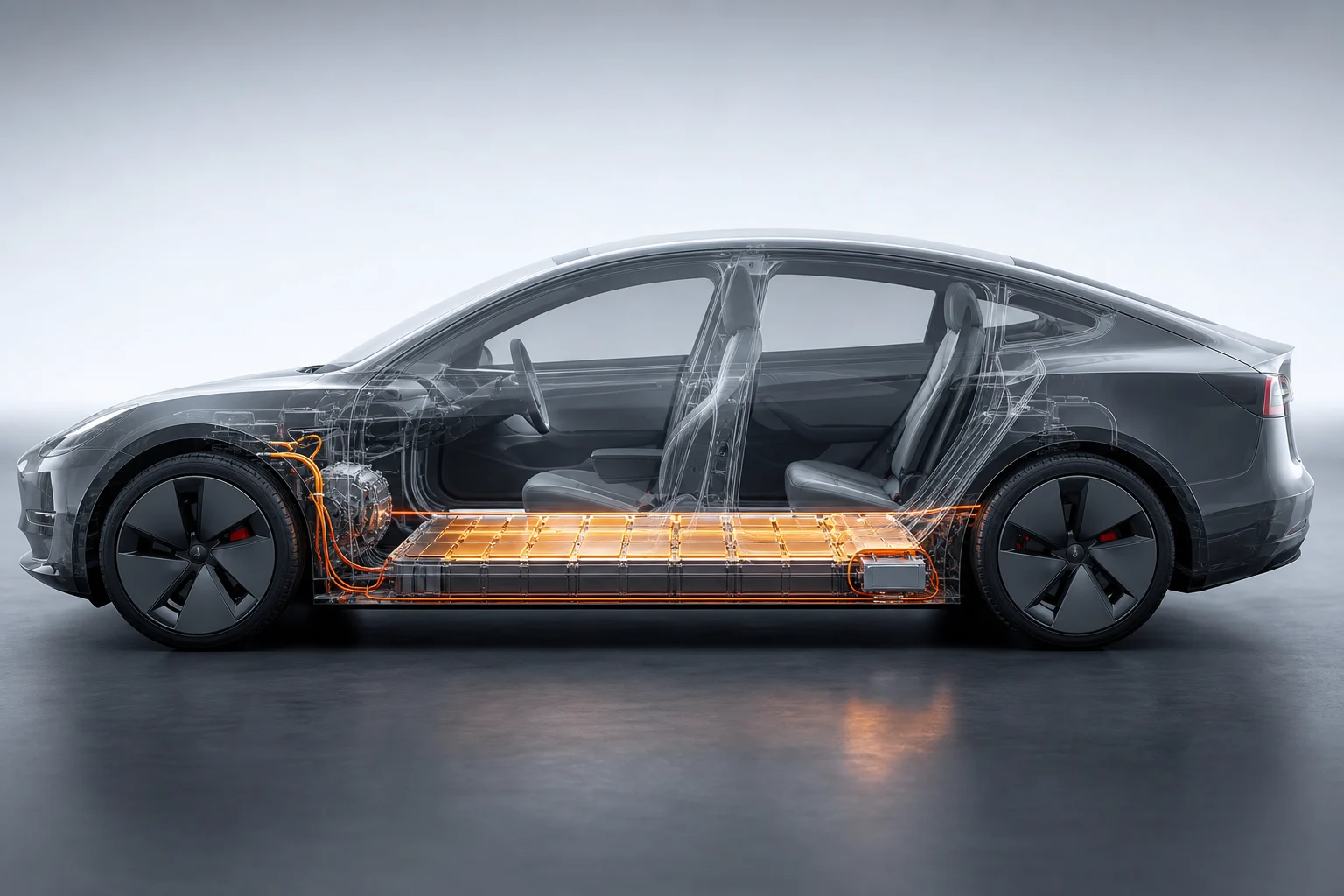
The Tesla Model 3 manual distinguishes between the high-voltage battery and the low-voltage auxiliary battery. They are different systems and should not be treated as though they were the same.
For this model, Tesla explains that when the vehicle is inactive and unplugged, it may use energy from the high-voltage battery to carry out system tests and recharge the low-voltage battery.
The conclusion for a Model 3 is that the high-voltage battery level and the condition of the auxiliary battery are separate matters. For any other electric, hybrid or plug-in hybrid vehicle, check the specific guidance in its manual without extrapolating this operation.
| System | Function described in the manual | Scope of the information |
|---|---|---|
| Low-voltage auxiliary battery | The manual states that it may be recharged using energy from the high-voltage battery. | Tesla Model 3-specific description. |
| High-voltage battery | It can provide energy for system tests and to recharge the low-voltage battery when the vehicle is inactive and unplugged. | Tesla Model 3-specific description. |
Section references: Batería de alta tensión — Manual Model 3 ↗
- In the Tesla Model 3, distinguish between the high-voltage battery and the low-voltage auxiliary battery.
- Do not extrapolate Model 3 instructions to other electrified vehicles.
- Check your model’s manual before intervening in any of its electrical systems.
Why a car that does not move can lose charge
Switching off the engine or locking the car does not necessarily mean there is no electrical consumption. VARTA lists the alarm, door locking, keyless entry and navigation systems among examples of loads that may remain active when the engine is off.
This standby consumption becomes more significant the longer the absence and the lower the available charge. Therefore, time spent parked should not be assessed separately from the battery’s prior condition or the equipment that remains active.
Previous short journeys deserve attention. VARTA notes that, over short distances, there is very little time to fully recover the energy used for starting and powering electrical consumers. After many journeys of this kind, it is advisable to be especially cautious before leaving the vehicle parked.
Section references: Trayectos cortos y batería ↗ · Mantenimiento de baterías xEV ↗
- Check which added accessories or devices remain connected.
- Consider the cumulative effect of the alarm, locking, keyless entry or navigation.
- If previous use was mainly short journeys, do not assume the state of charge.
Factors that increase the risk before an absence
Age matters because, according to VARTA, a battery loses capacity and its internal resistance increases over the years. This leaves less margin against electrical loads that may remain active while the vehicle is switched off.
Temperature also affects the outcome. Cold slows electrochemical reactions; extreme heat, on the other hand, can accelerate self-discharge or corrosion. It is therefore not enough to think about how many weeks the car will be parked: where it will be parked also matters.
It is advisable to assess the factors together. A battery that has been in use for years, previous short journeys, demanding temperatures and several connected devices create a more uncertain scenario than any of these circumstances in isolation.
Section references: Trayectos cortos y batería ↗ · Efecto de la temperatura en las baterías ↗ · Mantenimiento de baterías xEV ↗
- Check whether there have been vehicle warnings related to the battery.
- Consider the battery’s age and usage history.
- Take into account expected exposure to cold or heat.
- Review installed electrical accessories and anything that will remain connected.
Checklist before leaving a car parked for several weeks
Useful preparation means identifying uncertainties before locking the car, rather than applying a generic solution. Start by finding and reading the section of the manual that deals with the battery or vehicle storage. If necessary, use the manual-search method documented by your vehicle manufacturer; Ford, for example, provides access to its manuals using the VIN.
Then check whether there are already warnings or messages on the instrument panel. Their presence is a reason not to assume the battery is in good condition before a prolonged absence.
Finally, check accessories and devices that may remain connected. If your vehicle manual sets out specific measures for a period of inactivity, follow only those instructions. In the case of the Tesla Model 3, Tesla recommends leaving it plugged in for several weeks to preserve the high-voltage battery.
Section references: Manual del propietario por VIN ↗ · Batería de alta tensión — Manual Model 3 ↗
- Find the manual using the method documented by your vehicle manufacturer; Ford provides VIN lookup for its manuals.
- Check any warnings and messages present before parking the car.
- Review connected accessories and added equipment.
- Follow only the storage instructions that apply to your model.
- For electric vehicles, explicitly confirm your vehicle’s storage guidance.
When you return: avoid improvised interventions and check the manual
Short journeys offer little time to recover the energy used for starting and powering electrical consumers. For this reason, a brief drive should not be used as proof that the battery has fully recovered its charge.
Avoid disconnecting components or connecting electrical equipment by intuition. Check your vehicle manual before any intervention, especially if it is an electrified model with separate high-voltage and low-voltage systems.
When you return, look for warnings, starting faults or symptoms that were already present before the period of inactivity. Note how long the car has been parked, the temperature conditions and connected accessories, and follow the instructions in your vehicle manual if warnings or faults appear. Do not treat a high-voltage battery as though it were an auxiliary battery.
Section references: Batería de alta tensión — Manual Model 3 ↗ · Trayectos cortos y batería ↗
- Do not take a short drive as a guarantee of a full recharge.
- Do not disconnect or connect equipment without checking the vehicle instructions.
- Note the storage time, temperature and connected accessories if a problem arises.
- Follow the vehicle manual’s instructions if messages, starting faults or previous symptoms appear.
How many weeks can a car remain parked before the battery goes flat?
There is no single time limit. The type and condition of the battery, temperature, cycles, depth of discharge, frequency of use and electrical loads that remain active all have an influence. Check your vehicle manual before a prolonged absence.
Does a switched-off car still use battery power?
It may still consume energy. VARTA lists the alarm, door locking, keyless entry and navigation among the systems that may remain active when the engine is off.
Should I leave an electric car plugged in if it will be parked for several weeks?
It depends on the model. Tesla recommends leaving the Model 3 plugged in for several weeks to preserve its high-voltage battery, but this instruction should not be extrapolated to other vehicles without checking their manuals.
Why should I consider short journeys before leaving a car parked?
VARTA states that short journeys leave little time to fully recover the energy used for starting and powering electrical consumers. Therefore, previous use is part of the assessment before a prolonged absence.