Adaptive Cruise Control: Limits and Safe Use
ACC adjusts speed according to traffic ahead, but it has important limitations. We explain what it does, when it may fail, what Stop & Go adds and what to check when buying a used car.
Key points
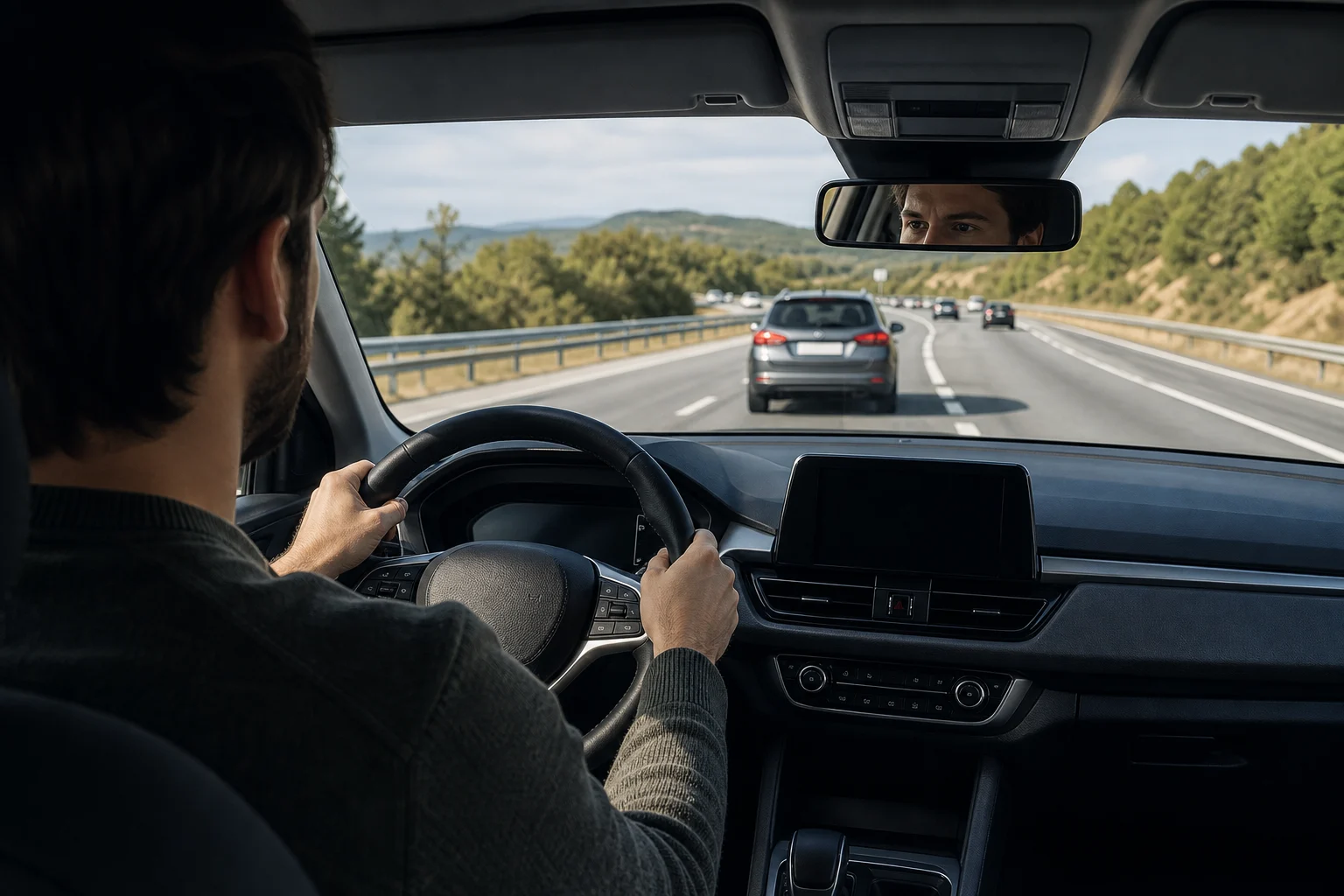
Adaptive cruise control (ACC) can adjust speed and distance to the vehicle ahead, but it does not drive by itself. Its specific limits depend on the model, so check the manual, stay alert and be ready to intervene.
What ACC is and its essential limitation
Adaptive cruise control, known as ACC, is a system that adjusts the vehicle's speed according to a selected speed and a preset distance from the vehicle travelling ahead. In practice, it lets you set a target speed and choose a gap; if it detects traffic ahead within its operating conditions, it reduces or increases speed to follow it.
That does not mean the car is autonomous. The assistance does not replace observing the surroundings, anticipating events or making decisions as a driver. Spain's DGT states that partially automated systems require constant attention and that the driver remains ultimately responsible for controlling the vehicle. Euro NCAP also warns that driver-assistance systems are not the same as full automation.
The useful rule is simple: ACC is an aid and does not replace constant attention or driver intervention whenever needed.
Section references: DGT: definición general de ACC ↗ · DGT: ACC y responsabilidad del conductor en sistemas parcialmente automatizados ↗ · Euro NCAP: asistencia no equivale a conducción automatizada ↗
- ACC follows a selected speed and a configured distance from the vehicle ahead.
- The driver must monitor the road continuously and retain control of the vehicle.
- Dashboard warnings and automatic interventions do not turn the function into autonomous driving.
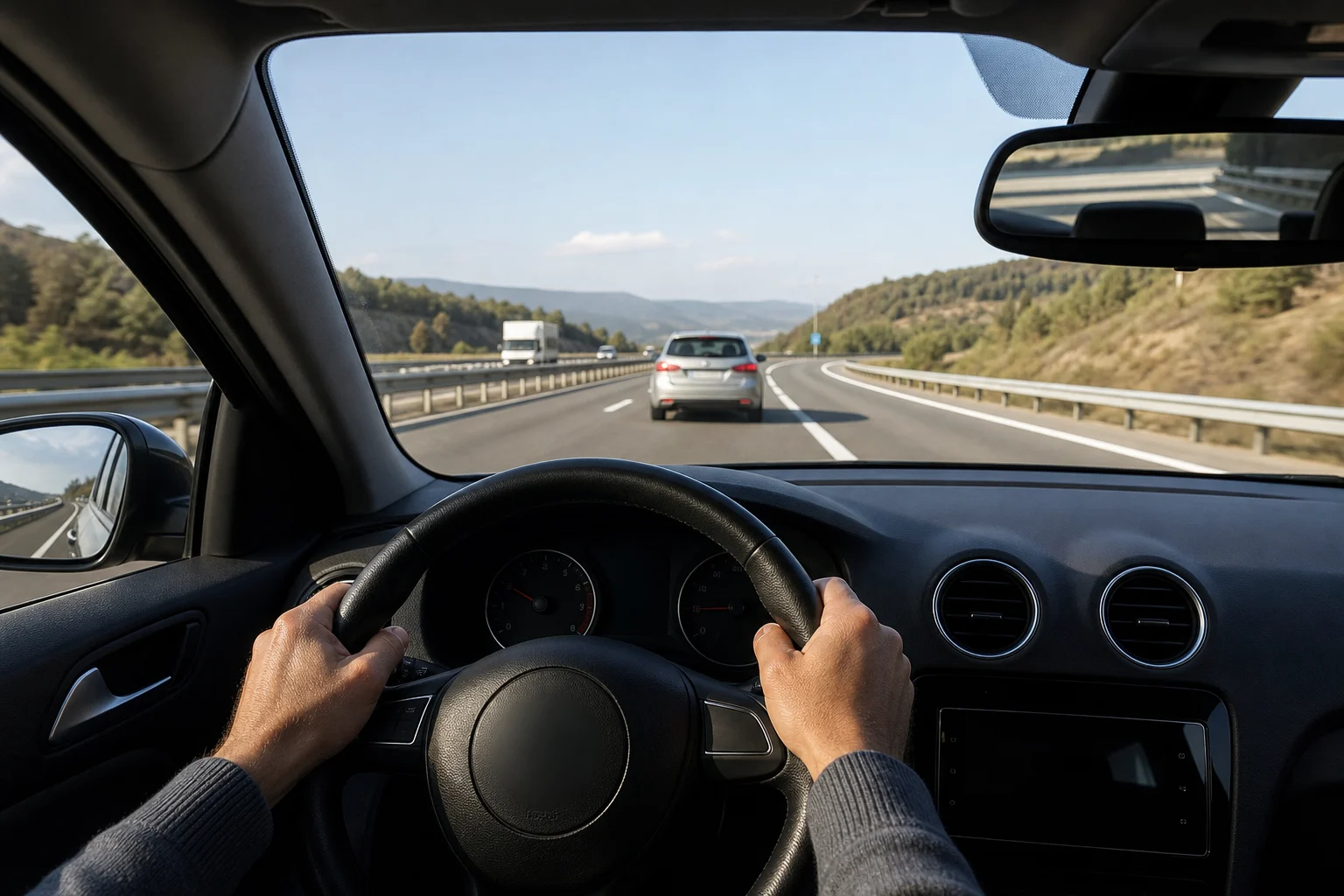
It is not the same as lane centring
The commercial name may vary, so check exactly which driver-assistance systems the car includes. ACC adjusts speed according to a set speed and the configured distance from the vehicle ahead.
Lane-centring assistance is a different function. Euro NCAP describes Highway Assist as a combination of ACC, lane centring and speed assistance. Therefore, a vehicle advertised with ACC cannot automatically be assumed to keep the car centred between the lines. Where both functions are available, the duty to supervise does not disappear either: they are complementary aids, not a replacement for driving.
Section references: DGT: ACC y responsabilidad del conductor en sistemas parcialmente automatizados ↗ · Euro NCAP: asistencia no equivale a conducción automatizada ↗
- Always check exactly which driver-assistance systems the car includes, rather than relying only on the package's commercial name.
- The presence of ACC does not mean the vehicle necessarily includes lane centring.
- Even if the car has ACC and lane centring, the driver remains responsible for controlling the vehicle.

What it may fail to detect or interpret too late
ACC does not see or interpret the surroundings like a person. Its specific limitations vary among models, model years and versions, and the vehicle manual is the reference. In models documented by SEAT, the radar may stop detecting the vehicle ahead on a bend or react to a vehicle in an adjacent lane. In both cases, the driver must take control of the situation.
Narrow vehicles are another risk scenario. The SEAT Leon MY17 manual warns that motorcycles and other narrow vehicles may not be detected until they enter the sensor's range. Likewise, a vehicle merging very close into your lane may be recognised late. Do not wait for ACC to deal with a merging vehicle: keep a visual watch and check the mirrors and side areas.
There is one particularly relevant limitation when approaching a queue of traffic: that manual warns that ACC does not detect stationary objects while driving, such as the end of a traffic jam or a broken-down vehicle. The SEAT Ateca MY19 manual adds that ACC does not react to stationary obstacles and, unless the vehicle has pedestrian detection, neither does it react to people; it also does not react to animals, cross traffic or oncoming vehicles in the same lane. These warnings do not describe every ACC system on the market, but they explain why you should never rely on the system to detect hazards.
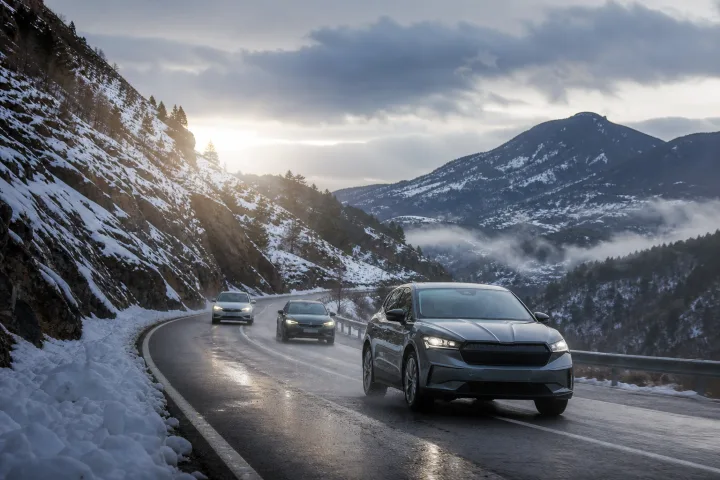
Environmental conditions also matter. Heavy rain, water spray, snow or mud may affect the radar and cause temporary deactivation. SEAT also advises against using ACC in poor visibility, on steep sections, on roads with many bends, on slippery surfaces or on flooded roads. If a sensor visibility warning appears, consult the manual before attempting any action on the system.
Section references: Manual SEAT León: límites del ACC en curvas, motos, cambios de carril, objetos fijos y meteorología ↗ · Manual SEAT Ateca: advertencias, intervención del conductor y sensor sin visibilidad ↗
- According to the SEAT Leon MY17 manuals, take extra care on bends: the vehicle being followed may disappear from detection or be confused with one in another lane.
- According to the SEAT Leon MY17 manual, do not assume early detection of motorcycles, close merges or the end of a queue.
- According to the SEAT Ateca MY19 manual, intervene when facing a stationary obstacle, pedestrian, animal or cross traffic; do not assume ACC will brake.
- In heavy rain, mud, snow or limited visibility, follow the vehicle's instructions and the manual.
Stop & Go: useful in traffic queues, but check how it resumes
The condition for resuming after a stop must be checked in the manual for the specific vehicle.
For example, Ford states for the Puma with automatic transmission that, if the stop lasts longer than three seconds, the driver must press the RES button or the accelerator to resume the system. Do not extrapolate this condition to other models, even within the same brand: the transmission, model year, equipment and market can change the stopping and restarting logic.
Before using it in a traffic queue, check the manual to see how it is activated, what the instrument cluster indicates, when it deactivates and how it asks for confirmation to move off. The first time, familiarise yourself with the controls in a simple situation without turning that check into a distraction.
Section references: Ford España: ACC con Stop & Go y condición de reanudación ↗
- Check whether your version has Stop & Go: ACC does not necessarily include this function.
- Consult the manual for your vehicle to find the stopping time and the action required to resume.
- Before confirming that the car should move off, check the surroundings visually.
What to check on a used car advertised with ACC
On the used market, “has cruise control” does not confirm that it is adaptive. You need to verify that the equipment is actually fitted to that individual car. The SEAT Ibiza MY22 manual, for example, states that ACC is identified by a configuration menu in the infotainment system and dedicated buttons on the multifunction steering wheel. This is useful as a method, not a universal rule: control layouts vary by manufacturer and generation.
Ask for the vehicle identification number (VIN) and check the trim level and options against documentation for the relevant model. Consult the manual for the exact version, as it lists the speed range, available settings, warning messages and operating restrictions. As a specific reference, the cited Ibiza MY22 regulates between 30 and 210 km/h; other versions may have different values and functions.
Check for ACC controls and menus, and see whether any sensor-related warnings appear. This is not proof that the system works correctly while driving: if in doubt, request a professional inspection.
Finally, check for outstanding recalls. For vehicles registered in Spain, the DGT lets you check recall notices for someone else's vehicle by entering the VIN; a detailed report is required for further information. An outstanding recall does not prove there is a fault, but it is something worth clarifying with the seller.
Section references: Manual SEAT Ibiza: identificación del equipamiento ACC, rango y Stop & Go según transmisión ↗ · DGT: llamadas a revisión de vehículos matriculados en España ↗
- Ask for the VIN, vehicle specification sheet and manual for the exact version or trim level.
- Distinguish ACC from conventional cruise control through the controls, menu and documentation.
- Check the instrument-cluster warnings related to the sensor.
- Check for outstanding recalls using the VIN.
- If the function is decisive for the purchase, include its verification in a pre-purchase professional inspection.
A safe-use routine before and during a journey
Maintain constant attention and be ready to take control of the vehicle whenever necessary. The DGT states that, in systems combining ACC and lane assistance, the driver is ultimately responsible for controlling the vehicle.
Keep your eyes on the road and your hands on the steering wheel. In Ford systems that combine ACC Stop & Go and lane centring, centring requires active ACC, hands on the steering wheel and detection of both lane markings. It is a useful reminder that these aids depend on conditions that can change within seconds.
Switch off or do not activate the assistance when the manual advises against it, when the sensor has poor visibility or in situations cited by the manufacturer, such as poor visibility, steep sections, many bends, slippery surfaces or flooded roads. The aim is not to use ACC at all times, but to use it within the conditions specified for the vehicle.
Section references: DGT: ACC y responsabilidad del conductor en sistemas parcialmente automatizados ↗ · Manual SEAT Ateca: advertencias, intervención del conductor y sensor sin visibilidad ↗ · Ford España: ACC, centrado de carril, manos en el volante y marcas viales ↗
- Maintain constant attention and be ready to intervene whenever necessary.
- Keep your hands on the steering wheel when the system requires it.
- Do not activate ACC in conditions the manual advises against.
- Consult the manual whenever a warning you do not understand appears or you have doubts about a function.
Does adaptive cruise control brake the car?
ACC adjusts speed to the configured distance from the vehicle ahead within its operating conditions. Consult the manual for the specific version to understand its capabilities and limitations.
Can ACC detect a motorcycle?
You should not assume immediate detection. The SEAT Leon MY17 manual warns that narrow vehicles, including motorcycles, may not be detected until they enter the sensor's range. Maintain a visual watch and a safety margin.
Are ACC and lane-centring assistance the same thing?
No. ACC regulates speed and distance to the vehicle ahead. Lane centring is an additional function; some systems combine them, but ACC does not guarantee that the car has lane centring.
What happens with Stop & Go if the car comes to a stop?
It depends on the model. In the automatic Ford Puma cited by Ford, after a stop longer than three seconds, you must press RES or the accelerator to resume. Consult your car's manual for its specific condition.
How do I know whether a used car really has ACC?
Verify the VIN, trim level and options; check the relevant manual and inspect the specific controls and menus. Also check sensor warnings and outstanding DGT recalls.