Helicopters: what they do and when they are useful
From rescue and medical support to firefighting, surveillance and aerial work: what helicopters offer and the limits that shape how they can be used.
Key points
Helicopters are used for emergencies, firefighting, surveillance, search and rescue, and specialist work because they can hover and reach places without a runway. That advantage does not make every location or mission viable: area safety, aircraft performance, weather and coordination with other resources all matter.
Hovering: an advantage, not a guarantee
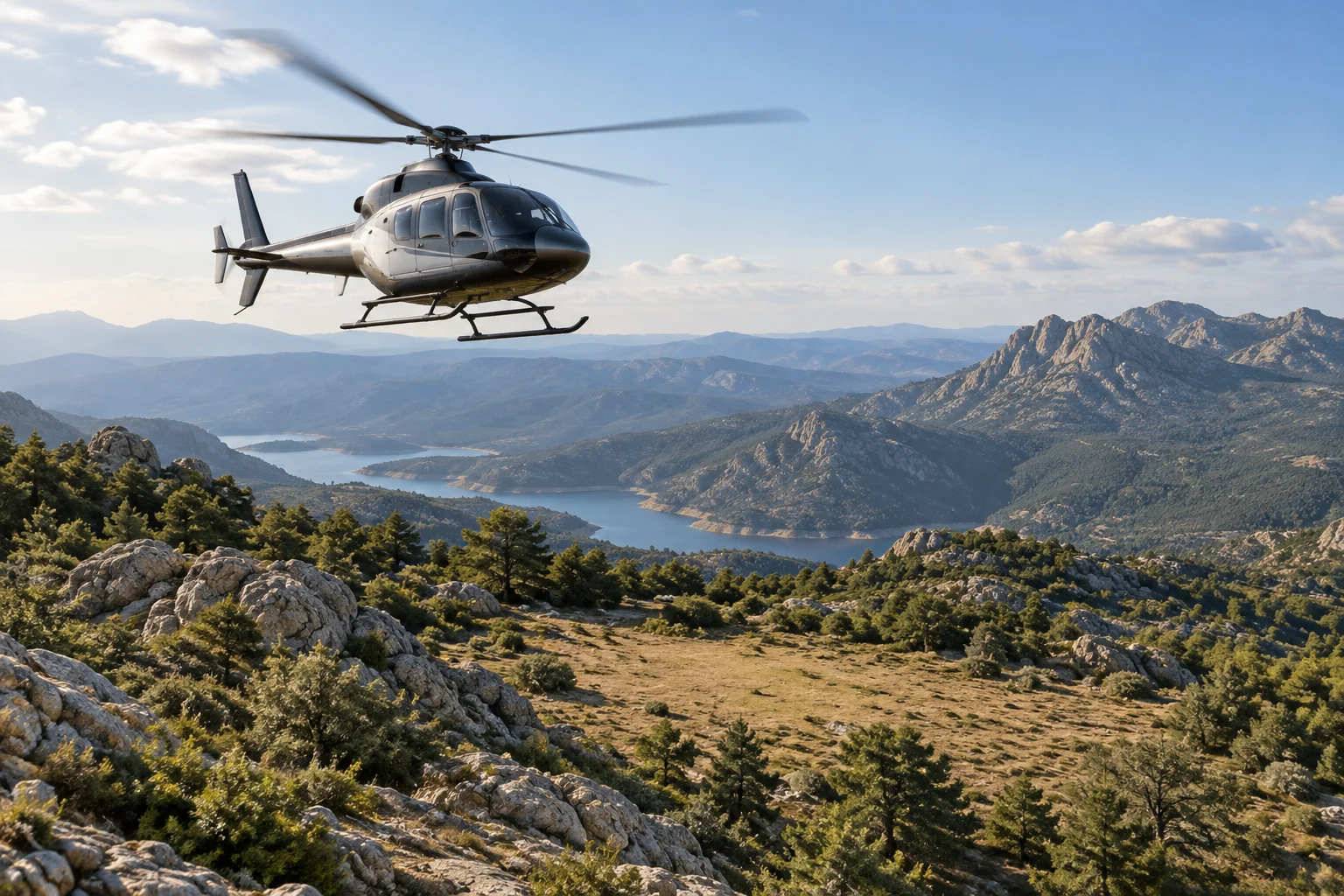
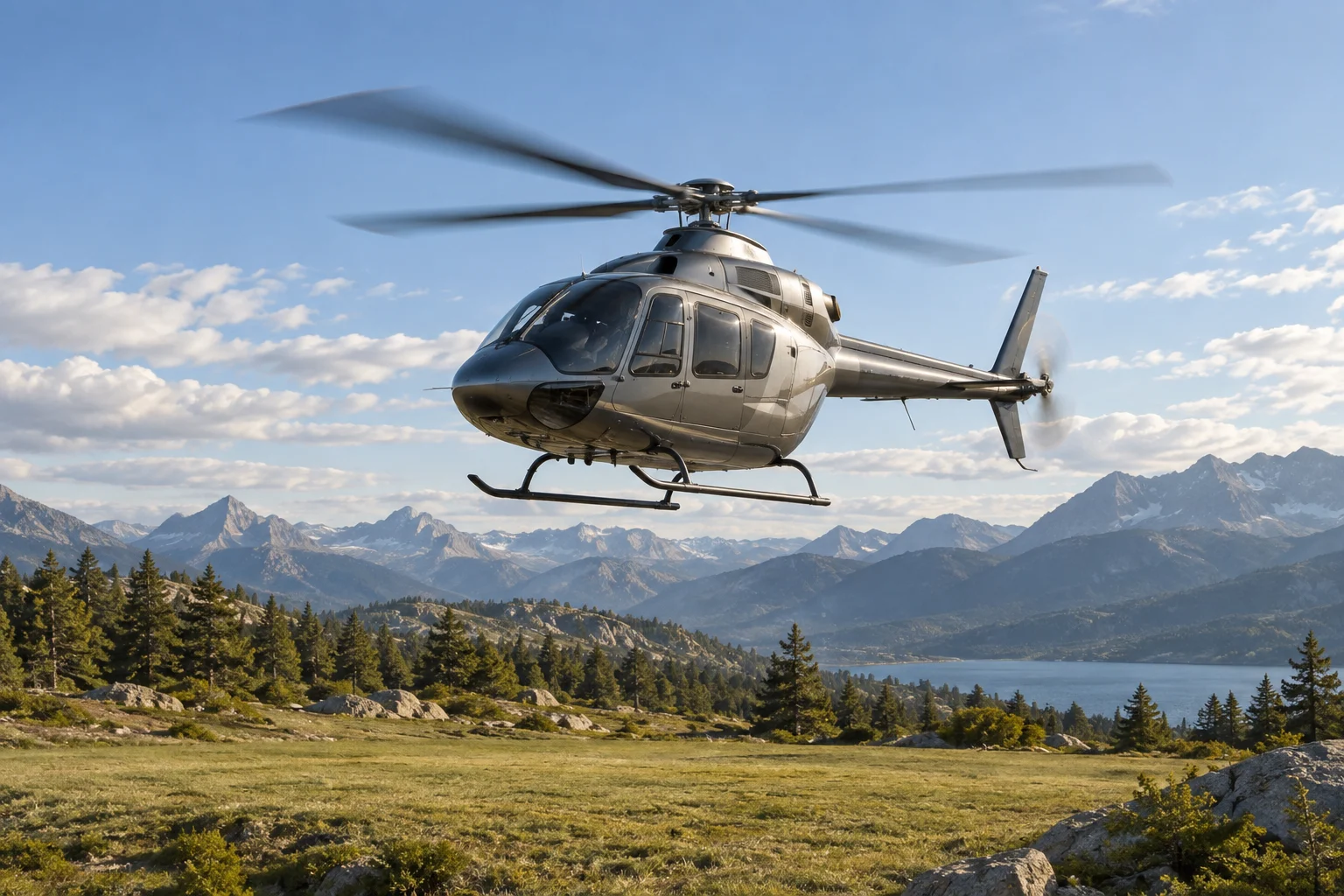
The best-known practical difference between a helicopter and an aeroplane is that a helicopter can take off and land vertically and remain in a hover. This allows it to operate without a conventional runway and approach places that may be difficult to reach by land or from an airport. That is why helicopters are used for very different tasks, including rescue, firefighting and carrying external loads.
But “not needing a runway” does not mean being able to land anywhere. The area must be suitable and safe, and the crew must assess obstacles, wind and aircraft performance. The FAA handbook warns that at high weight or high density altitude, there may not be enough power to sustain a hover; under those conditions, a different type of approach and landing may be needed. Vertical capability expands the options, but it does not remove physical limits or operational requirements.
Section references: Helicopter Flying Handbook ↗ · Helicopter Flying Handbook: aproximación y aterrizaje en zonas confinadas ↗
- Helicopters are valuable when it matters to reach a specific point, remain over an area or work without a nearby runway.
- They do not replace an assessment of the site, weather conditions or available performance.
- The fact that an aircraft can perform a task in general does not prove that it is available or authorised for a particular mission.
Medical emergencies and rescue: getting close and coordinating
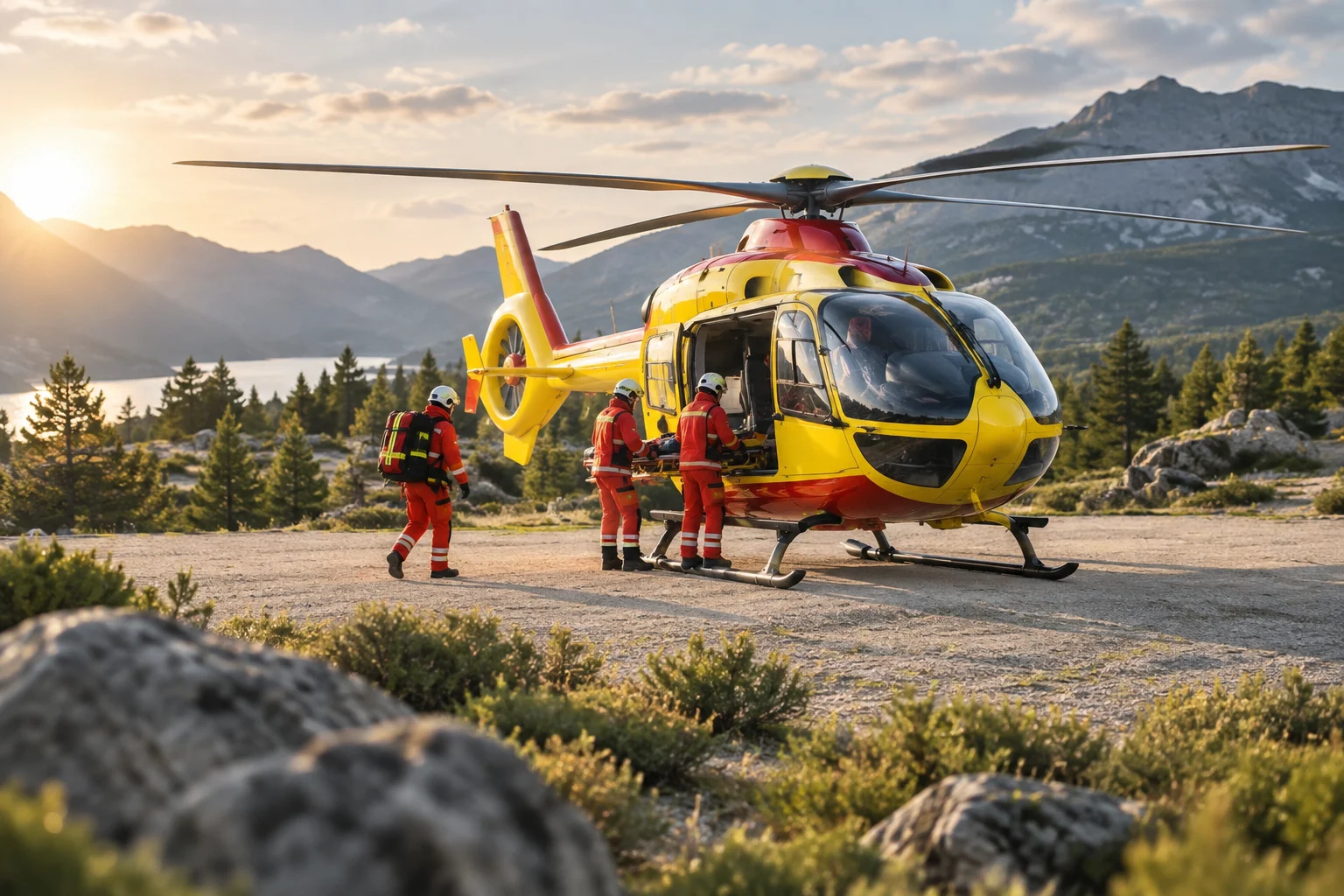
In a medical emergency, a helicopter can bring personnel and equipment close to the patient and, depending on the service and circumstances, transport them to a medical centre afterwards. SUMMA 112 describes this role for its medicalised helicopters in the Community of Madrid: operating near the emergency and taking the patient to the centre it considers appropriate. This is a specific example from that community, not a description of every medical service in Spain.
In search and rescue, an aircraft can provide access from the air and remain over an area of interest, but the response does not necessarily depend on a single resource. In a maritime operation documented by Salvamento Marítimo, helicopters, boats and a ship took part. The example shows how capabilities can be combined: the appropriate resource depends on the scenario and the task each one needs to perform.
A response requires coordination with emergency services and other resources. The presence of a helicopter does not mean it will land at the exact location or that it is the only option.
Section references: Helicopter Flying Handbook: aproximación y aterrizaje en zonas confinadas ↗ · Helicópteros medicalizados del SUMMA 112 ↗ · Operativo de búsqueda marítima y aérea del Maremi ↗
- To understand a medical mission, check whether the service brings equipment and personnel, transports the patient, or does both.
- In rescues, distinguish between the aircraft taking part and the operation as a whole: land or maritime resources may also be involved.
- Always consult the information provided by the competent authority in your area; examples from one community or service do not describe all of Spain.
Firefighting, surveillance and police work: different tasks
In forest fires, helicopters can transport crews, support water drops and help evacuate personnel. The MITECO BRIF operating method makes air transport conditional on weather conditions allowing it. In addition, responsibility for prevention and firefighting lies with the autonomous communities in their territories, while the Ministry’s state resources can provide support. There is therefore no single uniform system across the whole country.
Traffic surveillance is another mission. The DGT describes its Air Resources Unit as a surveillance, management and control service, and says that the Pegasus system combines image capture with radar installed on helicopters. This task should not be confused with the Guardia Civil Air Service, which the institution itself describes as supporting its units and being responsible for organising, coordinating, maintaining and operating its aircraft.
The fact that several institutions use helicopters does not mean they share the same purpose, organisation or availability. When looking for information about a flight or service, first identify the authority providing it and the official function it declares.
Section references: Acciones de prevención, preparación y extinción. Dispositivo del MITECO ↗ · Método de trabajo de las BRIF ↗ · Por su seguridad, vigilancia aérea ↗ · Especialidad Aérea ↗
- Firefighting: transporting crews, supporting water drops and potentially evacuating personnel, subject to operating conditions.
- Traffic: surveillance, management and control by the air resources described by the DGT.
- Police: support for units according to the institutional role of the relevant service.
Aerial work and specialist transport
Outside emergencies, helicopters are also used for specialist commercial operations. AESA cites external-load operations, reconnaissance and aerial photography as examples, along with construction work such as power-line installation and aerial pruning. These are different missions: some involve carrying a load, others observing or documenting from the air, and others supporting work in a specific area.
The ability to operate without a runway can be useful when work takes place in a remote or difficult-to-access location, but that alone is not enough to decide that a helicopter is the right solution. The specific operation and its safety requirements must be considered. AESA distinguishes specialised operations from other categories, such as firefighting and search and rescue, and notes that certain operations have specific approvals or requirements.
So when hiring or assessing aerial work, do not settle for the generic description “helicopter service”. Ask what task will be carried out, which operator will provide it and what requirements apply to that operation. AESA’s information can help explain categories and requirements, but the checks must be made for the specific case.
Section references: Helicópteros ↗ · ¿Qué se considera operación especializada? ↗
- External loads: check that the enquiry concerns this specialised operation, not generic transport.
- Reconnaissance or photography: identify the objective and work area before comparing resources.
- Construction or aerial pruning: confirm who provides the service and which requirements apply to the operation.
When to choose a helicopter and what to check
Its main operational advantage comes into play when a mission needs access without a conventional runway, hovering or an approach to a specific point. That does not mean it is always faster, cheaper or more suitable: the available evidence does not support generalising those comparisons. The decision depends on the objective and actual conditions, and may require combining the helicopter with other resources, as happens in some rescue operations.
A practical check is to separate the need from the solution. First, clarify whether you need to transport people or equipment, observe an area, support an operation or transport a patient. Then check whether the responsible authority provides that function and what limits it states. In emergency operations, the decision belongs to the responsible services, not to an informal assessment by an observer.
| Mission | Documented contribution | What conditions it or what you should verify |
|---|---|---|
| Medical emergency | Bringing personnel and equipment; in the SUMMA 112 example, also transporting the patient | The scope depends on the specific service and the location of the emergency |
| Search and rescue | Taking part in an operation alongside other resources | The aircraft does not necessarily act alone; check how resources are coordinated |
| Forest fire | Transporting crews, supporting water drops and helping with evacuations | Weather may prevent air transport |
| Specialist work | External loads, reconnaissance, photography or support for construction work | The operation may be subject to specific requirements or approvals |
Section references: Helicopter Flying Handbook ↗ · Helicopter Flying Handbook: aproximación y aterrizaje en zonas confinadas ↗ · Operativo de búsqueda marítima y aérea del Maremi ↗
- Define the mission: access, observation, transport, support or rescue.
- Identify the authority or operator and check that its information relates to that task and your area.
- Ask whether other resources are coordinating and what part of the mission each one covers.
- Bear in mind that the location and operating conditions can limit the mission.
- Do not infer availability, authorisation or capability at a specific site simply because a helicopter can hover.
How to find out who provides each service in Spain
Start with the authority responsible for, or publishing information about, the mission you are interested in. For aviation operations and requirements, AESA provides information about helicopters and specialised operations. For forest fires, MITECO explains both the general division of responsibilities and the role of its state support resources, as well as BRIF operating methods.
For medical services, consult the emergency service in the relevant autonomous community; SUMMA 112 information is useful for understanding the Madrid example, but should not be extrapolated without checking other areas. For road surveillance, the DGT describes its Air Resources Unit; to learn about the Guardia Civil Air Service, use that force’s institutional information. Salvamento Marítimo documents its own maritime operations.
When reviewing an official page, check which authority is speaking, what function it describes and which area it refers to. If you need to know whether a specific operation is permitted or available, look up the applicable requirements or contact the competent authority directly.
Section references: Helicópteros ↗ · Helicópteros medicalizados del SUMMA 112 ↗ · Acciones de prevención, preparación y extinción. Dispositivo del MITECO ↗ · Por su seguridad, vigilancia aérea ↗ · ¿Qué se considera operación especializada? ↗
- AESA: operation categories and aviation requirements.
- MITECO and the autonomous community: coordination and forest-fire resources.
- Regional medical service: territorial scope and the functions of medicalised helicopters.
- DGT, Guardia Civil or Salvamento Marítimo: institutional information about their respective missions.
Can a helicopter land anywhere without a runway?
No. It can operate without a conventional runway, but the area must be suitable and safe. Obstacles, wind and aircraft performance may prevent a hover or landing.
Do all emergency helicopters transport patients?
This cannot be generalised. SUMMA 112 describes this use for its service in the Community of Madrid; check with each medical service to find out what it does.
What specialist work can a helicopter do?
AESA cites external loads, reconnaissance, aerial photography and construction work such as power-line installation or aerial pruning, among other examples. Some operations have specific requirements.
Who organises forest-firefighting in Spain?
The autonomous communities are responsible within their territories. MITECO deploys state support resources that can operate wherever they are needed.